
Livraison le jour même ou le lendemain

Qualité garantie

Débloquez vos offres de bienvenue: Livraison GRATUITE | Jusqu'à -80 % | 30 jours d'essai gratuits à JoyPlus
Téléchargez l'application
Between promises of “natural” recipes, photos of fish fillets and packs carrying an enticing price tag, choosing wet cat food can quickly become a headache. For an adult cat, and even more so for a neutered cat, the choice is not simply about its favourite flavour or the amount of gravy.
Here are the key points to check before buying wet food for an adult cat, along with a selection of products suited to different needs and uses.
Complete wet cat food is designed to form the basis of meals, covering the nutritional needs specified by the manufacturer. By contrast, a soup or fillet in gravy may be a complementary food, intended to accompany meals or be given as a small treat.
The difference is far from insignificant. Sheba tuna and chicken fillet soup, for example, states that it should be given as a supplement: one pouch per day, alongside a complete diet. It should therefore not replace main meals.
In chicken wet food for cats or fish wet food for cats, check the actual proportion of the highlighted ingredient in the composition. Some recipes contain 4% chicken, tuna or beef, while others list a significantly higher proportion.
A “salmon” or “chicken” recipe is not necessarily made up mainly of that ingredient. Take the time to check the full ingredients list, which is presented in descending order by weight.
A pack of cat food can reduce the price per pouch, but this format is not suitable for every household. A fussy cat, one that is sensitive to certain textures or one accustomed to a particular recipe may turn its nose up at part of the stock.
Packs of 12, 24 or 44 pouches are mainly worthwhile when you already know your pet’s preferences. For a first try, it is better to start small to limit waste.
Look for the legal designation, such as “complete food for adult cats” or “complementary food for adult cats”. A kitten, a pregnant female or an animal being monitored for a health problem may need a specific formula.
For a neutered cat, suitable food can be selected based on its daily allowance, activity level and weight changes. The guidance on the packaging provides a starting point: it should be adjusted according to the animal’s body condition.
Wet cat food generally contains a large amount of water. The products presented list, for guidance, moisture levels ranging from 76% to 88,5%. This information affects the texture, energy density and amount to serve.
Also examine the analytical constituents:
Be careful when making quick comparisons: percentages must be considered alongside the moisture content. A very moist recipe may show lower figures on the label while still providing an interesting quantity of nutrients when calculated on a dry-matter basis.
Mousse is often popular with cats that prefer a smooth, consistent texture. Slices in gravy and fillets offer a different experience. Freshness pouches for cats make portioning easier and limit contact with air before opening.
Once opened, follow the manufacturer’s instructions. Several products need to be stored in the fridge and consumed within 24 to 48 hours. Serve the portion at room temperature and always leave fresh water available for your cat.
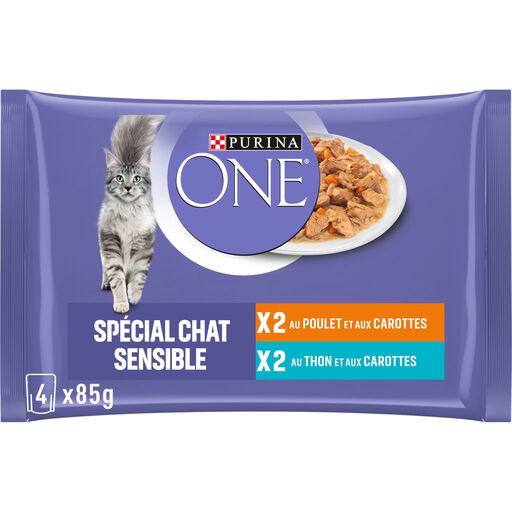
Why this choice suits this profile: The pack of four pouches lets you try a tuna and chicken recipe without ending up with a bulky stock of food. Each pouch contains 85 g.
The small format means you do not have to buy a large pack before knowing whether your cat likes the texture and flavours.
Complete food for adult cats, with 78 % moisture and 12,5 % crude protein according to the product details.
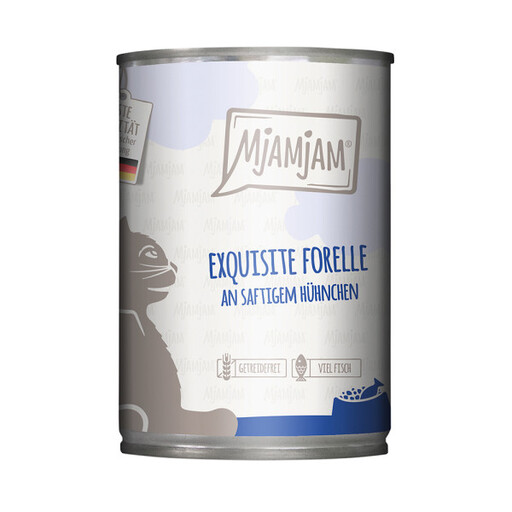
Why this choice suits this profile: This recipe combines chicken and trout in a 400 g format. It is aimed at households looking for a grain-free composition and a declared proportion of meat and fish.
The composition gives the advertised proportions in detail: 45 % chicken and 26 % trout. The promise is therefore not based solely on the recipe name.
Complete food, grain-free according to the product details, with 79 % moisture and 10,1 % crude protein.
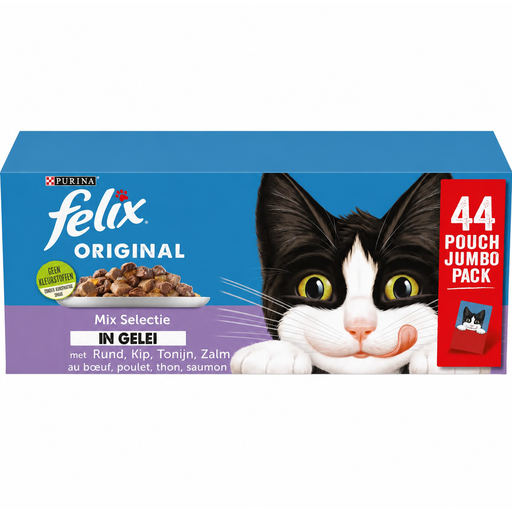
Why this choice suits this profile: The pack of 44 pouches is suitable for households that regularly serve individual portions and want to vary the flavours between beef, chicken, tuna and salmon.
The total weight of 3,74 kg is clearly stated. This makes it easy to calculate the cost per pouch and estimate how long the stock will last.
44 portions of 85 g, four advertised flavours and complete food for adult cats according to the product details.
We have put together a complete, real-time-updated selection of products that meet these strict selection criteria and European safety requirements.
Start with the recommendations on the packaging, then adapt the portion to your cat’s weight, age, activity level and body condition. As a guide, one Purina One product recommends approximately 3 to 4 85 g pouches per day for a 4 kg adult cat fed exclusively on wet food. A more calorie-dense recipe, or a meal combined with dry food, will require an adjustment.
To compare prices, it is better to work out the cost per 100 g rather than looking at the price of the box. This allows you to compare a pack of cat food containing 24 pouches with a 400 g tray on an equal basis.
Yes, provided the packaging states complete food and the daily portion is suitable. A soup or terrine described as complementary food cannot replace main meals on its own.
It depends on the cat’s weight, activity level, recipe and whether it also receives dry food or treats. Follow the manufacturer’s recommendations, monitor your cat’s body shape regularly and reduce portions if its weight gradually increases.
Place leftovers in the fridge in a sealed container and follow the storage period stated on the packaging: this is often between 24 and 48 hours. Before serving, allow the portion to return to room temperature and discard any product whose smell or appearance has changed.