
Livraison le jour même ou le lendemain

Qualité garantie

Débloquez vos offres de bienvenue: Livraison GRATUITE | Jusqu'à -80 % | 30 jours d'essai gratuits à JoyPlus
Téléchargez l'application
Choosing the right wet food for your cat can quickly become a real headache. Between the flashy packaging, promises of "gourmet" recipes, and a multitude of textures, it's easy to get lost. As a product expert at Joybuy, my mission is to help you see things more clearly. The goal: to find the perfect food for your companion, without falling into marketing traps.
Before you make your choice, let's review the 3 most common mistakes. These errors can take a heavy toll on your wallet, but more importantly, on your pet's health.
You don't need to be an expert to make the right choice. You just need to master a few essential points that will allow you to judge a product's quality at a glance.
This is THE first thing to check on the shelf.
The list of ingredients is always arranged in descending order of quantity: the first ingredient on the list is the most abundant in the recipe. For a good wet cat food, always look for a high-quality animal protein (meat or fish) at the top of the list.
Cats are known for being notoriously picky about the texture of their food.
To put theory into practice, here is our selection of products that tick all the boxes, for all needs and budgets.
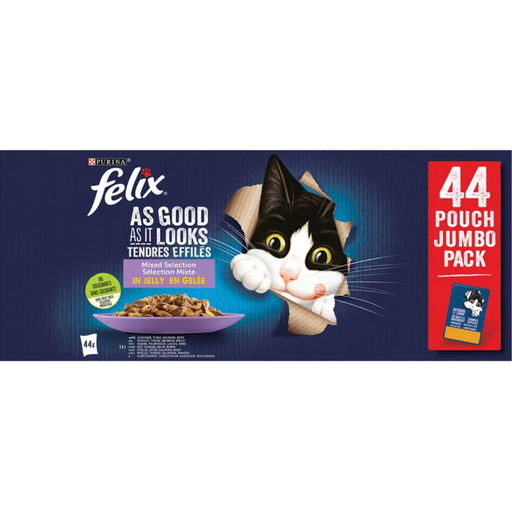
Our take: This mega-pack is the perfect solution for owners looking for excellent everyday value for money. With four flavours (salmon, beef, chicken, tuna), it's ideal for adding variety and satisfying cats who get bored easily, all while ensuring a complete and balanced diet.
This product is indeed a complete food, which eliminates any risk of deficiency. The economical 44-pouch format offers significant savings compared to buying single units.
An unbeatable quantity-to-price ratio for a varied daily diet. The formula is enriched with vitamins D and E, as well as omega-6 fatty acids.
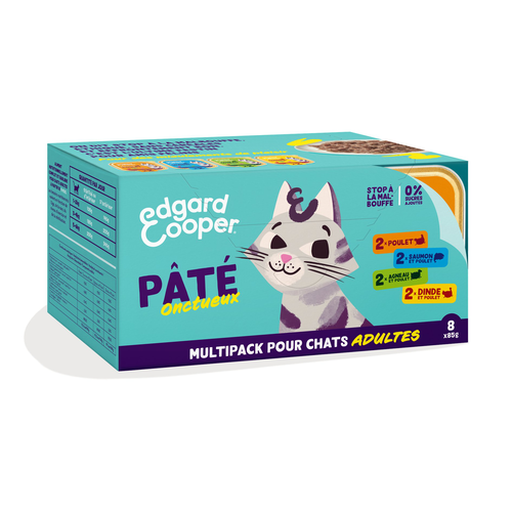
Our take: The choice for those who swear by natural ingredients and a meat-rich composition. This grain-free p?té stands out for its high percentage of fresh meat (clearly displayed) and its gentle recipe for sensitive stomachs.
Here, transparency is total. Gone are the vague "natural" promises: Edgard & Cooper is upfront, with high meat percentages (up to 59% fresh chicken), justifying its premium positioning.
A grain-free and gluten-free recipe, rich in fresh meat and slow-cooked to preserve all nutrients. The formula is, of course, enriched with taurine, essential for heart and vision.
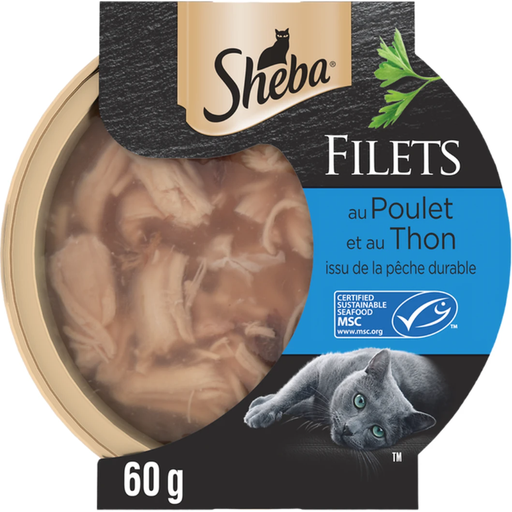
Our take: The perfect little indulgence for a gourmet cat. The recipe is all about the quality of its ingredients, with real chicken (35%) and tuna (4%) fillets in a delicate sauce. All without artificial colours or preservatives.
The product is clearly labelled as a complementary food. This is a treat, not a meal, which avoids any confusion and the associated risk of deficiencies.
The quality is visible to the naked eye: real pieces of chicken and tuna. It's the ideal way to add variety and share a special moment with your pet.
Discover our complete selection of products that meet our quality criteria and current regulations.
It's all about hydration. Wet cat food contains about 80% water, a major advantage for your pet's hydration, especially if they tend not to drink much. Kibble, on the other hand, is excellent for dental health thanks to its "toothbrush" effect, but it requires the cat to stay well-hydrated separately. The best solution? Mixed feeding, which combines the benefits of both.
A cat's digestive system is sensitive to change. To avoid any issues, a gradual transition over 7 to 10 days is essential. The principle is simple: start by mixing a small amount of the new food (about 25%) with the old one, then gradually increase the proportion each day until the food is completely replaced.
Absolutely not. Giving dog food to a cat, even occasionally, is a very bad idea. Their nutritional needs are completely different: cats, for example, have a vital need for taurine, an amino acid that is often absent or in insufficient quantities in canine food. A deficiency can lead to serious heart and eye problems. Similarly, a veterinary dog food is a targeted medicinal food and should never be given to another animal without the formal advice of a veterinarian.