
Livraison le jour même ou le lendemain

Qualité garantie

Débloquez vos offres de bienvenue: Livraison GRATUITE | Jusqu'à -80 % | 30 jours d'essai gratuits à JoyPlus
Téléchargez l'application
Standing in the wet cat food aisle can be overwhelming. Tins, freshness pouches, trays... Between tempting marketing claims and endless ingredient lists, it's hard to know where to start. Yet, our goal is simple: to spoil our four-legged companion with a healthy, balanced diet. But beware of the pitfalls that can turn a good intention into a purchase you'll quickly regret.
As a Product Expert at Joybuy, my mission is to help you decode the labels. Here are the most common mistakes to avoid, and more importantly, how to steer clear of them.
To avoid being fooled by marketing, it only takes a few seconds to check these crucial details on the packaging. They'll tell you what you're really putting in your cat's bowl.
This is THE most important detail to check for your pet's health.
This information is mandatory, but it's often written in tiny print on the back of the packaging. Keep an eye out!
The golden rule: ingredients are listed in descending order by weight. The first item on the list is therefore the main ingredient.
Every cat has their preferences. The best way to discover your refined palate's tastes is to offer different textures before committing to a value pack.
To guide you, we've selected three products that meet different needs and budgets.
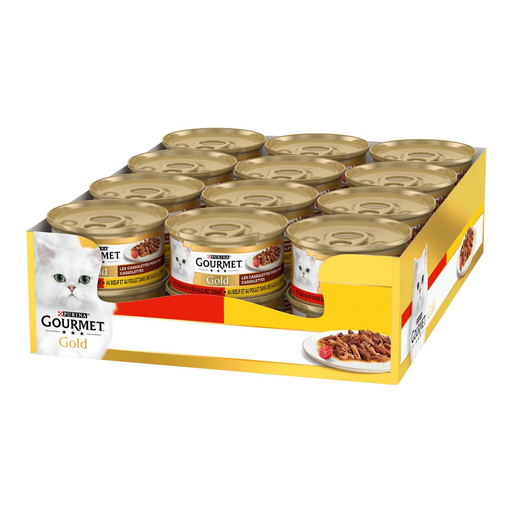
Why we recommend it: This 24-tin pack offers excellent value for money without compromising on variety. With several meat-based recipes, it allows you to mix up mealtimes and prevent your cat from getting bored.
This is a complete food, guaranteeing a balanced meal. The bulk format is economical, and the variety of flavours reduces the risk of waste if your cat is prone to changing their mind.
The small 85g tin format ensures a fresh serving every time, while offering a very attractive price per kilo thanks to the bulk purchase.
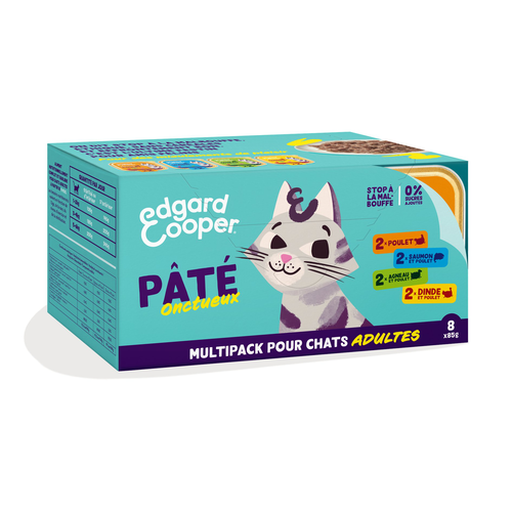
Why we recommend it: This is the perfect choice for owners who scrutinise labels and prefer grain-free options. Edgard & Cooper focuses on fresh meat and natural ingredients, an ideal recipe for sensitive stomachs.
The ingredient list is crystal clear, with a high and clearly stated meat percentage. As a complete and grain-free food, it ticks all the boxes to prevent digestive issues.
The brand highlights its slow-cooking method at low temperatures to best preserve nutrients and flavours. A guarantee of nutritional quality.
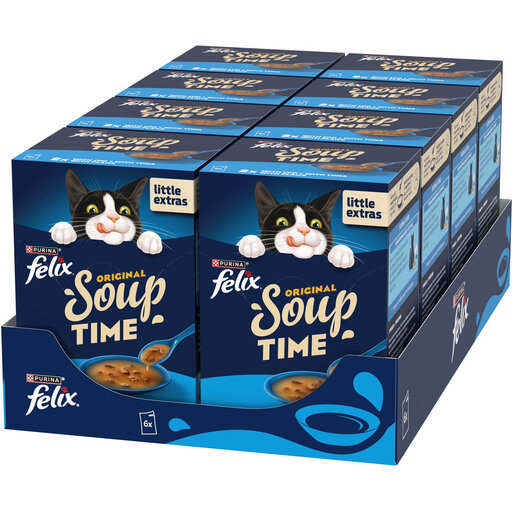
Why we recommend it: This is the perfect solution for cats that turn their nose up at their water bowl. This soup is a fun and tasty way to boost their hydration. Serve it alone as a treat, or pour it over kibble to soften it and enhance its flavour.
The product is unambiguously sold as a complementary food. It doesn't pretend to be something it's not, eliminating any risk of nutritional deficiency. It's a prime example of a pleasure product to be used with full awareness.
Its record-high moisture content (87.5%) makes it a hydration champion. The individual pouch is convenient and guarantees freshness. A little extra: the manufacturer suggests serving it chilled in summer for a refreshing effect.
P?tés, mousses, soups... Discover our complete selection of products that meet strict quality criteria.
It all depends on their weight, age, activity level, and of course, the type of product (complete or complementary). As a guideline, for a complete food, an adult cat weighing 4 kg will consume an average of 3 to 4 pouches or 85g tins per day, ideally split into two meals. The safest bet is to follow the manufacturer's recommendations on the packaging and adjust portions to maintain their ideal weight.
Yes, absolutely, on the sole condition that it is a complete food. It's even an excellent way to ensure good hydration. However, many owners opt for mixed feeding: kibble available freely for its "toothbrush" effect and wet food for hydration and enjoyment. It's the best of both worlds!
Once opened, a pouch or tin should be tightly sealed (with a suitable lid or cling film) and stored in the refrigerator. Consume the rest within 24 to 48 hours. Remember to take the p?té out of the fridge a little before mealtime so it can reach room temperature, as most cats dislike eating cold food. Most importantly, never let wet food sit out in the bowl, especially in summer: it dries out quickly, and bacteria can multiply.