
Livraison le jour même ou le lendemain

Qualité garantie

Débloquez vos offres de bienvenue: Livraison GRATUITE | Jusqu'à -80 % | 30 jours d'essai gratuits à JoyPlus
Téléchargez l'application
Giving your cat healthy, delicious food is every owner's goal. But when faced with shelves overflowing with tins and cat food pouches, the headache begins. Between marketing promises and endless ingredient lists, how do you make the right choice of wet cat food?
This guide is here to help you see things more clearly. Together, we'll break down the common pitfalls and give you the keys to choosing a wet cat food that will truly satisfy your little feline.
The pet food market is a jungle where some labels can be misleading. Here are the most common traps.
To make the right choice, focus on a few objective criteria that never lie.
The ingredient list is ordered by decreasing weight. The first ingredient is therefore the one present in the largest quantity.
Palatability is king. A p?té, even one that's perfect on paper, is useless if your cat refuses to touch it.
A sterilised cat has reduced energy needs and an increased risk of weight gain. A p?té for sterilised cats is therefore formulated with a controlled fat content and a moderate calorie intake to help them maintain their ideal weight.
To help you make your choice, here are a few products that suit different types of cats and owners.
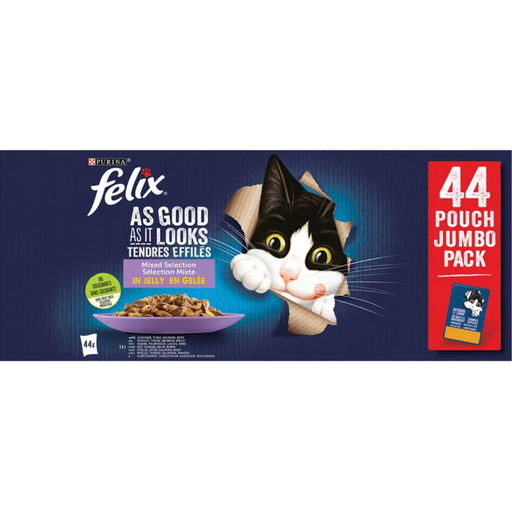
Why we chose it: This mega-pack is the perfect solution for owners looking for excellent value for money without sacrificing variety. It allows you to feed one or more cats over the long term while varying their daily meals.
It counters the trap of bulk-buying a single flavour. With its four varieties (salmon, beef, chicken, tuna), you can rotate the menu to prevent your cat from getting bored, all while benefiting from a very economical format.
Value pack of 44 pouches, perfect for budget-conscious households. A 100% complete and balanced diet, enriched with vitamins D & E and omega-6 fatty acids.
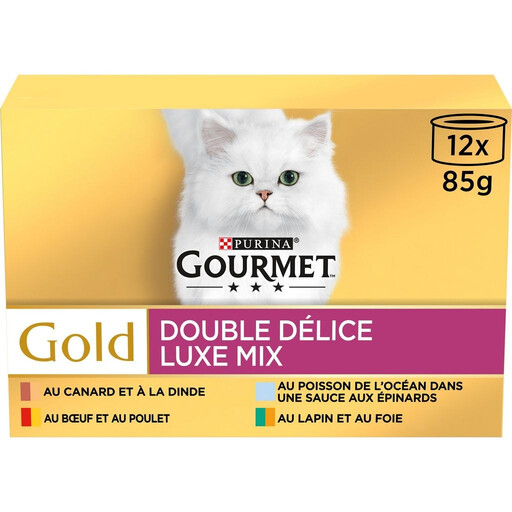
Why we chose it: Perfect for cats with discerning palates. The combination of fine shreds and tender chunks in gravy offers a dual-texture experience that will win over even the fussiest eaters.
It avoids the trap of monotony. By offering a dual texture in every tin, it maximises the chances of pleasing a cat who gets bored easily or is particularly selective.
Dual-texture recipes for maximum palatability. An assortment of flavours (duck-turkey, beef-chicken, etc.) to vary their meals. Formulated with no added artificial colourants or preservatives.
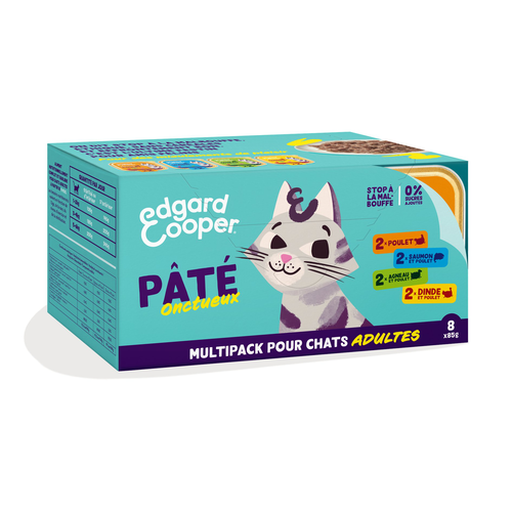
Why we chose it: This option is for owners who prioritise simple, natural ingredients. The recipe includes a high percentage of fresh meat, with no grains or gluten, making it ideal for cats with sensitive digestion.
It doesn't just rely on the "grain-free" claim and instead commits to full transparency. The high percentage of fresh meat (e.g., 59% chicken) is clearly stated, avoiding the trap of vague ingredient lists.
High fresh meat content and no meat meal. Grain- and gluten-free recipe. Slow-cooked at low temperatures to best preserve nutrients and flavours.
Discover our complete and up-to-date selection of products that meet our quality criteria and current regulations.
How much wet food should I give my cat each day? For an average-sized adult cat (around 4?kg), 2 to 4 portions of 85?g per day, split into at least two meals, are generally recommended. Of course, this amount varies depending on their activity level, age, and whether they are sterilised. It's always best to refer to the instructions on the packaging and adjust the portions to maintain their ideal weight.
Can I mix wet and dry food? Yes, and it's an excellent idea! This is called mixed feeding. This method is often recommended because it combines the benefits of both worlds: the hydration and palatability of wet food, and the abrasive action of kibble on tartar. Just remember to adjust the portions of each to avoid exceeding the total daily calorie intake.
How should I store wet cat food once it's opened? Once a pouch or tin is opened, the p?té must be stored in the refrigerator, ideally in an airtight container or covered with cling film to preserve its freshness and aromas. It should be consumed within 24 to 48 hours. Our tip: take it out of the fridge a little before mealtime to serve it at room temperature. Cats rarely appreciate a dish that's too cold.