First, choose a machine whose instructions say it can handle the waste you plan to collect: DIY dust, small debris, water and leaves don’t all call for the same equipment. For water, check the tank and how it’s emptied; for dust produced during work, check the tool connection and compatible consumables. A domestic wet and dry vacuum should not be treated as a machine designed for hazardous dust.
Who is this guide for?
For DIY dust
If you drill, sand or work with wood in a workshop or garage, look for a tool connection and filters and bags that are compatible with dry vacuuming. If the material may contain silica, lead or asbestos, you’ll need to consider the necessary protective measures separately; a wet and dry function alone isn’t enough.
For water and small debris after DIY work
If you need to collect shavings, ordinary dust, small debris and water, check which materials the instructions allow, the tank capacity and how it’s emptied. Don’t assume that all rubble or liquids are suitable.
For the patio and garden
If you move between the garage, patio and garden, compare the size, wheels, hose and accessories. A machine designed for leaves may meet this specific need, but that doesn’t mean it’s suitable for water or DIY dust.
Which features should you check?
Start by identifying what you need to vacuum, then choose the tank, accessories and power supply to suit the amount you need to collect and the area you need to clean.
| Feature |
What to check |
Who it’s for |
| DIY dust |
Whether the connector is compatible with your tool; a filter and bag designed for dry vacuuming. If the material may produce hazardous dust, check the necessary protection before cleaning. |
When I drill or sand, I want to collect ordinary dust as I work rather than afterwards; around 42% of consumers would make this their priority. |
| Water and wet debris |
Whether the instructions allow liquids to be vacuumed; the tank capacity and emptying procedure. |
After an overflow or work in the garage, I need to be able to collect the water and empty the tank without making clean-up difficult. This would be the top priority for around 33% of consumers. |
| Leaves and portability |
Whether the machine is approved for leaves, its collection capacity and how easy it is to move; for a cordless model, check which batteries are included and the runtime for your intended use. |
To move between the patio and garden, I want a machine that’s easy to carry and suitable for leaves; this would be the priority for around 25% of consumers. |
Mistakes to avoid
-
Assuming a wet and dry vacuum can handle every type of material
Machines designed for ordinary dry or wet waste aren’t automatically suitable for flammable liquids, hot materials or hazardous dust. The Bosch AdvancedVac 20 instructions, for example, prohibit flammable or explosive liquids; the Nilfisk Multi II instructions specify domestic use for non-hazardous dust and non-flammable liquids.
Before buying, compare the waste you expect to collect with the restrictions in the instructions for the exact model. If you suspect a material may be hazardous, don’t start cleaning as usual.
-
Choosing based on the power rating alone
When collecting water or cleaning for a long time, the tank capacity, emptying method and hose reach also affect how easy the machine is to use.
Choose a tank and emptying system that suit the amount you expect to collect, then check that you’ll be able to move and store the machine.
-
Confusing a floor-care machine with a vacuum for DIY work
A machine designed for indoor floors isn’t necessarily suitable for shavings, small debris or leaves.
Check which materials it can handle and choose nozzles, tubes and adaptors to suit the area you’re cleaning.
-
Forgetting about bags and filter maintenance
Consumables depend on the model and the type of vacuuming. Bosch offers pre-filters for the AdvancedVac 20 and paper bags designed for dry vacuuming; Nilfisk says the Multi II 22 has a filter saturation indicator.
Check which parts are compatible and how to clean the filter or switch from dry to wet vacuuming.
Depending on the machine and how often you use it, allow for replacement bags and filters.
Brands to know
Bosch Home & Garden
The range includes corded wet and dry vacuums for workshops, as well as a compact cordless model for cleaning on the move.
- Bosch describes the AdvancedVac 20 as suitable for dust, shavings and wet materials; the PAS20-220P has an adaptor for connecting to many power tools.
- These features vary by model. Check the instructions to see which materials are allowed, and don’t assume that a tool connection makes a vacuum suitable for hazardous dust.
Nilfisk
The Multi II range is designed for domestic collection of dry or wet waste; it is separate from the brand’s professional safety vacuums.
- According to Nilfisk, the Multi II 22 has a filter saturation indicator, while the Multi II 30 T has a 30 L tank and a 4 m hose.
- The Multi II instructions limit domestic use to non-hazardous dust and non-flammable liquids. These models should not be confused with a Class H vacuum.
Machines for DIY work and leaves on Joybuy
Two Vacmaster drum vacuums are suited to cleaning a garage or workshop; the greenworks blower vac meets a different need: collecting dry leaves outdoors. Check which materials each machine can handle before choosing.
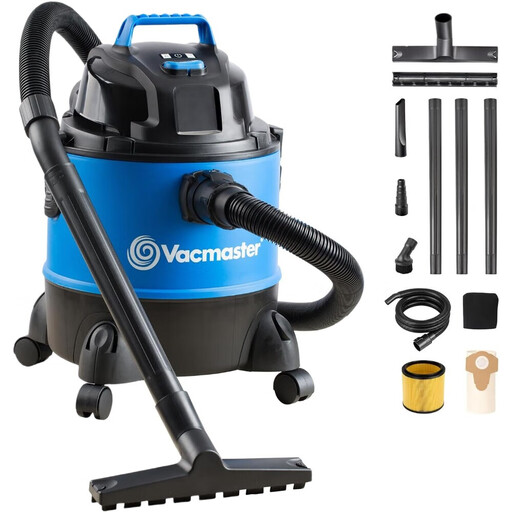 Image unavailable
Vacmaster VQ1220PF, 20 L wet and dry vacuum with blower
Worth considering for ordinary dust and wet materials in a garage, after checking the instructions.
The product name indicates a 20 L tank, a 1 250 W motor and a blower function.
Before vacuuming rubble, check which materials and sizes are allowed; a wet and dry function alone doesn’t mean it’s suitable for hazardous dust.
View on Joybuy
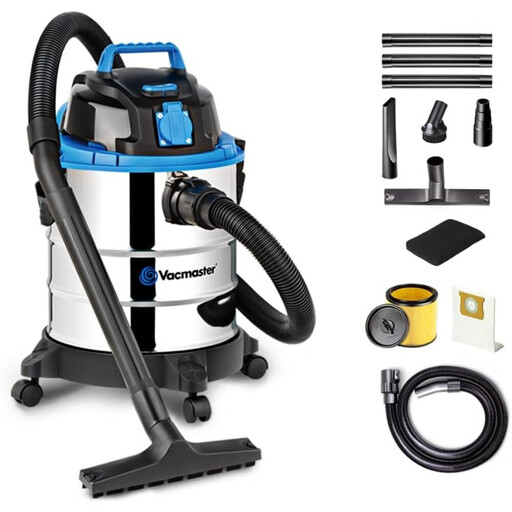 Image unavailable
Vacmaster VQ1220SC, 20 L vacuum with tool socket
Worth considering if you want to connect a power tool for work in the workshop.
The product name indicates a 20 L stainless steel tank, a 1 250 W motor, a tool socket rated at 2 430 W and a blower function.
Although it’s presented as a wet and dry vacuum, the product also carries a warning about use in dry environments. Check the instructions to confirm whether it can vacuum liquids and under what conditions. The description rules out harmful dust.
View on Joybuy
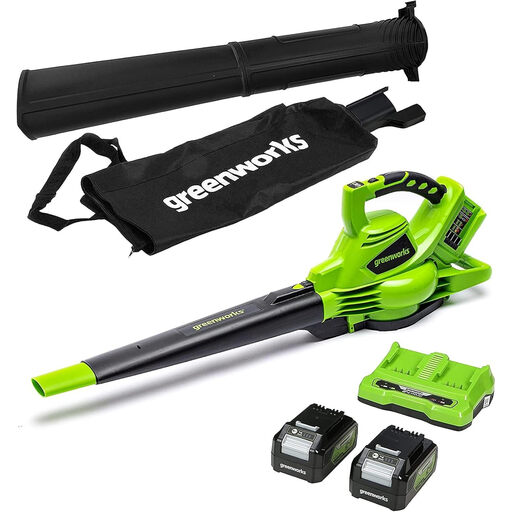 Image unavailable
greenworks GD24X2BVK4X, leaf blower vac with two 24 V 4 Ah batteries
Worth considering for collecting dry leaves in a garden or on a patio, but not as a replacement for a drum vacuum after DIY work.
The product name indicates a 45 L mulching bag, a shoulder strap and a dual charger, supplied with two 24 V 4 Ah batteries.
The description rules out wet leaves, water, stones and metal objects. Check the runtime for your intended use before choosing a cordless model.
View on Joybuy
Frequently asked questions
Can you vacuum water with a workshop vacuum?
Yes, if the instructions for your model explicitly allow it to vacuum liquids. Bosch describes the AdvancedVac 20 as suitable for wet materials, and Nilfisk describes the Multi II 22 and 30 T as wet and dry vacuums. Check the procedure for your specific model and don’t vacuum flammable liquids.
Should you remove the bag before vacuuming a liquid?
Follow the instructions for your model when switching from dry to wet vacuuming. The Bosch paper bags mentioned for this use are designed for dry vacuuming: don’t assume they’re suitable for liquids, and check which filters or accessories need to stay in place.
Is a domestic wet and dry vacuum suitable for asbestos?
No. The term ‘wet and dry’ doesn’t mean it’s suitable for asbestos. For cleaning connected with work on asbestos-containing materials, INRS recommends a Class H vacuum. If you suspect asbestos may be present, stop ordinary cleaning and find out which measures are appropriate for the work involved.
What precautions should you take with concrete or mortar dust?
Identify the material and the necessary protection before choosing a machine or starting to clean. INRS states that crystalline silica is found in concrete and mortar, among other materials. Check the collection and filtration requirements for the dust produced, rather than assuming that a domestic drum vacuum is suitable.


