People who drink herbal tea every day
If you regularly make one or more cups, packs of 80 or 100 tea bags can mean fewer trips to the shops. It’s easier to choose a larger pack when you already know you enjoy the blend.


For your retirement shopping, a box of 80 tea bags could be a good choice if you regularly drink a blend whose flavour you already know. Before choosing a larger pack, though, check whether it contains tea or a herbal infusion, then read the ingredients and warnings. The word ‘wellness’ does not guarantee that it is caffeine-free or has therapeutic effects.
If you regularly make one or more cups, packs of 80 or 100 tea bags can mean fewer trips to the shops. It’s easier to choose a larger pack when you already know you enjoy the blend.
If you limit your tea intake later in the day, distinguish tea from herbal infusions and check the exact blend. Anses says caffeine can delay falling asleep and reduce sleep duration or quality.
If you drink a blend repeatedly, checking the ingredients is especially important if you have high blood pressure, cardiovascular, kidney or liver disease, or take medication that may interact with certain herbs. Anses specifically advises caution with liquorice.
First, choose a blend that suits when you’ll drink it and whose ingredients you’re happy with. Then work out how much you’re likely to use.
| Criteria | What to check | Who is it for? |
|---|---|---|
| Number of tea bags | Count the tea bags in the whole pack: one box of 80 and four boxes of 20 contain the same total. Also check the date shown on the packaging. | If you drink this blend every day, you may want to shop less often without being left with a flavour you don’t enjoy. Around 40% of consumers put having a supply in the first place. |
| Caffeine | Check whether the blend contains tea or has a clear statement about its caffeine content. | If you’re choosing an evening drink, you may prefer to limit caffeine if it affects your sleep. This is the top priority for around 30% of consumers. |
| Herbs and warnings | Read the ingredients and warnings, particularly to check whether the blend contains liquorice if you plan to drink it regularly. | If an herb could be a concern because of your health or medication, check the blend before stocking up. Around 20% of consumers make this their top priority. |
| Flavour and preparation | Check the main herbs, along with the recommended amount of water and brewing time for each blend. | If you’re trying a new blend, a small box can help you decide whether you want to drink it regularly. For around 10% of consumers, flavour and preparation come first. |
A blend’s name is no proof that it helps with digestion, sleep or an illness. The DGCCRF points out that health claims made about food are regulated.
Choose based on flavour, ingredients and your usual habits. Don’t use an herbal infusion instead of treatment or medical advice.
Anses links high, repeated consumption of liquorice with health risks, including high blood pressure, and warns that it can interact with some medicines.
Check the ingredients before buying 80 or 100 tea bags. If you have a health condition or take medication, ask a healthcare professional for advice before drinking it regularly.
A pack of 80 tea bags may contain green tea, even if it’s marketed as a wellness product. According to Anses, caffeine can affect sleep.
If you plan to drink it in the evening, check whether the specific product you’re buying contains tea and what it says about caffeine.
Preparation instructions can vary: the listing for a Lipton cold-brew infusion specifies one tea bag per 500 ml of water, while Lipton’s mint and verbena gift sets recommend one 200 ml cup per tea bag.
Compare the amount of drink each tea bag makes, as well as the water temperature and brewing time. Then choose the pack that suits how you like to drink your infusion.
The brand offers 100-tea-bag gift sets of peppermint and verbena herbal infusions on Joybuy France. Amazon France also lists an 80-tea-bag pack of flavoured green tea. Tea and herbal infusions may not suit the same needs.
Pagès offers a range of herbal infusions. Its blend named Digestion comes in a box of 20 tea bags, with preparation instructions specific to this recipe.
Kusmi Tea offers organic Happy Mind herbal infusion in a box of 20 tea bags. According to the brand, the blend combines turmeric, dragon fruit, apple, chilli and moringa.
If you drink verbena regularly, this 100-tea-bag Lipton gift set gives you a larger pack than the 80-tea-bag box you’re considering. It’s best suited to you if you already know and enjoy this blend.
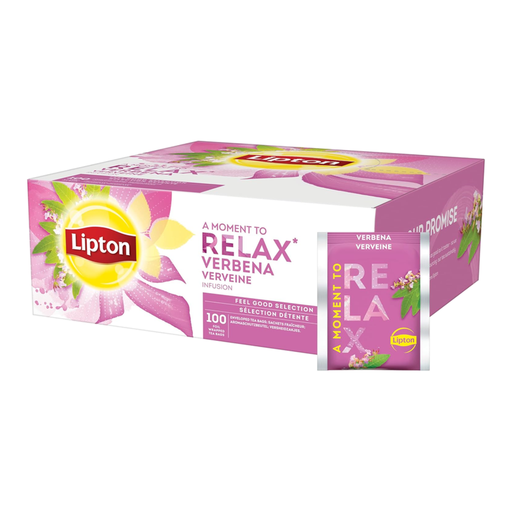 Image unavailable
This gift set could suit you if you regularly drink verbena herbal infusion and want to shop less often.
It contains 100 tea bags, not 80. If you want to avoid caffeine, particularly in the evening, check the details for this product and its full list of ingredients.
No. An herbal infusion cannot replace treatment for digestive problems, sleep issues or an illness. The DGCCRF points out that health claims made about food are regulated. If your symptoms persist or you’re receiving treatment, speak to a healthcare professional.
Before drinking it regularly, ask a healthcare professional about the amount and frequency you’re considering. Anses warns of the risks associated with high, repeated liquorice consumption, as well as interactions with some medicines. This does not mean that every infusion containing liquorice is automatically unsuitable for everyone.
First check whether the blend contains tea or another source of caffeine. Anses says caffeine can delay falling asleep, so check the ingredients and information for the exact product rather than assuming that something labelled ‘wellness’ is caffeine-free.
At the very least, read the ingredients list, allergen information, number of tea bags and preparation instructions. EU food labelling rules require information about ingredients and allergens, among other details. To help you decide, compare the information for the specific product you plan to buy.