
Livraison le jour même ou le lendemain

Qualité garantie

Débloquez vos offres de bienvenue: Livraison GRATUITE | Jusqu'à -80 % | 30 jours d'essai gratuits à JoyPlus
Téléchargez l'application
Investing in a complete weight bench is a key step toward building a proper home gym. The problem? The market is flooded with models that make enticing promises but often prove disappointing in practice. A poor choice can not only hinder your progress but also be dangerous. To help you see clearly, we've broken down the common pitfalls to avoid and the essential criteria to check before you buy.
On paper (or rather, in photos), many benches look sturdy. The reality is often quite different, with design flaws that become obvious after just a few uses. Here are the red flags you should never ignore to avoid buyer's remorse.
To be certain of the quality and durability of your future bench, focus on these three non-negotiable parameters.
This is the number one safety criterion. Specifically look for the supported dynamic weight capacity. For an intermediate to advanced user, a capacity of at least 250?kg (user weight + lift weight) is an excellent starting point. A heavy-duty weight bench is often built with thicker steel (usually 11 or 12-gauge), which guarantees better rigidity and unmatched durability.
Stability is directly dependent on the frame's design. Opt for benches with a wide footprint, especially at the rear feet. Non-slip rubber feet are also a significant plus to prevent the bench from sliding during an intense exercise like the bench press.
An incline and decline bench is the foundation of a truly comprehensive workout. Check the number of available positions for the backrest and seat. The more adjustments there are, the more you can vary your working angles and precisely target different muscle groups. For maximum versatility, some models include well-designed accessories:
Rather than an endless list, here are a few models that cater to specific user profiles, always keeping our quality and safety criteria in mind.
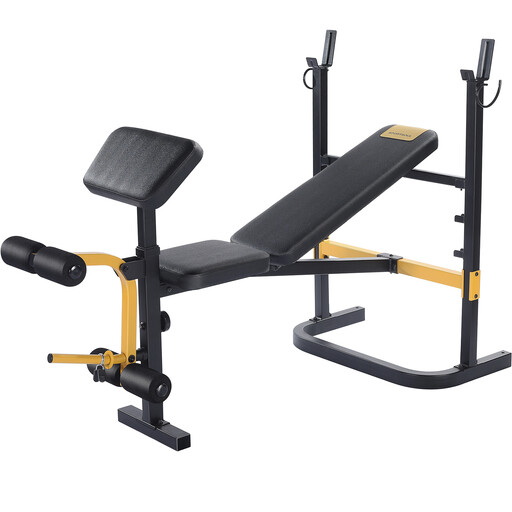
Why we recommend it: This is a true all-in-one workout station, perfect for those who are serious about training at home. It combines an adjustable bench, a barbell rack, and modules for legs and biceps, allowing for a full-body workout.
Its alloy steel frame supports a dynamic load of 186 kg (and 544 kg static), addressing the pitfall of overrated capacities. The integrated rack with its safety hooks prevents accidents and counters the risk of instability.
It combines the functions of a bench, squat rack, leg extension, and preacher curl attachment. It's a much more cost-effective and space-saving solution than buying each piece of equipment separately.
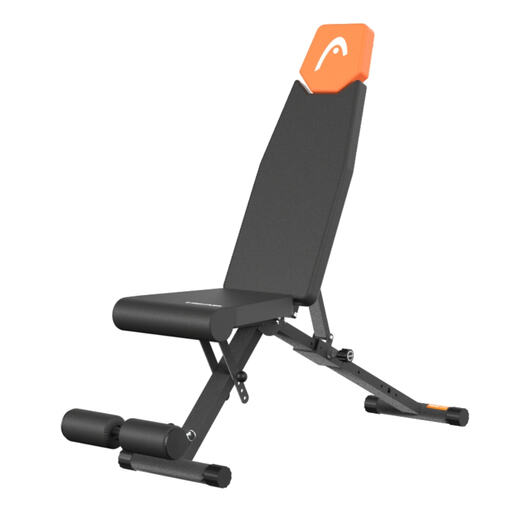
Why we recommend it: Perfect for apartments or multi-purpose rooms. It offers excellent versatility for dumbbell and bodyweight exercises, and is very easy to store once your session is over.
This bench states a maximum load of 120 kg, an honest specification suited for its intended use (moderate training). It doesn't fall into the trap of over-promising and offers perfectly adequate stability for the weight range it's designed to support.
Its standout feature: its ultra-compact foldable design (83.5 x 35 x 24 cm when folded). The multiple backrest (5 positions) and seat (3 positions) adjustments provide excellent versatility for a bench in this category.
We've curated a complete, up-to-date selection of benches that meet our selection criteria and safety standards.
The longevity of your bench depends on the quality of its materials, your frequency of use, and maintenance. A well-made steel frame can last for years. The parts most subject to wear and tear are the upholstery and padding, which may need to be replaced after 5 to 10 years of heavy use. Remember to regularly check and tighten all the nuts and bolts to ensure your safety.
A weight bench with a rack is highly recommended if you plan to train alone with loaded barbells, especially for the bench press. The safety spotters are a crucial element for preventing accidents. If your training focuses on dumbbells, resistance bands, or bodyweight exercises, a simple adjustable bench without a rack will be more than enough.
Focus on the dynamic weight capacity (user weight + weight being lifted). For an intermediate lifter, a capacity of 250?kg is a comfortable safety margin. If you are an advanced lifter or you're aiming for long-term progression with heavy weights, look for models that support 350?kg or more. This will give you peace of mind and plenty of room to progress for years to come.