If you mainly want an appliance to take care of cooking your weeknight meals, choose a multicooker suited to your recipes. If preparing the ingredients also takes up time, consider a cooking food processor instead; if you already have a way to cook, a food processor without a cooking function may be enough. In every case, compare the usable capacity, the parts you’ll need to clean and the space required, and follow the instructions for monitoring your chosen model.
Which approach is right for you?
You want to get dinner started, then do something else
Your priority is managing the cooking rather than chopping or blending. A programmable multicooker can meet this need for recipes suited to its bowl, provided you follow the appliance’s instructions about when to intervene and how to monitor it.
You want to prepare and cook with the same appliance
Chopping, mixing, whisking or kneading are regular parts of your evening meals. A cooking food processor is worth considering if its accessories are suited to the tasks you actually do repeatedly.
You already have a way to cook
If you’re happy with the way you cook using your current equipment, a food processor without a cooking function could help with grating, slicing, chopping or blending. Cooking will remain a separate step.
What should you look for before buying?
Programmable multicooker
Consider it: when your main aim is to start cooking in the bowl and limit the need to intervene during the cooking stage.
Bear in mind: chopping and blending will generally need to be done separately; some recipes will still require you to step in.
Cooking food processor
Consider it: if chopping, mixing or kneading before or during cooking would save you from having to do these tasks by hand regularly.
Bear in mind: there are more accessories to consider, and instructions vary by model; built-in cooking doesn’t mean you can leave the appliance unattended.
Food processor without a cooking function
Consider it: if you’re already happy with your cooking equipment and preparing ingredients is what slows you down most.
Bear in mind: you’ll still need another appliance for cooking and to monitor it.
| Factor | What to check | Who is it for? |
|---|
| Monitoring while cooking |
Programmes suited to your dishes and any steps that still require you to intervene. |
If I need to do something else while dinner is cooking, I want to spend less time checking on it. Around 36% of consumers would make this hands-off cooking their priority. |
| Preparation functions |
Tasks you can do with the included accessories, before or during cooking. |
When slicing, blending or mixing also slows down dinner, I want to combine these tasks with cooking. Around 29% of consumers would make these built-in preparation functions their priority. |
| Usable capacity |
Fill limits in the instructions and the quantities allowed for your usual recipes. |
To cook my usual portions in one go, the bowl’s stated capacity isn’t enough: I need to know how much food it can actually cook. Around 21% of consumers would put this need first. |
| Cleaning and storage space |
Parts that can be washed according to the instructions, and the space needed to use and then store the appliance. |
If I have to wash lots of parts or move the appliance every time I cook, I may use it less often. Around 14% of consumers would put easy cleaning and storage ahead of other factors. |
Mistakes to avoid
-
Confusing bowl capacity with the amount you can cook
The permitted fill level depends on the appliance and recipe, among other things. Que Choisir gives the example of a 6 L Cookeo bowl with a 4 L cooking limit.
Compare the limits in the instructions with the portions you need to cook, particularly for soups, dishes with sauces and pressure cooking.
If the capacity is too small for your portions, you may have to cook in batches.
-
Choosing a cooking food processor just for cooking
Its chopping and mixing functions won’t make dinner easier if you hardly ever do these tasks. A multicooker is a more direct fit if cooking is your main priority.
Think about the tasks that actually take up your time each week, then choose between cooking management and preparation with built-in cooking.
-
Assuming recipes and accessories are the same across models
Advertised functions and access to recipes vary by appliance and package. The number of programmes alone doesn’t tell you which tasks a model can perform.
Before deciding, check the accessories included, the recipes you can access and the instructions for the exact model.
Brands to know when comparing appliances
Moulinex
Cookeo and Companion represent two distinct approaches: cooking in a bowl with the former, and combining preparation with cooking with the latter.
- Moulinex lists a 6 L bowl and several cooking modes for the Cookeo+ CE851HF0; the brand states that the Companion featured in its product information has a usable capacity of 3 L.
- Compare the functions and dishwasher-safe parts of the specific model: the features of a Cookeo don’t describe those of a Companion.
Vorwerk
The Thermomix TM7 combines preparation, cooking and guided recipes in a cooking food processor.
- Vorwerk lists 24 modes for the TM7, as well as a pre-clean function.
- Check the terms for accessing Cookidoo and which TM7 parts are actually dishwasher-safe.
Magimix
The Cook Expert Original combines cooking with preparation tasks such as chopping, grating and kneading, according to Magimix.
- For this Original model, Magimix states a total capacity of 3.5 L and a usable capacity of 2.5 L.
- Compare this usable capacity with your recipes and check how much space you’ll need; don’t assume it applies to another Cook Expert version.
Appliances for cooking weeknight meals
These appliances cover programmable cooking, preparation with built-in cooking and, for meals centred around rice, a more specialised way to cook. Compare their functions with your recipes: they don’t all replace the same tasks.
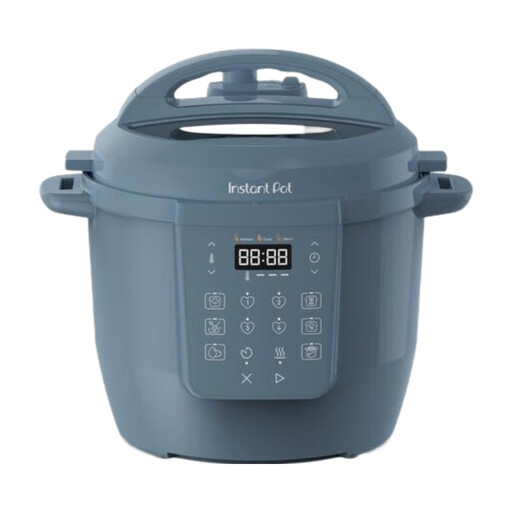 Image unavailable
Instant Pot Classic 5.7 L, Daydream Blue
Worth considering if you prioritise cooking in a bowl over preparing ingredients.
The title describes a 7-in-1 multicooker, including slow cooking and steaming, with four customisable presets. Check the fill limit for your recipes and follow the instructions for releasing pressure.
View on Joybuy
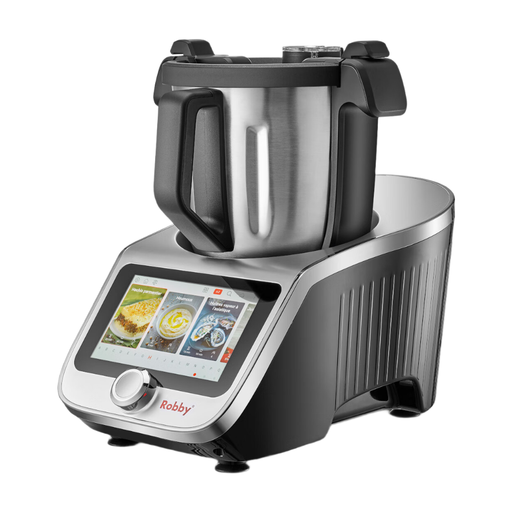 Image unavailable
Robby Smart cooking food processor with built-in scales
Worth a look if you’re after an appliance that combines preparation steps with cooking.
The title mentions a large bowl and touchscreen. Check which recipes are actually included: the number differs between the title and the description. The model instructions say not to leave the appliance running unattended.
View on Joybuy
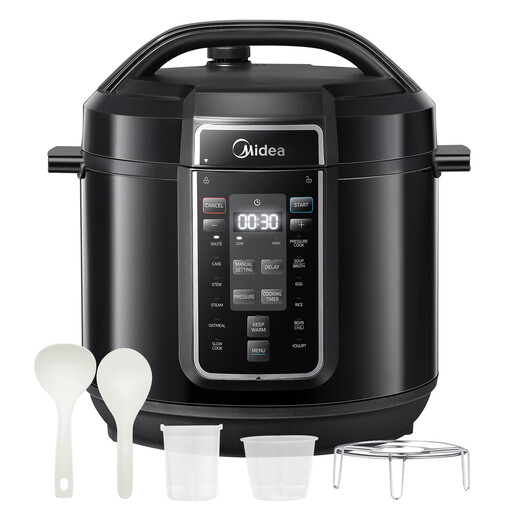 Image unavailable
Midea 9-in-1, 8 L multicooker
Compare it with other bowl-style cookers if your meals call for different cooking modes.
The title lists 1,200 W of power, 12 preset menus and a non-stick bowl. Before choosing the 8 L capacity for your portions, check the fill limits and cleaning instructions.
View on Joybuy
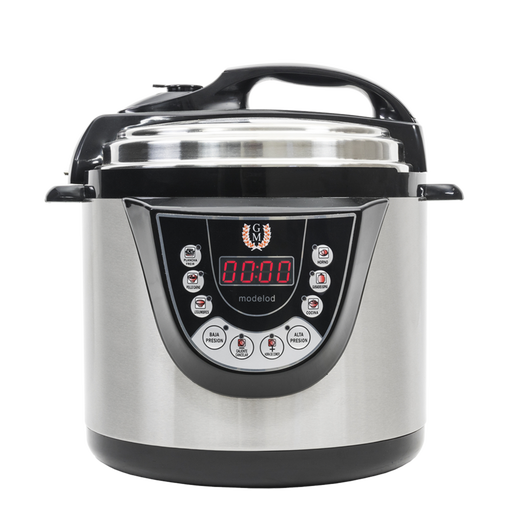 Image unavailable
Cecotec Model D, 6 L programmable cooker
Worth considering if you plan your meals around cooking programmes in a bowl.
The title mentions nine menus, two pressure settings, a voice function and a 24-hour timer. Check the instructions for fill limits, the language they’re in and how to clean the parts.
View on Joybuy
 Image unavailable
ochama 2 L rice cooker with steam basket
Worth considering if your meals are mainly based around cooking rice, rather than preparing ingredients or making a wide variety of dishes.
The title lists 500 W, a keep-warm function, a timer and a rice spoon. Check which programmes are actually available and how the timer works before relying on a delayed start.
View on Joybuy
Frequently asked questions
What’s the difference between a multicooker and a cooking food processor for dinner?
A multicooker mainly handles cooking in a bowl, while a cooking food processor can also prepare ingredients by chopping or mixing them. Choose based on the tasks that take up your time before cooking, then check the functions and instructions for the model you’re considering.
How can I tell if the capacity will be enough for my meals?
Compare your portions with the fill limit for your recipes, not just the stated total capacity. Que Choisir gives the example of a 6 L Cookeo bowl limited to 4 L for cooking; Magimix lists the Cook Expert Original as having a total capacity of 3.5 L and a usable capacity of 2.5 L.
Will a cooking food processor necessarily mean less washing up?
No: it depends on the tasks you do, the accessories you use and the parts that need washing after each recipe. Check the instructions to see which parts are dishwasher-safe. Vorwerk lists a pre-clean function for the Thermomix TM7, but that doesn’t automatically mean all its components can be washed in the same way.
What should I do with an old appliance if I replace it?
In France, an old multicooker or cooking food processor counts as electrical and electronic equipment. Use an appropriate reuse, repair or collection service rather than putting it in household rubbish. The ministry responsible for the ecological transition sets out how these appliances are collected in France.


