If you shop for several days at a time, first measure the space and access routes, then compare the fridge and freezer capacities: a large total capacity doesn’t guarantee the right balance. A fridge-freezer gives you space for both fresh and frozen food, while a larder fridge prioritises fresh food if freezing is less important; a multi-door model needs more room. Whatever the style, easy-to-reach shelves and enough space for air to circulate matter just as much as the advertised food-preservation features.
Which type is right for you?
Households that shop for the week
If your regular shop includes both fresh and frozen food, start by looking at fridge-freezers, then check the usable capacity of each compartment. How the space is divided matters more for organising your food than the total capacity alone.
Households that mainly buy fresh food
A larder fridge is worth considering if you don’t buy much frozen food or already have another way to freeze it. Check whether the drawers suit the food you buy and whether the shelves make it easy to see what needs using.
Households with a small kitchen
Start by measuring the space and access routes. An under-counter model may fit beneath a worktop, but make sure its storage capacity is enough for the amount of shopping you keep between trips.
What should you check before choosing?
First choose a style that fits your kitchen and offers the right balance of fridge and freezer space. Then consider how easy it will be to find and store your food.
Fridge-freezer
Choose this if: your shopping for several days regularly includes both fresh and frozen food.
Bear in mind: the two compartments share the total capacity, so compare their capacities separately.
Larder fridge
Choose this if: fresh food is your priority and you don’t need a large freezer built in.
Bear in mind: a small freezer compartment, if included, won’t meet the same needs as a separate freezer compartment.
Multi-door
Choose this if: you have lots of food to organise and enough space in your kitchen.
Bear in mind: the appliance’s width could make installation and getting it into your kitchen more difficult.
Table-top
Choose this if: you need a compact appliance to fit beneath a worktop or in a kitchenette.
Bear in mind: the available storage may be too limited for a large shop that needs to last several days.
| What to consider |
What to check |
Who is it for? |
| Capacity and layout |
Compare the usable fridge and freezer capacities separately, based on the food you usually buy. |
When my shopping needs to last several days, I want enough room for fresh food without sacrificing freezer space; around 50% of shoppers in this situation would put this balance first. |
| Food preservation and visibility |
Check how easy it is to reach the shelves and whether the drawers suit the food you buy; leave space for air to circulate. |
If fresh food gets forgotten at the back of the shelves, I want to be able to spot and organise it without piling up packets; around 30% of shoppers would prioritise food preservation and visibility. |
| Size and access |
Measure the space, access routes and clearances required in the model’s instructions. |
With a small kitchen or narrow access route, I need to know I can get the appliance in before looking for extra capacity; around 20% of shoppers would put this constraint first. |
Anses recommends keeping the coldest part of the fridge between 0 and +4 °C and not overfilling it, so air can circulate. Specialised drawers don’t replace a suitable temperature setting or regular organisation. To help you spot food that needs using, ADEME also recommends tidying your fridge regularly.
Mistakes to avoid
-
Choosing based on total capacity alone
A spacious appliance may allocate a large share of its capacity to the freezer, even if you mainly buy fresh food, or the other way round. The European energy label shows the storage capacity of each compartment.
Compare those capacities separately and picture where you’d put the food from your usual shop.
-
Measuring your kitchen but not the delivery route
A multi-door fridge may fit in its space but not through a doorway, along a corridor or in a lift. For example, Samsung France lists the RF50C530ES9/EF as 817 mm wide. This is the appliance measurement and may not include its packaging.
Measure the access routes and ask for the packaged dimensions before ordering. Also check the instructions for the clearances required for installation.
-
Relying on a special drawer to make up for overfilling
A brand’s advertised food-preservation feature doesn’t remove the need to keep the whole appliance cold. Anses recommends allowing air to circulate and aiming for 0 to +4 °C in the coldest part.
Check which foods the drawer is designed for, make sure the appliance is set correctly and avoid piling food in front of air vents.
Brands to consider, model by model
The features below apply to the models mentioned, not to every fridge from each brand.
Bosch
The KGN49AIBT fridge-freezer is an example worth considering if your shopping includes both fresh and frozen food.
- Bosch Electroménager France lists 311 l of fridge capacity, 129 l of freezer capacity and a stated noise level of 35 dB for this model.
- The VitaFresh and air circulation features described by Bosch are specific to models that include them. Check the layout and settings of the model you’re considering.
Liebherr
The RBa30 425i Prime BioFresh is an example of a larder fridge for a household that prioritises fresh food storage.
- Liebherr lists a total capacity of 160 l and a noise level of 34 dB for this model. It also has a BioFresh zone, where temperature and humidity depend on the available settings.
- This larder fridge won’t meet the same freezing needs as a fridge-freezer. The food-preservation benefits associated with BioFresh are claims made by the manufacturer.
Samsung
The RF50C530ES9/EF is an example of a multi-door fridge to consider if your household needs plenty of capacity and has suitable access routes.
- Samsung France lists a capacity of 495 l and dimensions of 817 × 1 776 × 715 mm for this model.
- Check that the appliance will fit through your access routes and that its layout suits your needs. Samsung’s claims about the effect of its independent cooling systems on freshness are not based on an independent comparison.
Fridges to help organise your shopping
These Joybuy models include fridge-freezers that divide space between fresh and frozen food, as well as multi-door models for organising larger shops. Choose according to the space you have and how much you need to store in each compartment.
 Image unavailable
Haier HTW5618ENMG, three-door fridge-freezer, 360 l
Worth considering if your shopping includes both fresh and frozen food and you’d like dedicated spaces for storing fresh food.
The model name lists Total No Frost, My Zone and Wi-Fi connectivity. Check the recommended settings to see which foods to put in My Zone or Humidity Zone. Also measure the delivery route and the clearances required.
View on Joybuy
 Image unavailable
Candy CFQQ5T817EPS, four-door multi-door fridge-freezer, 467 l
This style is suited to households looking to divide a large shop between several fridge and freezer spaces.
The model name lists Total No Frost. Before choosing this multi-door fridge, check its width, the route into your kitchen and whether it has a special-temperature compartment if that matters for the food you buy.
View on Joybuy
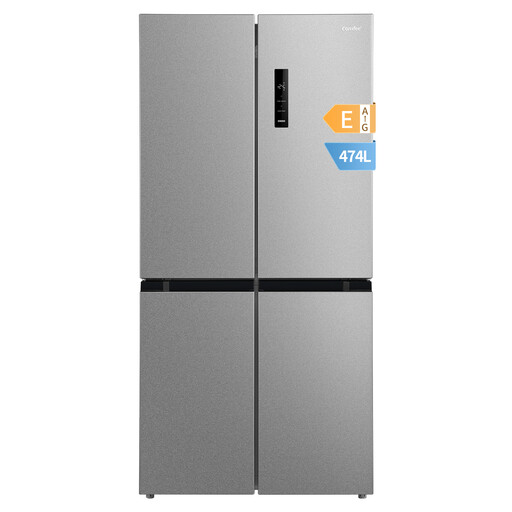 Image unavailable
COMFEE' RCF470LS2EU(E), four-door multi-door fridge, 474 l
Consider this model if you’re looking for organised storage for a large shop, particularly if you buy fruit and vegetables.
The model name mentions a three-temperature vegetable drawer and the Vario Box system. Before choosing, check which temperatures are available for the drawer and how the capacity is divided between the compartments.
View on Joybuy
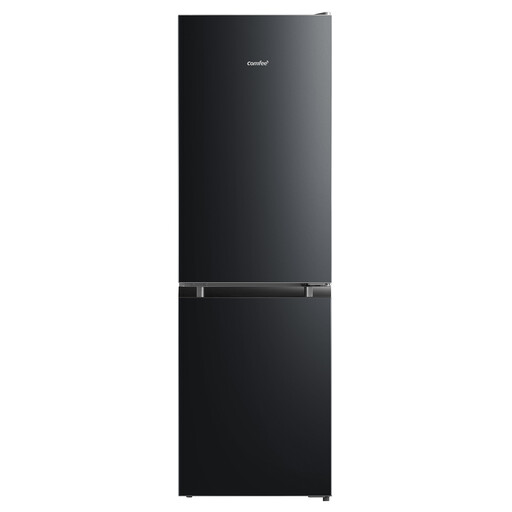 Image unavailable
Comfee' by Midea RCB230BL2EU(E), fridge-freezer, 174 l
This fridge-freezer is worth considering if you need a more modest amount of storage but still want space for both fresh and frozen food.
The model name lists Low Frost, an adjustable thermostat, LED lighting and a reversible door. Compare the capacity of each compartment with your usual shop, then check the dimensions and care instructions in the manual.
View on Joybuy
Frequently asked questions
What temperature should I aim for to keep fresh food safe?
Anses recommends keeping the coldest part of the fridge between 0 and +4 °C. Check the temperature setting and avoid overfilling the appliance so cold air can circulate.
Is the energy label enough to compare two fridges?
No. According to the European Commission, it gives information including the energy class, energy consumption, storage capacities and noise level, but it doesn’t show whether the shelves and drawers suit your shopping. Compare the dimensions and the capacity of each compartment too.
What should I measure before a multi-door fridge is delivered?
Measure the space, as well as any doors, corridors and lifts along the delivery route. Compare these measurements with the dimensions of the packaged appliance, and check the manual for the clearances needed once the fridge is installed.
Does an extended warranty replace the statutory guarantee?
No. For goods sold in France by a business to an individual, the Ministry of the Economy states that the statutory guarantee of conformity is mandatory; any commercial warranty is additional and doesn’t replace it. Check the terms of the extended warranty separately, including the services and exclusions it covers.


