What should you check before choosing?
Start with the space you need for fresh and frozen food, then see which styles will work with your kitchen.
| Feature | What to check | Think about your needs |
|---|
| Fresh food capacity |
Compare the fridge’s usable capacity, not just its total capacity. Que Choisir suggests 100 to 150 L for one person, plus 50 L for each additional person, as a starting point. |
I store several days’ worth of fresh food between shops, so I need enough space without choosing capacity based only on the size of my household. |
| Freezing capacity |
Check whether there’s a freezer compartment and how much space it offers. A small freezer compartment may not be enough for your regular frozen food shop. |
If I often buy frozen food, I want to compare its storage capacity separately from the fridge’s. |
| Style and installation |
Measure the appliance, the space where it will go and the delivery route, including packaging. For a built-in model, check the cabinet niche and the ventilation requirements for that model. For a freestanding model, also check the space needed to open the door. |
In a narrow kitchen or a home with awkward stairs, the fridge needs to be delivered and installed without blocking access. |
| Storage and temperature |
Check the layout of the shelves and drawers, and avoid overfilling the compartment. Anses recommends monitoring a temperature of 4 °C in the coldest part of the fridge. |
After shopping, I need to be able to put sensitive foods in the right area and leave enough room to move items around. |
| Noise and energy use |
Check the stated noise level if the appliance will be near a living area. For models with a similar style and capacity, compare the energy rating and annual consumption on the energy label. |
My kitchen opens onto the living room, so the stated noise level matters just as much as the energy-use information when I choose. |
Which brands should you consider for each style?
These brands are useful to consider when comparing styles and installation requirements. This doesn’t guarantee that a particular model will be available.
Bosch
Worth considering for a fridge-freezer, built-in or freestanding model if you want to check the dimensions and layout.
- Bosch offers flexible interior layouts across its fridge-freezer range.
- The niche and ventilation requirements depend on the installation. Bosch’s general guide, for example, mentions leaving at least 200 cm² of free space behind and beneath the appliance. Always follow the instructions for the model you choose.
Electrolux
Worth considering if you’re looking for a built-in fridge-freezer and need to check a specific model against your cabinet niche.
- Electrolux’s built-in models come with installation information and specifications for each appliance.
- Check the required niche height for your chosen model. Electrolux, for example, specifies 1780 mm for the ENS3LE18S, but this measurement doesn’t apply to the whole range.
Samsung
Worth considering if you’re looking for a multi-door model and your kitchen and delivery route can accommodate a wide, deep appliance.
- Samsung’s French range includes the RF65DG960ESL multi-door model, with a stated capacity of 646 L.
- According to Samsung, this model is 912 mm wide and 723 mm deep. The brand also recommends checking that the packaged appliance will fit through your doors.
Fridges to compare on Joybuy
These models include a built-in fridge-freezer, a multi-door model and freestanding fridge-freezers. Compare their stated total capacities, then check the capacity of each compartment and the dimensions that matter for your household.
 Image unavailable
Hisense RB3B250SAWC, 252 L built-in fridge-freezer
Worth considering if you want to store fresh and frozen food in a built-in appliance. The model name indicates No Frost, a total capacity of 252 L and an energy rating of C. Check the capacity of each compartment, the niche dimensions and the ventilation requirements separately.
View on Joybuy
 Image unavailable
Candy CFQQ5T817EPS, 467 L 4-door multi-door fridge-freezer
This style is worth comparing if you need plenty of storage and have room for it. The model has a stated total capacity of 467 L, Total No Frost and an energy rating of E. Check how the capacity is split between fresh and frozen food, how the doors open and whether it will fit along the delivery route.
View on Joybuy
 Image unavailable
Haier HTW5618ENMG, 360 L 3-door fridge-freezer
This fridge-freezer offers a way to store fresh and frozen food in one appliance. Its name indicates a total capacity of 360 L, Total No Frost, an energy rating of E and Wi-Fi. Compare the separate fridge and freezer capacities with what you buy.
View on Joybuy
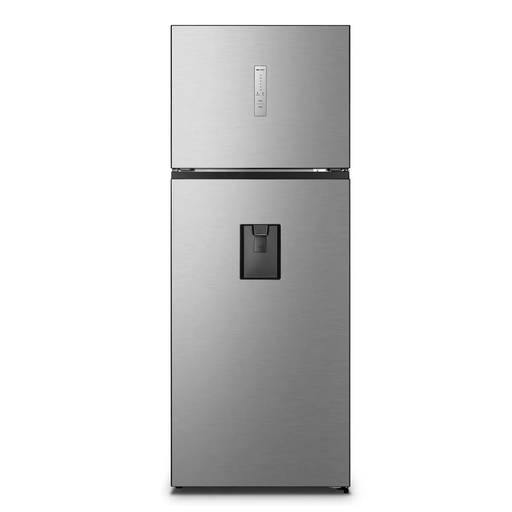 Image unavailable
Hisense FTN461WCE1, 467 L fridge-freezer
Worth comparing if you’re looking for a stated total capacity of 467 L for fresh and frozen food. The model features Total No Frost and an energy rating of E. Check how much space each compartment offers, as well as the dimensions needed for your kitchen and delivery route.
View on Joybuy
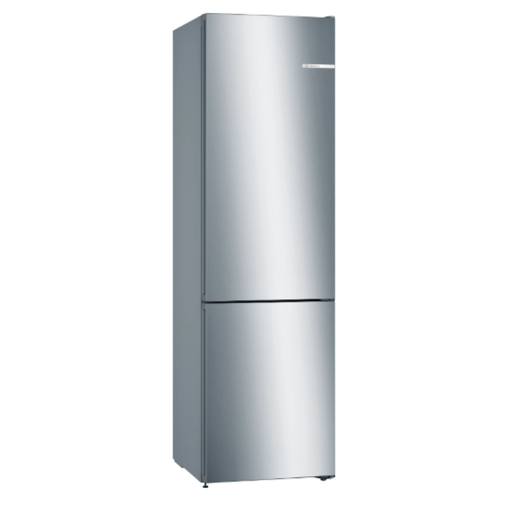 Image unavailable
Bosch KGN39VLEB, 368 L fridge-freezer
Worth considering if a fridge-freezer with a total capacity of 368 L will fit in your kitchen. The model has a stated energy rating of E. Check the fresh and frozen food capacities separately, and look at the noise level if it will be near a living area.
View on Joybuy
Frequently asked questions
What capacity do I need for a weekly shop?
Que Choisir recommends an average fridge capacity of 100 to 150 L for one person, plus 50 L for each additional person. Use this as a starting point and adjust it to suit your habits. If you buy frozen food, check the freezer capacity separately.
Which style should I look at if I often buy frozen food?
Look for styles with a freezer compartment that’s big enough for your shopping, including fridge-freezers. Don’t judge the available space by the total capacity or the presence of a small freezer compartment alone. Compare the capacity set aside for frozen food.
What should I measure before a home delivery?
Measure the final space, the appliance and its packaging, then check the route through doorways, corridors, staircases and lifts. Electrolux asks you to tell the delivery team about any access difficulties. Also check the installation instructions for the space needed.
Can a built-in fridge directly replace a freestanding model?
Not without checking that it’s compatible with your kitchen. A built-in appliance must fit the niche and meet the ventilation requirements and, where applicable, the door-fitting system specified for that exact model. Bosch lists different niche heights for different models, so measure up before choosing.
How should I use the energy label to compare two models?
Compare the energy rating and stated annual consumption of fridges with similar capacities and styles. France’s Ministry of the Economy states that new fridges sold in France must display an energy label. The label doesn’t replace checking capacity and dimensions.


