Households that shop once a week
If you buy a lot in one go, check the space available in the fridge compartment as well as the capacity for frozen food. Que Choisir includes a full weekly shop in its fridge-freezer testing process.


For a weekly shop that regularly includes frozen food, a fridge-freezer is a good starting point: it has separate fridge and freezer compartments in one appliance. Compare the capacities of each compartment separately and measure the space available. If your frozen food regularly takes up more room than a fridge-freezer can offer, consider a separate freezer, bearing in mind the space it will take up and its ongoing energy use.
If you buy a lot in one go, check the space available in the fridge compartment as well as the capacity for frozen food. Que Choisir includes a full weekly shop in its fridge-freezer testing process.
Check the freezer’s capacity in litres and how its drawers are arranged, rather than looking only at the total capacity. If you freeze a lot of food after shopping, also check the model’s stated freezing capacity.
Measure the space for the appliance and allow for the doors to open, then compare the noise levels of the models you’re considering. Que Choisir gives a stated level below 40 dBA as a guide to the quietest fridges.
First, choose a format to suit the space available and the proportion of frozen food in your shop. Then compare the compartments and the energy label details of the models that fit your needs.
Worth considering: if space is very limited and you mainly store small quantities of fresh food.
Limitation: the format described by Gifam generally has a main compartment and a small space for making ice cubes, so it’s not well suited to storing frozen food regularly.
Worth considering: for shopping that needs to last several days, with fresh and frozen food stored in two separate compartments.
Limitation: the freezer has its own set capacity, which may not be enough if you regularly freeze large quantities.
Worth considering: if fresh food takes up most of your storage space and you only need to store frozen food occasionally.
Check: the capacity and function of the freezer compartment before relying on it to store prepared portions.
Worth considering: alongside your fridge if your frozen food regularly exceeds the capacity of a fridge-freezer.
Trade-off: you’ll need to find space for it and factor in the energy use of a second appliance running continuously, as ADEME points out.
| Criterion | What to check | My needs |
|---|---|---|
| Fresh-food capacity | Check the fridge’s usable capacity, then consider your household size and how often you shop. Que Choisir suggests 100 to 150 L for one person, then around 50 L for each additional person. Adapt this to your own habits. | I shop for several days at a time and want enough room for fresh food without choosing a total capacity that leaves too little space for the freezer. |
| Space for frozen food | Compare the freezer capacities in litres separately and check the drawer layout. If you freeze large quantities of food, also check the model’s freezing capacity. | Cooked portions and frozen food must fit in the designated compartment, not just within the stated total capacity. |
| Energy consumption | On the energy label, compare kWh/year, the A to G rating and the capacities of similarly sized appliances. ADEME points out that refrigeration appliances run continuously and that their size can affect energy consumption. | I’d rather assess annual energy consumption alongside the capacity I actually need than choose based on the rating letter alone. |
| Installation | Measure the width, height and depth, as well as the route into the kitchen. Check the installation type, required clearances and the space needed to open the doors. | The appliance needs to fit in my kitchen and allow me to access its drawers once it’s installed. |
| Noise | Compare the noise level in dB and the noise class on the energy label. For an open-plan kitchen, Que Choisir gives a stated level below 40 dBA as a useful guide. | If my kitchen opens onto the living area, I want to compare the noise levels of models that already meet my capacity and space requirements. |
Two appliances with a similar total capacity may divide the space differently between fresh and frozen food. A larger fridge won’t solve a lack of room for portions you want to freeze.
Estimate how much fresh and frozen food you store separately, then check the capacity of each compartment on the energy label or product specifications.
A fridge or freezer runs continuously. According to ADEME, the size of the appliance can affect its energy consumption; the rating letter alone doesn’t tell you which capacities are being compared.
Also compare kWh/year and usable capacity across appliances of a similar size and capacity.
The height, depth and door clearance can prevent the appliance from fitting or make it difficult to access the drawers. With a built-in model, you’ll also need to check the cabinet and its fixing system.
Measure the space and the access route in full, then check the clearances required for the model you choose.
In France, a used fridge must be disposed of through the collection system for waste electrical and electronic equipment. You’ll also need to arrange its removal when your new appliance arrives.
Before ordering, check the collection and removal options available, along with any preparations required for your old fridge.
These examples cited by the brands illustrate features to check on the specific model you’re considering; they aren’t a ranking.
Bosch’s range includes freestanding fridge-freezers, with different splits between fridge and freezer space to compare depending on the model.
LG also offers freestanding fridge-freezers, which you can compare based on the capacity you need and the space in your kitchen.
Beko built-in models are worth comparing if your kitchen requires an appliance to be fitted inside a cabinet.
These options include fridge-freezers in a range of formats, with separate spaces for fresh and frozen food. Compare their dimensions, the capacity of each compartment and the energy label to suit how often you shop.
 Image unavailable
If your planned shop includes frozen food, compare how the 360 L is divided between the compartments. The product description lists Total No Frost and an E rating. Also check the dimensions and the clearance needed for installation.
 Image unavailable
If you regularly store a full shop as well as frozen food, check how the stated 467 L is divided between the fridge and freezer. The product description lists Total No Frost and an E rating. Measure the space available and allow for the doors to open in this four-door format.
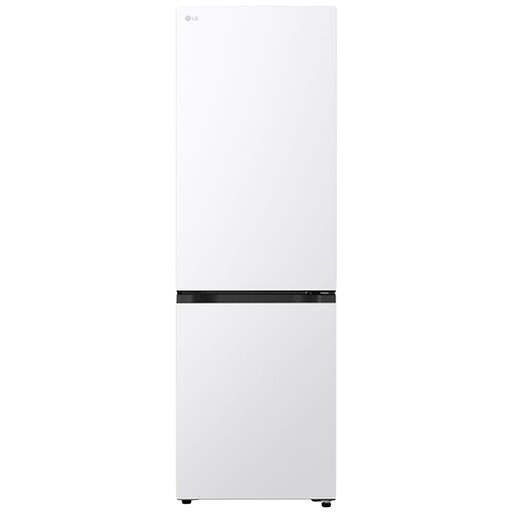 Image unavailable
If you want a separate space for frozen food, check how the stated 333 L is divided between the compartments. The product description lists a C rating. Also compare the dimensions and noise level with your kitchen requirements.
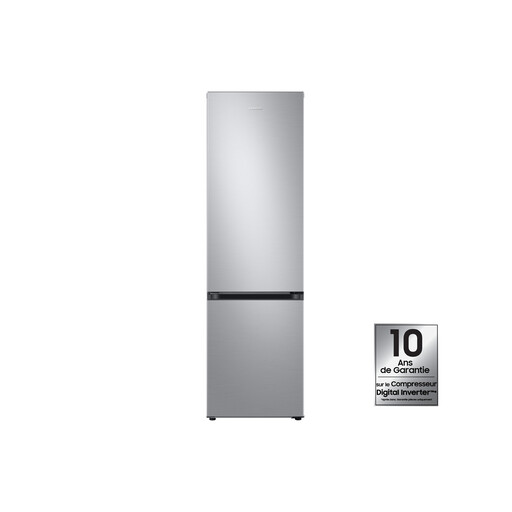 Image unavailable
This fridge-freezer has a stated capacity of 390 L and is worth considering if your shop includes both fresh and frozen food. The product description lists a C rating. Check the capacity of each compartment, the available height and the installation clearances.
 Image unavailable
For larger food shops, the product description divides the stated 525 L into 333 L of fridge space and 192 L of freezer space. It also lists No Frost and a noise level of 37 dB. Check the access route and available space, then confirm the dimensions and kWh/year in the model information before comparing energy consumption.
When comparing household appliances sold in France, check the A to G rating, annual consumption in kWh, storage capacities and noise level. The DGCCRF states that these appliances are covered by Delegated Regulation (EU) 2019/2016, which has applied since 1 March 2021. The European Commission confirms that these details appear on the label.
No. Also compare the kWh/year and the fridge and freezer capacities of appliances of a similar size. ADEME points out that refrigeration appliances run continuously and that their size can affect energy consumption.
Que Choisir gives a stated level below 40 dBA as a guide to the quietest fridges. However, compare the exact figure and noise class on the label of models that suit your space.
No. Darty describes fan-assisted cooling as a way to prevent frost from forming. Check that the feature applies to the freezer in the model you choose, and follow the instructions for use and maintenance.
Check the collection options available when you place your order, as well as the requirements for disconnecting the appliance and accessing your home. In France, old appliances are handled through the waste electrical and electronic equipment scheme described by the ministry responsible for the environment.