
Livraison le jour même ou le lendemain

Qualité garantie

Débloquez vos offres de bienvenue: Livraison GRATUITE | Jusqu'à -80 % | 30 jours d'essai gratuits à JoyPlus
Téléchargez l'application
A weather strip can limit draughts, conceal a gap between two surfaces, or protect a joint exposed to water. But you need to pick the right one. A poorly chosen seal can peel off quickly, stop a door from closing properly, or crack as temperatures change.
Before you place your order, three mistakes crop up time and again:
For a door or window seal, measure the gap when the door or window is closed. A strip that's too thick can prevent it from shutting and put unnecessary pressure on the frame.
Here are the main ranges to keep in mind:
Compare the width, thickness and length separately. A longer roll isn't necessarily better suited to your installation.
PVC or polyurethane foam works well for draught-proofing doors and windows. It's compressible and can help reduce draughts, dust and some noise. However, check it's compatible with wood, PVC or aluminium.
In a bathroom or kitchen, sanitary silicone sealant is more suitable around a basin, shower or sink. The Rubson Bain & Cuisine Noir Intense is designed for several sanitary materials, but its product details state it is not suitable for plexiglass or certain synthetic materials.
Acrylic sealant is better for filling cracks and joints between walls, windows and doors. Depending on the product, it can be painted after drying. Don't choose it by default for a joint that's constantly submerged or exposed to water splashes.
To fit a self-adhesive seal, clean and degrease the area thoroughly, then leave it to dry completely. Apply the strip without stretching it and press it down along its entire length. With a sealant, use a cartridge compatible with a standard gun and smooth the bead before it starts to set.
Always take the time to read the usage restrictions: some sealants are incompatible with bitumen, polyethylene, polypropylene or PTFE. In a damp room, ventilate while applying and follow the precautions on the packaging.

Why this choice suits this profile: No tools required and 6 m long, this seal is perfect for a first draught-proofing job on joinery in good condition.
Its working range of 1 to 3 mm stops you fitting foam that's too thick on a door or window that's already properly aligned.
High-density foam, 0.9 cm wide, 0.4 cm deep and stated compatibility with wood, PVC and aluminium.
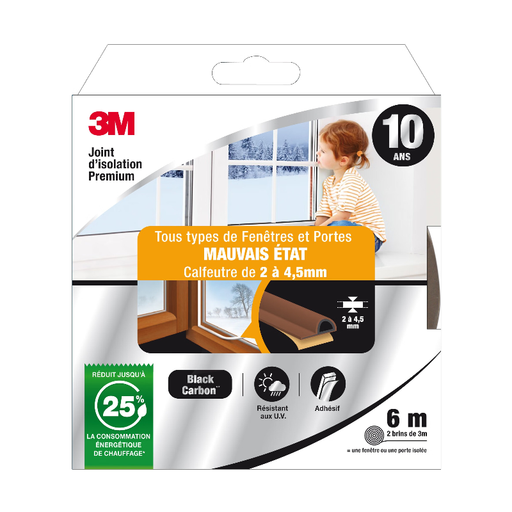
Why this choice suits this profile: This reinforced strip is aimed at homeowners and renovators dealing with frames that have uneven gaps.
The product details state a range of 2 to 4.5 mm and a reinforced rubber backing: you know exactly what it's designed for, unlike a so-called universal strip.
6 m supplied as two 3 m strips, brown colour, stated UV resistance and can be fitted on wood, PVC or aluminium.
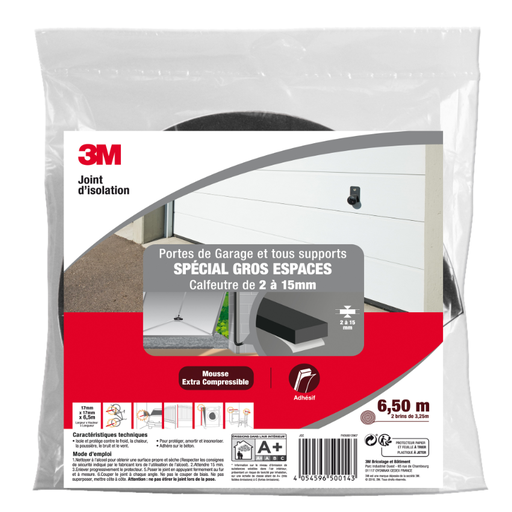
Why this choice suits this profile: Its compressible polyurethane foam profile is designed for large gaps in doors, windows and garages.
Its range of 2 to 15 mm lets you check it's right for a large opening, rather than over-compressing a strip that's too thin.
6.50 m long, supplied as two 3.25 m strips, with lightweight, easily compressible foam.
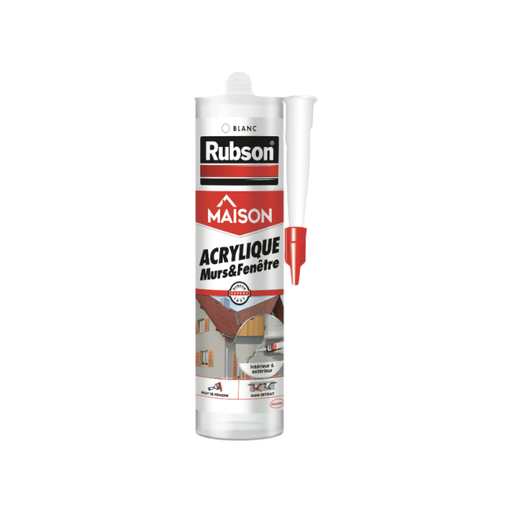
Why this choice suits this profile: This sealant is suitable for small repair and renovation jobs on walls, ceilings, doors and windows, where the finish needs to be paintable.
It's not a substitute for sanitary silicone: this is an acrylic sealant for cracks and construction joints, not a universal solution.
280 ml cartridge, stated adhesion to wood, plaster, cement, aluminium, PVC and brick, with a paintable finish after drying.
For a draught excluder for the bottom of a door, also consider the type of floor. The 3M Smooth Floor Quick model is designed for smooth floors and gaps up to 20 mm. To join a wooden floor, tiles, carpet or vinyl flooring, a self-adhesive PVC floor transition strip can hide the gap, provided the surface is clean and dry.
In the garden, a joint for artificial grass isn't chosen the same way as a window seal. The Tenax Mat Seal strip measures 15 cm by 10 m and is used with a special grass adhesive: place it under the join, then press the two edges together.
Close the door and measure the gap between the door and the frame. Then compare this measurement with the range stated on the packaging. A foam designed for 2 to 15 mm doesn't meet the same need as a strip designed for 1 to 3 mm.
It depends on the material, exposure to UV, how often the door or window is opened, and how well the surface was prepared. The product details for the Joint Bon Etat Classique Blanc Blanc state it can withstand more than 37,500 openings under the intended conditions. This figure doesn't mean you shouldn't check the adhesion and condition of the foam regularly.
Choose silicone for a joint exposed to water or subject to frequent movement, and check it's compatible with the surface. Acrylic sealant is better for cracks and construction joints that need to be painted after drying. For a window, the right choice depends on the exact location and the stresses the seal will face.