
Livraison le jour même ou le lendemain

Qualité garantie

Débloquez vos offres de bienvenue: Livraison GRATUITE | Jusqu'à -80 % | 30 jours d'essai gratuits à JoyPlus
Téléchargez l'application
Weather apps on your smartphone are convenient, but their lack of local accuracy can quickly become frustrating. Whether you're a passionate gardener, a tech enthusiast looking to optimise your indoor comfort, or simply want to know how to dress before heading out, a home weather station provides hyper-local data that no generic app can match.
This guide breaks down the essential criteria to consider and presents our selection of the best models for every need and budget. Our goal: to guide you to the right choice, without drowning you in unnecessary technical jargon.
Before you buy, let's review the key features that truly set different models apart.
Most current models are wireless weather stations. They consist of a main unit (the display) and one or more external sensors. The outdoor temperature sensor communicates with the base unit via a radio frequency. Be sure to check the maximum range advertised by the manufacturer (often measured in an open field, so it's optimistic!) and consider the thickness of your walls. A reinforced concrete wall or double-glazed windows can significantly reduce the signal. Sufficient range is crucial for placing the sensor in the ideal spot: sheltered from direct sunlight and bad weather.
Your needs will determine the type of device you should choose.
The display is your daily dashboard. A backlit colour LCD screen ensures comfortable reading, even from a distance. Don't overlook the power source: battery-powered models offer great placement flexibility but require regular changes. Mains-powered units provide a continuously bright display, which is often more practical for daily use.
Here are a few models that caught our eye, chosen for their relevance, features, and design.
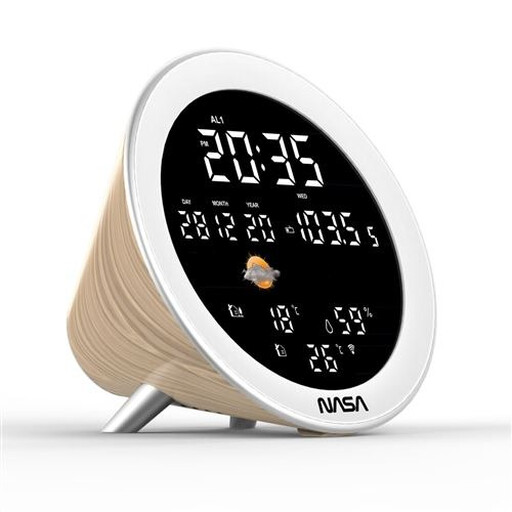
Key Features
The NASA weather station WSP1700 successfully combines style with substance. With its wood-effect finish and large 5.7-inch colour touchscreen, it blends seamlessly into a living room or office decor while delivering essential weather information.
Pros
Who is it for? This is the ideal choice for those seeking a device that is as high-performing as it is elegant. It's a perfect fit as a main station for the home or makes an excellent gift for a fan of beautifully designed tech.
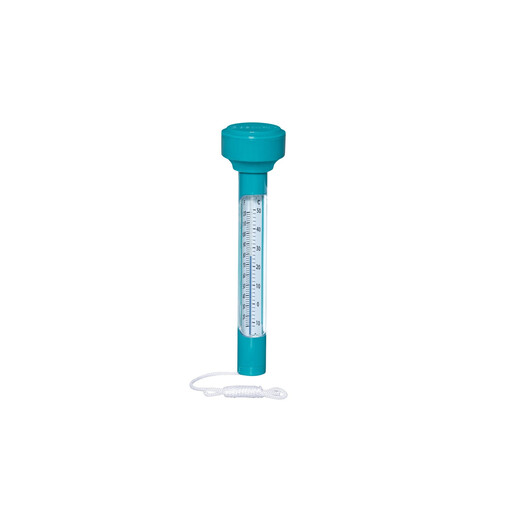
Key Features
Sometimes, simplicity is best. This floating pool thermometer from Bestway gets straight to the point: accurately measuring water temperature. Robust and easy to read, it's the essential accessory for the swimming season.
Pros
Who is it for? A product for all pool owners who want to know the water temperature before taking the plunge. A simple, reliable, and affordable tool.
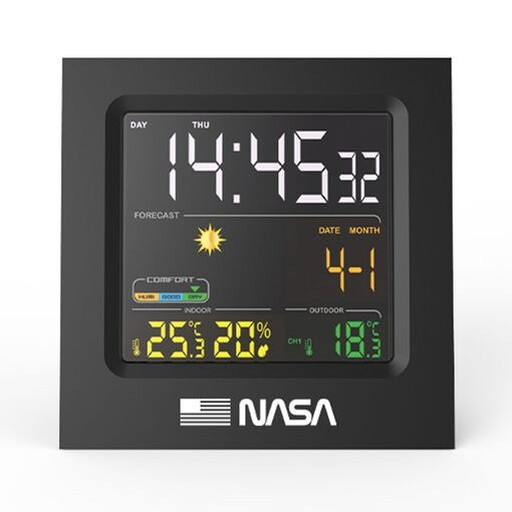
Key Features
For enthusiasts who demand comprehensive data, the WS300 station is an excellent choice. Its 10-in-1 outdoor sensor provides a complete overview of local conditions, going far beyond just temperature.
Pros
Who is it for? This model will delight gardeners, amateur farmers, and weather buffs who rely on precise data to plan their outdoor activities.
Our selection highlights a few key models, but the market is full of options. If you're looking for a simpler device or one with different features, feel free to explore our full category to discover other models of outdoor thermometers and weather stations.
1. What's the difference between a weather station and a simple thermometer-hygrometer? A thermometer-hygrometer simply measures temperature and humidity. An indoor/outdoor weather station goes a step further by adding a barometric function to provide icon-based weather forecasts (sun, clouds, etc.). The most comprehensive models also measure wind, rain, and other parameters.
2. Where should I place the outdoor sensor for a wireless weather station? For reliable measurements, the sensor should be placed in the shade, sheltered from rain and direct sunlight. Ideally, install it at a height of 1.5 to 2 metres (about 5-6.5 feet) off the ground. Avoid placing it near heat sources (like a sun-baked wall or an air conditioning outlet) or large metal surfaces that could interfere with the wireless signal.
3. Are forecasts from a home weather station reliable? Forecasts from a personal station are based on analysing local atmospheric pressure changes. They are therefore very relevant for anticipating short-term trends (12-24 hours) at your specific location. While they don't replace professional forecasts based on powerful computer models, they complement them perfectly by providing a unique, hyper-local perspective.