
Livraison le jour même ou le lendemain

Qualité garantie

Débloquez vos offres de bienvenue: Livraison GRATUITE | Jusqu'à -80 % | 30 jours d'essai gratuits à JoyPlus
Téléchargez l'application
An action camera needs to cope with far more than a simple walk in fine weather. Hiking in the rain, skiing downhill, a seaside getaway or an indoor vlog sequence: every use comes with its own demands. The waterproof Insta360 Ace Pro action camera stands out in particular for its 1/1.3-inch sensor, Leica co-developed lens, stabilisation and 2.4-inch flip touchscreen.
Before placing your order, however, it is worth separating genuinely useful features from marketing claims that can sometimes be difficult to verify in real-world conditions. Here are the key points to check so you can avoid a camera that is too fragile, has limited battery life or delivers disappointing image quality.
The 10 m waterproof camera specification refers to a stated operating depth under very specific conditions. It does not guarantee that the camera will withstand every impact, salt water or prolonged immersion without any precautions.
The battery compartment and memory-card compartment must be completely closed and locked. After use at sea, the manufacturer recommends rinsing the camera with fresh water and then allowing it to dry completely. A dedicated housing is still strongly recommended for diving, intensive water sports or sandy environments.
The 4K action camera at 120 fps lets you slow down fast movements with excellent smoothness. However, this mode places significant demands on the battery and generally requires sufficient light. When filming a descent through a forest, a street at dusk or a poorly lit room, the sensor size, lens aperture and image processing often matter more than the number of pixels.
The Ace Pro combines a 1/1.3-inch sensor with a dedicated image-processing chip. The manufacturer presents PureVideo mode and AI noise reduction as features designed for low-light scenes. These are stated features: the result will also depend on the scene, settings and stability of the shot.
A camera packed with features can quickly become frustrating to use if the screen is difficult to read, changing the angle requires several steps or the mount is incompatible with your equipment. For cycling, skiing or hiking, check the mounting system, the extra weight added to your helmet or handlebars, and whether you can quickly change accessories.
A flip screen makes it easier to frame yourself when facing the lens, particularly with a vlogging camera. It does not replace proper preparation, though: test the field of view, sound and exposure before starting an important sequence.
The Ace Pro’s 1/1.3-inch sensor is presented as an advantage for capturing more light than smaller sensors. Its Leica SUMMARIT lens, co-developed with Leica according to the product information, is another distinctive feature of this Insta360 camera with Leica lens.
When comparing two models, do not focus solely on the number of pixels. Also consider:
Recording in 4K at 120 frames per second is suitable for slow motion and sports footage. In practice, it generates large files and generally reduces battery life compared with a more moderate setting.
On trails, while cycling or on the slopes, a stabilised sports camera reduces visible shaking. The Ace Pro includes FlowState stabilisation, as stated by Insta360. However, this feature cannot compensate for vibrations caused by a poorly tightened mount, nor can it completely absorb sudden movements.
The 2.4-inch flip touchscreen can make framing easier from a tripod, selfie stick or low-level mount. For winter sports, the stated operating temperature drops as low as –20 °C. Cold weather can nevertheless often reduce battery life. Take a spare battery with you, keep it warm and avoid charging a very cold camera immediately: allow it to return to room temperature first.
Also check that the doors are properly closed, that the seals are in good condition and that there is no condensation behind the lens. These checks are just as important as the specifications shown on the product page.
The models below meet different needs. Actual performance and battery life may vary depending on the selected resolution, temperature, stabilisation and accessories used.
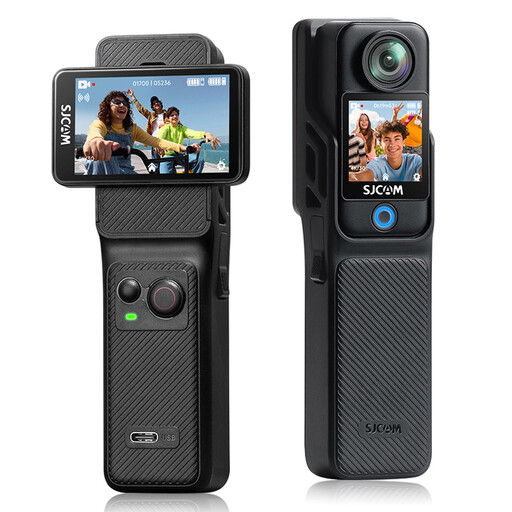
Why this choice suits this profile : Its compact design, two touchscreens and generally more accessible price make it a good first camera for cycling, hiking or holidays.
The product information states that it features six-axis electronic stabilisation and a waterproof housing rated to 30 m with the case. However, check the housing’s usage conditions before any immersion.
Recording of up to 4K at 30 fps, 1080p slow motion at 120 fps, dual-band Wi-Fi and a 64 GB memory card stated as included.
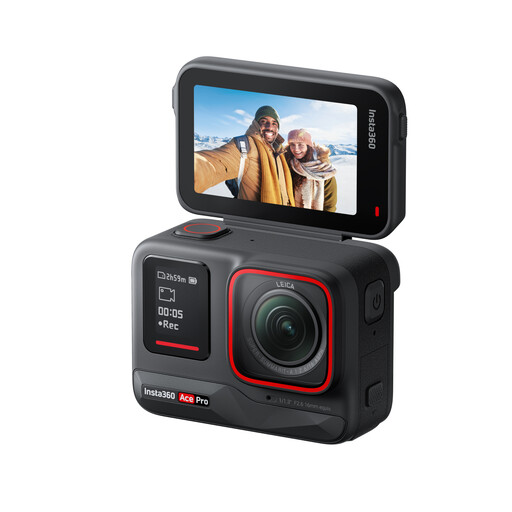
Why this choice suits this profile : This model is aimed at users looking for detailed images, flexible framing and features suited to both outdoor adventures and vlogging.
The product information states water resistance down to 10 m and operation down to –20 °C. The doors must remain closed, and exposure to salt water should be followed by rinsing with fresh water.
1/1.3-inch sensor, stated Leica SUMMARIT lens, 4K video at 120 fps, 2.4 inch flip screen and AI noise reduction.
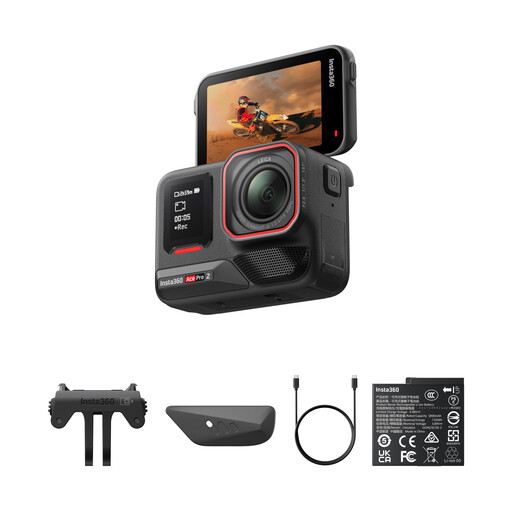
Why this choice suits this profile : This two-battery pack is aimed at creators and travellers who shoot continuously and want to minimise interruptions caused by recharging.
Two batteries reduce your reliance on a power socket, but they do not replace a suitable memory card or good temperature management outdoors.
Pack presented with two batteries, stated waterproof design, plus audio and artificial intelligence features described in the product information.
We have put together a complete, real-time-updated selection of products that meet these demanding selection criteria and European safety requirements.
When hiking, prioritise a secure mount on your rucksack or chest and choose a resolution compatible with your memory card’s capacity. When skiing or snowboarding, regularly check that the mount has not loosened due to vibration. A wrist strap or additional safety system can also help prevent you from losing the camera.
For vlogging, the flip screen helps you monitor the framing, but sound remains essential. Avoid pointing the microphone into the wind and use a wind muff or compatible accessory if you are filming outdoors. AI noise-reduction features can alter the sound quality, so listen to a sample before recording a complete sequence.
The product information states water resistance down to 10 metres. Before any immersion, check that the various compartments are properly closed. After use at sea, rinse the camera with fresh water and dry it completely. For deeper immersion or particularly dynamic activities, a housing may be necessary.
No. This setting is mainly useful for slow motion and fast movements. It produces large files and uses more power. For a long hike or a vlog, a more moderate frame rate often offers a better balance between battery life, storage space and image quality.
Keep spare batteries in an inside pocket, avoid charging a cold camera and allow it to gradually return to room temperature after your outing. Also consult the manual to ensure you stay within the stated operating range, and inspect the device before each use.