
Livraison le jour même ou le lendemain

Qualité garantie

Débloquez vos offres de bienvenue: Livraison GRATUITE | Jusqu'à -80 % | 30 jours d'essai gratuits à JoyPlus
Téléchargez l'application
A water leak, an object to mount outdoors, a stair tread that's become a skating rink: daily life is full of minor emergencies that demand a quick, reliable adhesive solution. Waterproof sealing tape often seems like the miracle cure. Yet, faced with an overwhelming array of options on the shelf, it's easy to end up with an ineffective product that fails to deliver on its promises, turning a quick fix into a major headache.
As a product expert at Joybuy, my job is to help you navigate this landscape and find solutions that meet real-world needs. Let's break down the common pitfalls to avoid and the criteria that truly matter for making the right choice.
Marketing loves bold claims that often hide poor quality. Here are the most common disappointments:
To avoid making a mistake, trust the technical specifications, not the marketing slogans.
The adhesive's main component is its core engine; it determines nearly all of its performance characteristics.
For outdoor applications, two points require close attention:
Always check the list of compatible materials provided by the manufacturer. A good waterproof repair adhesive must be able to conform to complex shapes, corners, and granular surfaces without creating air bubbles, which are gateways for moisture.
Rather than an endless catalogue, here are products that meet specific needs and sidestep the classic pitfalls.
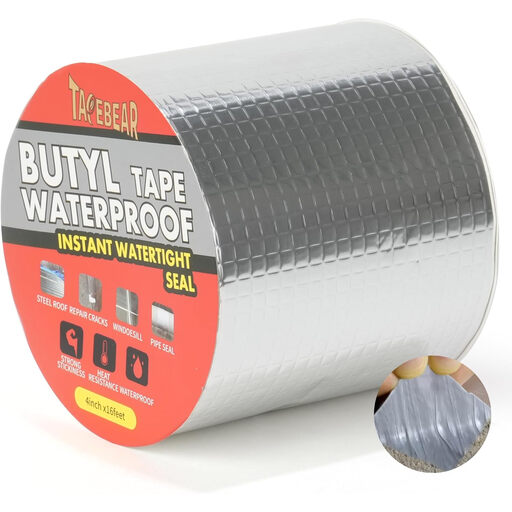
Who is it for? For homeowners or RV owners tired of leaks on their roof, gutters, or windows. Its 100 mm width covers large cracks in a single pass.
Its formula, based on pure butyl rubber and protected by a reinforced aluminium foil, is built to last. It's night and day compared to generic adhesives that crack at the first sign of sun.
Professional-grade sealing that sticks strong and long on almost anything (metal, tile, wood, fibreglass), for a repair that holds up.
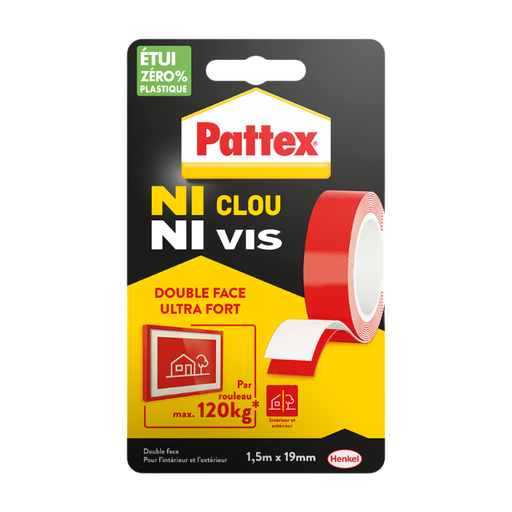
Who is it for? For anyone who wants to hang heavy objects (mailboxes, mirrors, accessories) without pulling out the drill and making a mess. A powerful double-sided adhesive for permanent mounting, both indoors and out.
No more vague claims of "universal" adhesion. Here, we're talking numbers: up to 120 kg per roll and clear compatibility with difficult materials like certain plastics (PE, PP), in addition to glass, metal, or wood.
An immediate bond and rock-solid resistance (to weight, moisture, temperature). The truly reliable alternative to drilling.
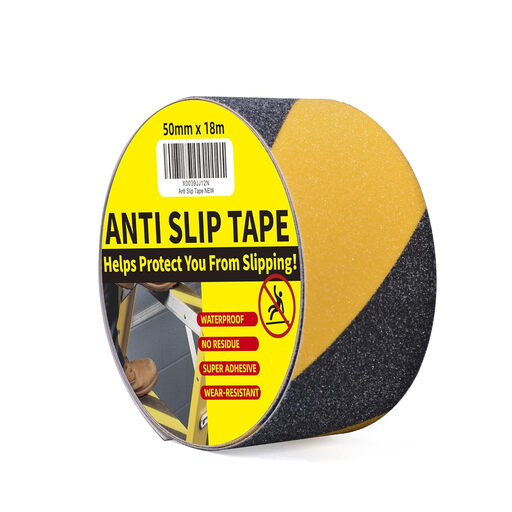
Who is it for? Essential for securing stairs, ramps, or slippery floors, whether at home (think of children or pets) or in a professional setting. This anti-slip tape is a critical safety measure.
This isn't a "do-it-all" gadget, but a specialist. Its surface with 80-grit quartz sand offers real, quantifiable grip, unlike smooth tapes that merely claim to be "safe". It's also designed to resist water and wear.
Maximum grip and perfect visibility thanks to the black/yellow contrast for enhanced safety on slippery surfaces, both indoors and outdoors.
Explore our complete selection of products, all tested and approved according to rigorous criteria and current regulations.
How long does an outdoor sealing tape last? It all depends on the product and its exposure. A high-quality butyl tape, protected by an aluminium foil, can last for several years. Conversely, a low-end adhesive without UV treatment will barely last a season or two. Our advice: always check the manufacturer's technical data sheet regarding UV and temperature resistance.
Can you apply waterproof adhesive tape to a wet surface? The short answer: no. For maximum adhesion, the surface must be clean, dry, and free of grease. This is non-negotiable. Applying tape to a wet surface is a guarantee that it won't stick. For an emergency roof leak repair, it is absolutely essential to dry the area as much as possible before applying the tape.
Is butyl tape difficult to remove? Yes, and that's by design! Butyl tape is made for permanent bonding, so removing it is a real chore. Expect a very sticky residue. The trick: heat the area with a heat gun (or a hairdryer) to soften the adhesive. Then, use a plastic scraper and a suitable solvent (like a tar remover or citrus-based cleaner) to get rid of the residue.