
Livraison le jour même ou le lendemain

Qualité garantie

Débloquez vos offres de bienvenue: Livraison GRATUITE | Jusqu'à -80 % | 30 jours d'essai gratuits à JoyPlus
Téléchargez l'application
A ball used in the rain, on wet grass or on sand can't be chosen the same way as one designed for dry pitches. A cover that absorbs water can make the ball heavier, distort its shape and change how it feels to play. On the other hand, a ball that's too soft or poorly inflated makes passing harder and wears out more quickly.
To find a waterproof rubber football that suits the way you play, focus on three things: the design of the surface, the size, and the ball's ability to hold a steady pressure. Some of the claims made in product listings are also worth looking at more closely.
An outer finish that can shrug off a few drops doesn't guarantee the ball will stand up to regular use in the rain. Exposed stitching can trap moisture, while the surface may swell if it absorbs water.
A seamless foam rubber construction, like the one advertised on the LONGSAIL models shown here, reduces the number of areas that can hold water. That doesn't mean you can skip drying the ball after each use, but it does limit the strain caused by wet pitches, damp artificial grass or the beach.
A size 4 football and a size 5 football aren't meant for the same purpose. For a child, a ball that's too big can make control more difficult. Conversely, an adult used to the standard size is likely to find a size 4 less suited to passing and striking.
Size should always come before colour, pattern or any extras included.
Listings may mention resistance to a high number of impacts or low air loss. These figures should be treated as data provided by the manufacturer, not as a guarantee of longevity in every condition.
How long a ball lasts also depends on the playing surface, the pressure, how it's stored and whether it comes into contact with sharp objects. A durable football is still a practical choice, as long as you look after it properly.
To choose an all-weather football, go for a surface that absorbs little water while staying soft enough to make control easy. Foam rubber can give a softer touch than a very rigid cover. It works well for training, casual games and different surfaces, including grass, artificial turf and sand.
The spec sheets for the LONGSAIL models mention a seamless foam rubber composite shell, designed to limit water absorption and keep its shape in damp weather. This is a feature claimed by the manufacturer, so weigh it up against how often you play.
Here are the guidelines given in the product listings:
For a child who's improving, a size 4 football offers a good balance between handling and volume. For adult training or practice that's close to match standard, size 5 is more appropriate.
How well a ball holds its air depends mainly on its bladder and valve. The LONGSAIL models are advertised with a latex or butyl bladder and a double-layer valve. The manufacturer's spec sheet mentions an air loss of less than 1 to 3% over 48 hours, under the stated conditions.
You should check the pressure before every session. For the size 5 model, the spec sheet gives a range of 8.7 to 11.6 PSI, compared with 7 to 9 PSI for size 4. If you want accurate, consistent inflation, use a pump with a pressure gauge.
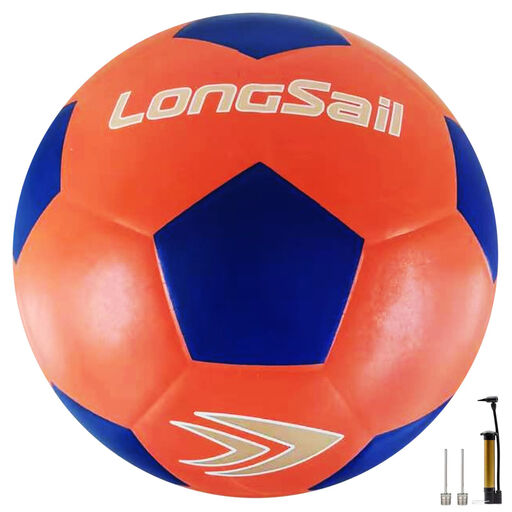
Why this suits this profile: Size 4 is ideal for young players and family kickabouts. The kit includes the ball, a pump, an inflation needle and a mesh carry bag.
The surface is advertised as waterproof, so you're not relying on a simple outer finish, and the accessories mean you don't need to buy anything extra.
Youth size, seamless foam rubber construction and accessories included.
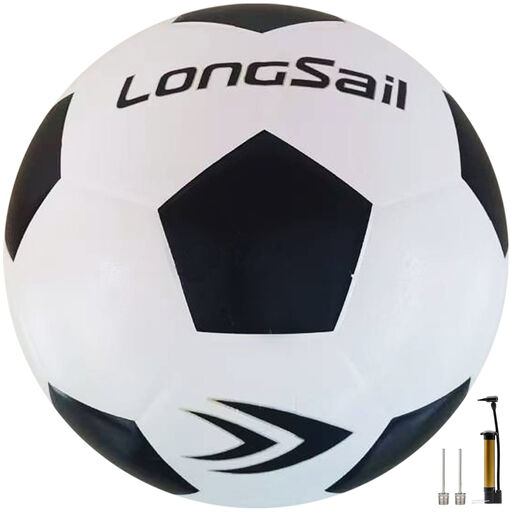
Why this suits this profile: The size 5 format is aimed at adults and teenagers aged 12 and over who want an all-weather football for training or casual play.
The spec sheet states the circumference and recommended pressure, which helps you avoid a badly sized ball or guesswork with inflation.
Adult size, advertised double-layer valve and kit including a pump, needle and storage bag.
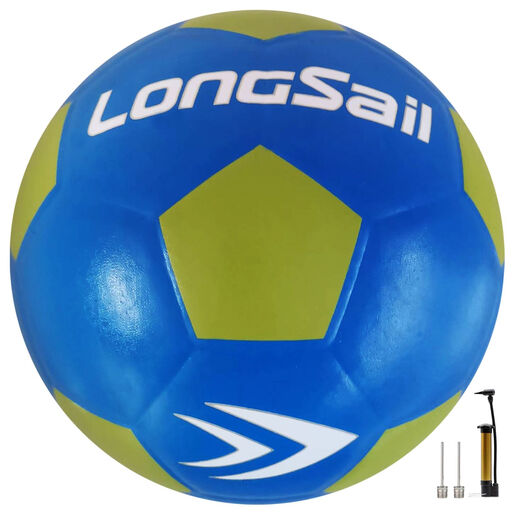
Why this suits this profile: This size works well for clubs, coaches and families who regularly run sessions for players aged 8 to 12, on grass, artificial turf or the beach.
The construction, advertised for wet surfaces, reduces the risk of the ball soaking up water during outdoor sessions.
Advertised water-resistant surface, cushioned touch and mesh bag for easy transport between sessions.
After a session in the rain or on a damp pitch, wipe the ball with a slightly damp cloth, then let it dry at room temperature. Keep it away from radiators, car boots left in the sun and sharp objects. Storing it in a cool, dry place helps protect the cover and the valve.
Also check the pressure before you play. An under-inflated ball deforms more on impact, while over-inflating makes the touch harder. For a club or a family, a pump and a spare needle can come in handy, even if the kit already includes these accessories.
We've put together a full, real-time list of products that meet these strict selection criteria and comply with European safety regulations.
Yes, a foam rubber surface advertised as water-resistant can be used on sand. Just remember to brush off any grains after the session – they can speed up wear on the valve and the surface.
Size 4 is generally recommended for players aged 8 to 12. Size 5 is better suited to older teenagers and adults. For organised training, always check the size required by the club or organiser.
How often depends on the valve, the temperature and how intensively the ball is used. Check the pressure before every session. According to their product spec sheets, the models shown have a double-layer valve designed to reduce air loss, though regular checks are still needed.