
Same-day & Next-day Delivery

Quality Guaranteed

Unlock Your Welcome Offers: FREE Delivery | Up to 80% OFF | Free 30-day JoyPlus trial
Download the APP
The secret to a successful picnic is a simple formula: a nice spot in nature, the right people, and a basic level of comfort. But be warned, choosing the wrong blanket can quickly turn this relaxing moment into a fiasco. Dampness from the grass seeping through the fabric, sand getting into the sandwiches, or the ordeal of a blanket that's impossible to fold... these little annoyances probably sound familiar. To avoid buyer's remorse after the very first use, let's review the common pitfalls to avoid.
To invest in a model that will last you for years, here are the few technical points that make all the difference in everyday use.
What's the key to effective protection against moisture? It's all about the composition. A truly waterproof picnic blanket always features a multi-layer structure.
The ideal size depends primarily on your habits. A 200x200 cm picnic blanket is a versatile format, perfect for a family of four. For larger groups, an XXL picnic mat will obviously be more suitable.
However, size shouldn't come at the expense of portability. Check the weight and dimensions once the blanket is folded. A good foldable camping blanket should pack down into a small, easy-to-carry bundle, often secured with hook-and-loop straps and equipped with a handle.
Comfort is directly related to the thickness and quality of the padding. A foam layer of just a few millimetres is enough to smooth out small ground irregularities and make your outdoor ground mat much more inviting.
For maintenance, opt for smooth surfaces that don't trap crumbs or plant debris. A sand-proof beach mat is typically designed with an acrylic or polyester weave that allows sand to slide right off. For the PEVA base, a simple wipe with a damp cloth is all it takes to make it look new again.
Here is an option that checks all the boxes for practicality and reliability for regular use.
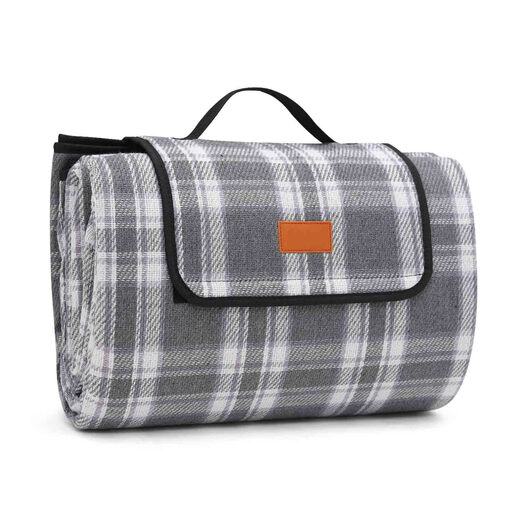
Why it's a great choice: With its generous 200x200 cm dimensions, it comfortably accommodates 4 to 6 people. It's the perfect format for family lunches on the grass, beach afternoons with friends, or as a giant play mat in the garden.
Its triple-layer structure, featuring a PEVA base, ensures foolproof waterproofing and protects you from ground moisture. The foam padding smooths out uneven terrain, while its folding system with an integrated handle solves the transport headache.
3-layer structure (comfort and insulation); Ultra-compact folding with a carrying handle; Acrylic surface that cleans up in a snap (sand, crumbs...).
We've put together a full selection of products that meet our standards for quality and practicality.
Most blankets with a PEVA or PVC base are very easy to clean. After use, shake it out well to remove grass, sand, and crumbs. For stains or mud on the waterproof side, a simple wipe with a damp cloth is sufficient. For the fabric side, treat stubborn stains with a sponge and a little soapy water. Avoid machine washing unless specified by the manufacturer, as it could damage the waterproof layer.
Yes, the term "sand-proof" means that sand doesn't cling to the fabric's fibres. Materials like tightly woven acrylic or polyester are very effective for this. The sand stays on the surface and can be removed by simply shaking the blanket. This is a particularly valuable feature for a beach mat, helping it stay clean and comfortable for longer.
The distinction is crucial. A water-repellent fabric has been treated with a surface coating that causes water to bead up. It can resist a light shower or splashes, but under continuous pressure (like sitting on wet ground), water will eventually seep through. A waterproof fabric, thanks to its membrane or coating (like PEVA), forms a physical barrier that prevents water from passing through, even with prolonged contact. For a picnic on damp morning grass, being waterproof is essential.