
Livraison le jour même ou le lendemain

Qualité garantie

Débloquez vos offres de bienvenue: Livraison GRATUITE | Jusqu'à -80 % | 30 jours d'essai gratuits à JoyPlus
Téléchargez l'application
A waterproof motorcycle pannier can make daily commutes much simpler, as well as long road trips. But an attractive product listing doesn’t always guarantee a pleasant experience in the rain. Unreliable fastenings, trailing straps, or a volume that’s impossible to use properly – some flaws only become apparent after several rides.
Before buying a motorcycle tail bag, it’s worth examining a few concrete features rather than relying solely on claims like “all-terrain” or “waterproof”.
A fabric treated against splashes doesn’t necessarily offer the same protection as a PVC motorcycle travel bag with a roll-top closure. The material isn’t everything: the seams, the base, and the closure system are all vulnerable points.
A waterproof motorcycle pannier with a roll-top closure must be properly rolled and compressed to minimise water ingress. However, it isn’t designed to remain submerged for long periods.
A generous capacity might seem practical, but an overly bulky pannier can make getting on and off the bike difficult, reduce rear visibility, or block access to certain components. So you need to compare the stated volume with the external dimensions.
The labels 36L motorcycle tail bag, 66L motorcycle tail bag, and 86L motorcycle tail bag refer to quite different uses. The available capacity should never tempt you to exceed the recommended load or force the closure.
A poorly positioned strap can get caught in a wheel, touch the exhaust, or interfere with a control. Quick-release straps speed up installation, but they must be properly adjusted and checked before every ride.
Reflective strips help other road users spot you with their headlights, but they don’t replace the bike’s legal lighting or suitable high-visibility gear. For walking or cycling, a reflective LED armband can complement dark clothing, especially in the morning or evening.
PVC is appealing because its surface is easy to clean and offers good resistance to spray. For a PVC motorcycle travel bag, look for a reinforced base and a clearly described roll-top closure. This closure limits water entry when the top of the bag is sufficiently rolled.
After a ride in the rain, wipe the pannier with a damp cloth, then leave it to dry in a well-ventilated area. Avoid corrosive products and heat sources, which can accelerate the ageing of PVC.
The stated capacity should be compared with what you normally carry:
External dimensions matter just as much. A 36 L pannier measuring 41 × 26 × 28 cm doesn’t take up the same space as a 66 L model at 60 × 32 × 33 cm, or an 86 L version at 70 × 37 × 38 cm.
Choose an installation that doesn’t obscure the lights or number plate, while keeping a safe distance from hot or moving parts. The models shown here come with fixing straps and reflective elements. It’s still essential to check their tension after a few miles.
For non-motorised travel, an adjustable running LED armband can be worn on the arm, ankle, on a bag, or on a cycle helmet. The steady and flashing light modes let you adapt your visibility to the environment. The manufacturer describes it as lightweight, flexible, and water-resistant; however, they recommend removing the armband before showering or swimming.
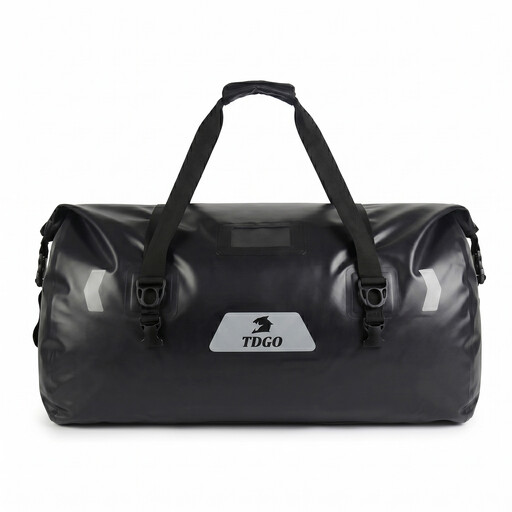
Why this choice suits this profile: Its 36 L format is ideal for daily commutes, errands, and short trips, without imposing a volume that’s hard to keep stable.
The roll-top closure and quick-release straps address two often-overlooked points: protection against spray and secure fixing.
PVC, dimensions of 41 × 26 × 28 cm, reflective elements, and reinforced base, according to the product listing.
Why this choice suits this profile: Travellers who carry more clothes or accessories benefit from a good compromise between storage space and bulk.
The 66 L volume avoids having to carry multiple small bags, while the roll-top closure lets you adjust how much you pack.
Dimensions of 60 × 32 × 33 cm, PVC, reinforced base, and reflective elements as stated by the manufacturer.
Why this choice suits this profile: Its format is designed for long distances and users who regularly carry bulky equipment.
The reinforced fixing and roll-top system make organising a large load easier, provided you respect your bike’s limits.
Dimensions of 70 × 37 × 38 cm, wear-resistant PVC, quick-release straps, and reflective strips.
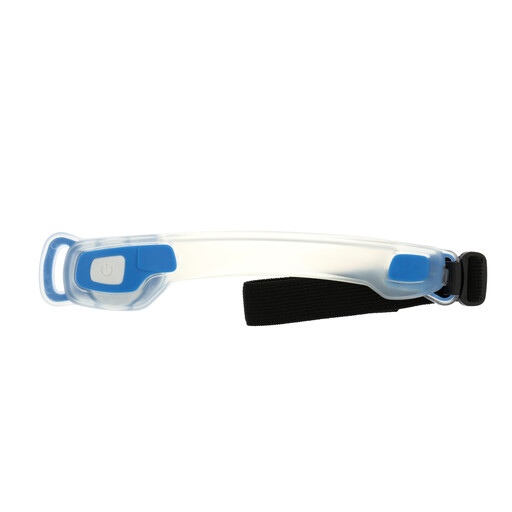
Why this choice suits this profile: This adjustable armband is ideal for running, walking, cycling, or trips with a bag when you need extra visibility.
The Velcro fastening and additional reflective strap allow you to adjust it to your arm, leg, or an accessory.
Two light modes, 18 cm format, lightweight and flexible design, clean with a damp cloth.
We’ve put together a comprehensive, real-time updated list of products that meet these strict selection criteria and European safety regulations.
Place it on the pillion seat or on the designated support, then pass the straps around fixed, solid anchor points. They must not touch the wheel, chain, exhaust, brakes, or controls. After tightening each strap, check that the pannier doesn’t move, then re-check after a few miles.
A correctly used roll-top closure and PVC material limit water ingress from rain and spray. To maintain this protection, don’t overload the bag, avoid sharp objects, and don’t submerge it for long periods. Important documents can also be stored in an additional internal pouch.
For daily commutes, 36 L may be enough. A 66 L model suits a weekend or more comprehensive gear. The 86 L volume is better for long distances, provided your bike has suitable fixing points and the load remains stable. Capacity should always come second to safety and the vehicle’s balance.