
Livraison le jour même ou le lendemain

Qualité garantie

Débloquez vos offres de bienvenue: Livraison GRATUITE | Jusqu'à -80 % | 30 jours d'essai gratuits à JoyPlus
Téléchargez l'application
Riding in the rain has its charm, but only if your gear stays completely dry. The problem is, the motorcycle luggage market is a jungle of broken promises. A bag sold as "?water-resistant?" often turns into a sponge during the first heavy downpour, and a dubious mounting system can quickly become a public hazard on the road.
As a product specialist at Joybuy, my mission is to help you cut through the noise. This guide focuses on the criteria that truly matter when choosing a waterproof motorcycle bag worthy of the name—one that will protect your gear without failing you after just a few months.
Before diving into technical specs, let's review the two most common mistakes that lead to a regrettable purchase?:
The durability and waterproof performance of your motorcycle luggage depend first and foremost on the material.
The closure is a bag's Achilles' heel. Of course, waterproof zips exist, but they wear out, get stuck, and can fail to seal properly. For foolproof reliability, nothing beats a "roll-top" closure. The principle is simple yet incredibly effective?: you roll the top of the bag down on itself several times before clipping it shut. This compression creates a physical barrier that is virtually impenetrable to water, even during brief submersion.
The type of bag is also a key factor. A motorcycle tail bag is installed on the passenger seat or a luggage rack. A crash bar bag, on the other hand, attaches to the engine's protection bars. The advantage? It lowers the centre of gravity, a real plus for off-road handling.
Here are a few models that check all the boxes for different types of riders.
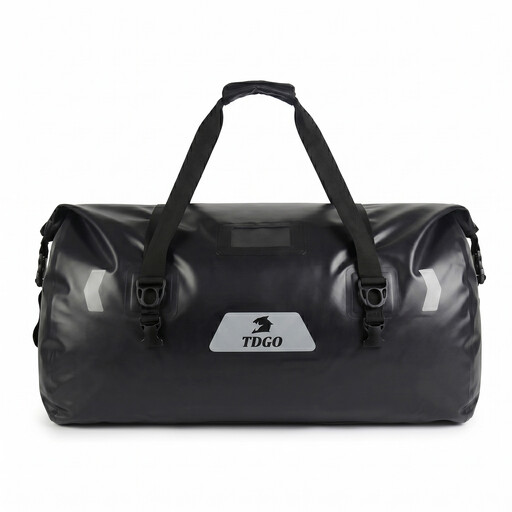
Why we chose it : For long journeys where volume and ruggedness are non-negotiable. This bag offers an XXL capacity to carry everything you need, whether for a few days or several weeks, with guaranteed protection against the worst downpours.
Its ultra-durable PVC construction with a roll-top closure puts an end to questionable "marketing" waterproof claims. This is the real deal. Its quick-release straps ensure a rock-solid hold, steering clear of the low-quality attachment trap.
Its impressive 66-litre volume and its simple, proven design, engineered to last and protect your cargo no matter what.
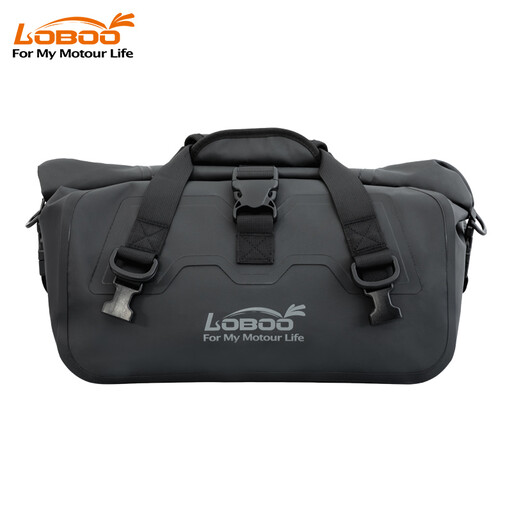
Why we chose it : Perfect for the daily commute. Its 20L capacity is sized for everyday essentials. Its universal mounting system makes it easy to install and remove without ever sacrificing security.
The IPX6 rating is an official standard, not an empty promise. It guarantees protection against powerful water jets, going far beyond a simple " water-resistant " claim. The adjustable, sturdy straps ensure a reliable attachment, day after day.
Its compact size and certified IPX6 waterproofing make it the perfect ally for keeping your belongings dry during unexpected daily downpours.
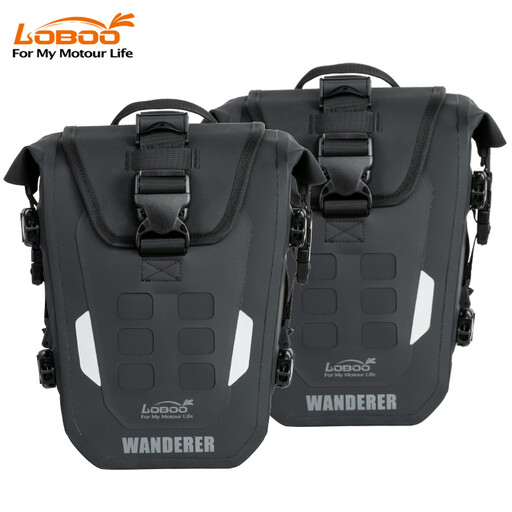
Why we chose it : For trail and adventure riders who want more than just storage. This bag provides accessible space while also serving as extra protection for the engine in a fall. A true 2-in-1.
This is more than just a bag. The IPX7 rating (protection against temporary submersion) is one of the highest on the market. Its passive protection function is a tangible benefit that puts it in a class of its own.
Its dual role as storage/protection and its submersible-grade waterproofing (IPX7), ensured by a TPU construction and high-frequency welded seams.
We have selected a full range of products that meet these criteria for reliability and safety.
Yes, in the vast majority of cases. A roll-top closure creates a mechanical barrier that doesn't rely on the integrity of a seal or a zip's teeth. It is far less susceptible to wear, sand, or mud, making it the most reliable choice for heavy use and extreme conditions.
Always use all the provided anchor points. Attach the straps to solid parts of the frame or luggage rack, never to plastic fairings or moving parts. Tighten the straps firmly and ensure there is no slack. Before every ride, a quick visual and manual check is essential to verify that nothing has shifted. And of course, keep the bag away from the exhaust pipe?!
For a 2-3 day weekend, 30 to 40 litres is usually sufficient. For a week or more, aim for a 50L motorcycle bag or a 60L+ model, especially if you plan to bring camping gear or tools. Finally, remember to balance the load on the motorcycle so as not to affect its handling.