
Livraison le jour même ou le lendemain

Qualité garantie

Débloquez vos offres de bienvenue: Livraison GRATUITE | Jusqu'à -80 % | 30 jours d'essai gratuits à JoyPlus
Téléchargez l'application
For a multi-day trek on rugged terrain, reliable gear is non-negotiable. And at the heart of this gear are your boots. For the seasoned hiker, selecting the right pair of waterproof men's hiking boots is a crucial decision. The goal? To find the ideal balance of protection, comfort, and durability for tackling technical trails, often with a heavy backpack.
This guide breaks down today's top models and gives you the keys to making an informed choice, beyond the marketing hype.
Before diving into our selection, let's review the essential technical aspects that will guide your choice.
To keep your feet dry, whether in the rain, crossing a stream, or stepping in a puddle, a waterproof membrane is essential. GORE-TEX technology remains the undisputed industry standard. Its secret? It blocks external water while allowing perspiration to escape. This dual action is crucial for long-term comfort and preventing the dreaded blisters. Choosing Gore-Tex hiking boots therefore provides peace of mind when the weather is unpredictable.
For long-distance hiking or trekking with a heavy pack, stability is non-negotiable. Men's high-cut walking boots provide optimal ankle support, reducing the risk of sprains on uneven or rocky terrain. The "mid" cut is an excellent compromise, combining more flexibility with secure support. Your choice will therefore depend on the weight of your pack and the technicality of the trails you frequent.
The choice of material directly impacts the durability, comfort, and maintenance of your boots.
Let's get down to business with models that stand out for their technical specs and designs tailored for demanding hikers.
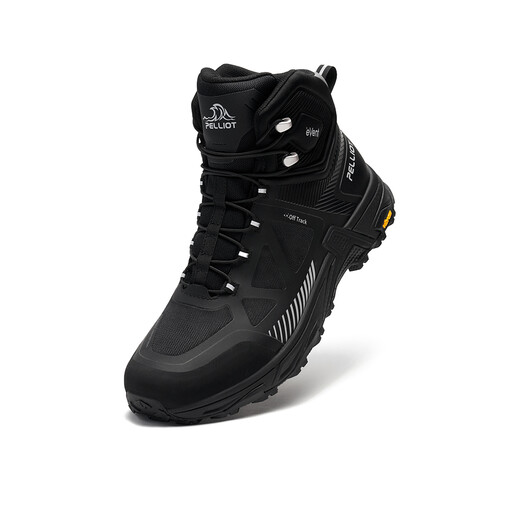
Key Features: These men's hiking boots are built for the most unpredictable terrain. They focus on aggressive traction and a quick-lacing system, making them a decidedly technical choice for those seeking pure performance and lightning-fast adjustments on the trail.
Pros:
Who is it for? For the hiker or mountaineer seeking a technical, robust boot with modern features to tackle difficult routes with confidence.
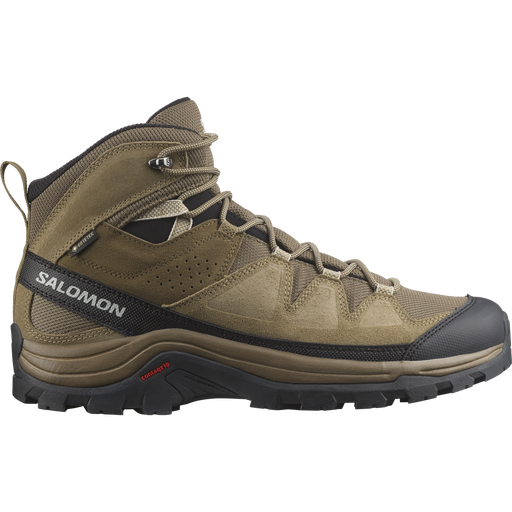
Key Features: The Quest Rove GTX combines classic adventurer style with pure performance for long-distance hiking. The combination of suede leather and a GORE-TEX membrane makes it a durable and completely waterproof model, designed for multi-day treks with a heavy backpack.
Pros:
Who is it for? The trekker looking for durability, protection, and a timeless style for long expeditions. A reliable choice and a benchmark in the Salomon hiking boot range.
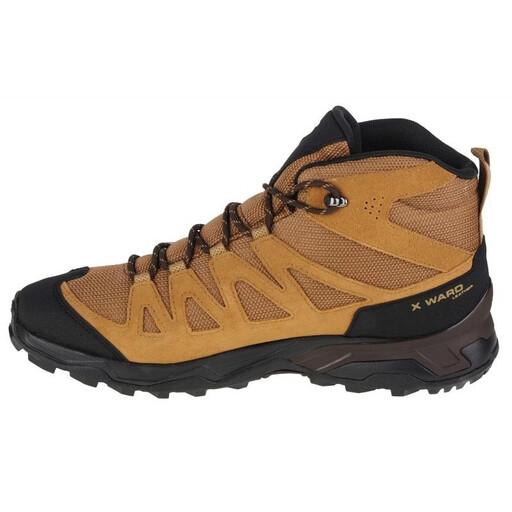
Key Features: This model is the archetype of the versatile hiking boot, combining the toughness of leather with GORE-TEX protection. Its mid-cut upper offers a perfect balance between ankle support and agility.
Pros:
Who is it for? The hiker looking for a reliable, all-around model that is just as comfortable on a day hike as it is on a multi-day trek over moderate terrain.
Our selection focuses on hiking and trekking in "three-season" conditions. If your adventures take you onto snowy trails or into extreme cold, thermal insulation becomes the number one criterion. To discover models specifically designed to handle freezing temperatures, check out our guide to the best winter boots for men.
The golden rule: choose a half size, or even a full size, larger than your usual shoe size. Your feet swell with exertion, and you need some free space at the end of your toes (about a finger's width) to prevent them from hitting the front on descents. The trick: always try on your future boots at the end of the day, wearing your hiking socks.
Yes, if you hike in wet conditions (rain, dew, mud, stream crossings...). A waterproof-breathable membrane like GORE-TEX is a real asset for comfort and blister prevention. However, for short outings in very dry and hot weather, non-membrane boots, which are more breathable, will be more comfortable.
The lifespan of mountain boots depends on many factors: frequency of use, type of terrain, maintenance, quality of materials... Generally, a good pair can last you between 800 and 1,200 kilometres. The tell-tale signs? Worn-down lugs on the outsole, a compressed midsole that has lost its cushioning, or tears in the upper.