
Livraison le jour même ou le lendemain

Qualité garantie

Débloquez vos offres de bienvenue: Livraison GRATUITE | Jusqu'à -80 % | 30 jours d'essai gratuits à JoyPlus
Téléchargez l'application
A good mattress is a significant investment in quality sleep. To protect it from life's little and big mishaps—spilled drinks, perspiration, children's bedwetting, or surprises from our four-legged friends—and ensure it has a long and healthy life, nothing beats a waterproof mattress protector. It's the simplest and most effective solution.
But with so many models on the market, how do you find the right one? Don't worry. This guide is here to shed light on the essential criteria and present our selection of the best protectors, helping you find the perfect fit for your bed and lifestyle.
Before you buy, take a moment to consider a few technical details. They're what will make all the difference in your day-to-day experience.
Its primary mission is to block liquids. The most effective models rely on a thin polyurethane (TPU) membrane. But be careful—effective protection should never come at the cost of comfort. A good breathable mattress protector must allow air to circulate to wick away moisture and heat. This is the secret to avoiding the feeling of sleeping on a plastic sheet and ensuring a truly restorative night's sleep.
The fear of a "crinkling" sound with every movement is a common concern. Rest assured: technologies have evolved, and a silent mattress protector is now the standard. Comfort also depends on the material that lies beneath your sheet. Terry cotton is popular for its absorbency and natural feel. Microfibre, on the other hand, offers unparalleled softness and quick-drying properties. Here, it's all a matter of personal preference.
There are two main styles:
On the practical side, check that the model is a machine-washable protector. The ability to wash it at 60?°C is a real bonus for perfect hygiene, especially for allergy sufferers or for incontinence protection. Compatibility with a low-temperature tumble dryer will also make your life easier. Last but not least, make sure you get the right size! Whether it's for a single bed (90x200 mattress protector) or a double (140x200, 160x200 mattress protector), the fit must be perfect.
After reviewing several models, here is our selection. It covers a range of needs in terms of both material and size.
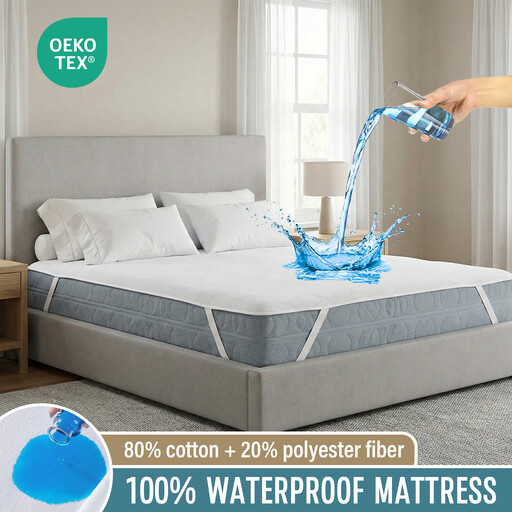
Why it stands out: This model strikes a balance, combining the comfort of cotton with the durability of polyester. Thin and easy to install with its four corner elastic straps, it's straightforward and effective.
Pros:
Who is it for? Ideal for everyday use, whether on a child's bed (available as a 90x200 cm mattress protector) or for anyone looking for a practical and effective solution.
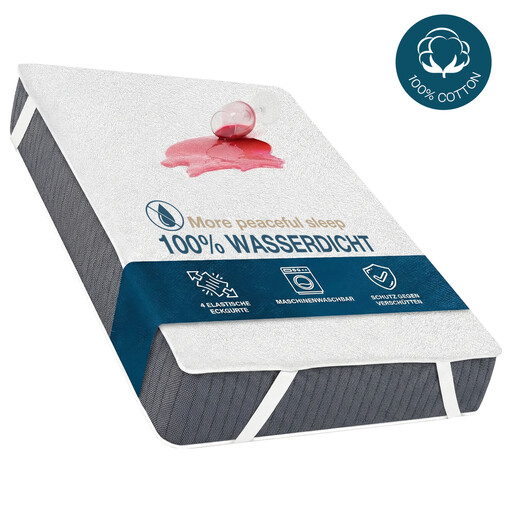
Why it stands out: With its 100% cotton terry loop surface, this model focuses entirely on natural comfort and high absorbency. It is particularly recommended for sensitive skin and for those prone to night sweats.
Pros:
Who is it for? For adults who demand the comfort of a natural material without sacrificing protection, as well as for anyone with sensitive skin.

Why it stands out: This model leverages microfibre for its softness and record-breaking ease of care. Its polyester terry loop surface is not only very pleasant to the touch but also dries in record time after washing.
Pros:
Who is it for? The perfect option for those who prioritise softness and lightning-fast care. It is particularly suitable for large beds and fans of new-generation synthetic textiles.
Does our selection not quite cover what you're looking for? Or are you simply curious to discover other products for your home? Feel free to explore our other categories.
Discover our selection of Multicoloured Briefs
Historically, the term "mattress pad" ("alèse") referred to a simple piece of absorbent fabric, often cotton flannel, placed on the bed. Today, the two terms are often used interchangeably. The main difference? A modern waterproof mattress protector always includes a technical membrane (like TPU) that makes it completely waterproof, whereas a classic mattress pad might only be absorbent. For foolproof protection, a waterproof mattress protector is what you need.
That was the major flaw of older, entry-level models with their PVC layer, which turned the bed into a noisy sweatbox. Fortunately, things have changed. Today's quality mattress protectors use polyurethane (TPU) membranes, which are both waterproof and micro-breathable. Paired with a cotton or microfibre surface, they ensure a silent mattress protector that is comfortable and won't make you sweat.
To maintain the effectiveness of your washable protector, the simplest way is to follow the manufacturer's instructions. As a general rule, a machine wash at 40?°C is sufficient for routine cleaning. For a deep clean, a 60?°C cycle is often possible. The golden rule: never use fabric softener, as it can damage the waterproof membrane. Air drying is ideal, although a low-temperature tumble dry is often permitted. And of course, never iron the membrane