
Livraison le jour même ou le lendemain

Qualité garantie

Débloquez vos offres de bienvenue: Livraison GRATUITE | Jusqu'à -80 % | 30 jours d'essai gratuits à JoyPlus
Téléchargez l'application
A good mattress is an investment—not just for your wallet, but more importantly, for your sleep. The problem? It's on the front line against life's little and big accidents: spilled drinks, night sweats, children's bedwetting, or mishaps from pets. Without an effective barrier, these incidents leave behind permanent stains, stubborn odours, and create a breeding ground for dust mites. The result: the lifespan and hygiene of your bedding take a serious hit.
I'm the Head of Product Recommendations at Joybuy, and my job is to sift through the market for you. This guide has one simple goal: to help you choose the perfect waterproof mattress protector for your needs, based on concrete criteria and cutting through the marketing jargon.
Before diving into our selection, let's review the essential criteria to ensure you make the right choice.
A mattress protector's number one mission is obvious: to block liquids. Be careful, a 100% hermetic, plastic-like cover will quickly turn your bed into a sauna, promoting perspiration. Fortunately, modern technologies have managed to reconcile the two. The secret? A polyurethane (TPU) membrane. This thin film blocks liquids but allows air to circulate, wicking away body moisture for a dry and comfortable sleep.
To ensure it stays in place and doesn't form uncomfortable wrinkles under your sheets, the fastening system is crucial. Two main styles stand out:
The material in direct contact with your sheet (and therefore with you) is crucial for your comfort.
After our analysis, here are three models that stand out, each catering to specific needs.
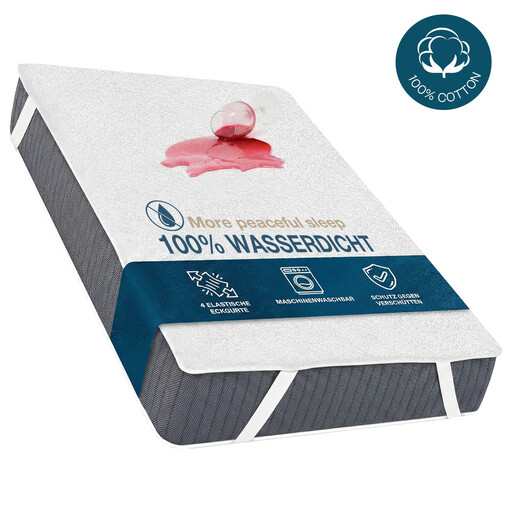
Why it stands out: This model is all about natural comfort. Its 100% cotton terry surface is exceptionally soft, while its waterproof and breathable membrane provides effective protection without the unpleasant plastic crinkling sound found in some protectors. Its thin design preserves the original feel of your mattress.
Advantages:
Who is it for? For those who prioritise the feel of a natural material and want simple, effective protection. Perfect as a protector for a double bed, including large sizes like a 200x200 cm mattress protector.
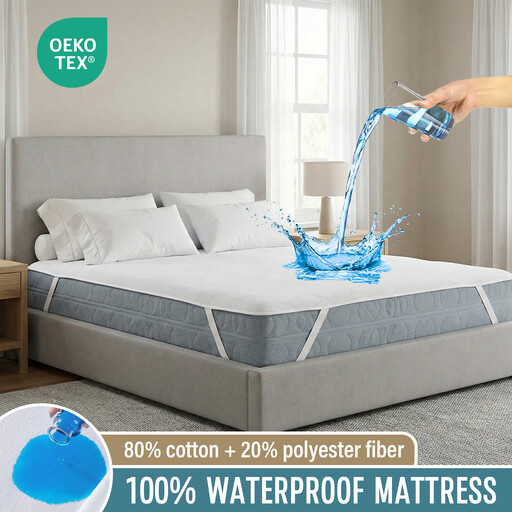
Why it stands out: This mattress protector is a versatile option, combining the softness of cotton with the durability of polyester. It's the perfect waterproof protector for intensive family use, offering reliable protection against all of life's little accidents.
Advantages:
Who is it for? The smart, durable choice for families, pet owners, or anyone looking for hassle-free daily protection.
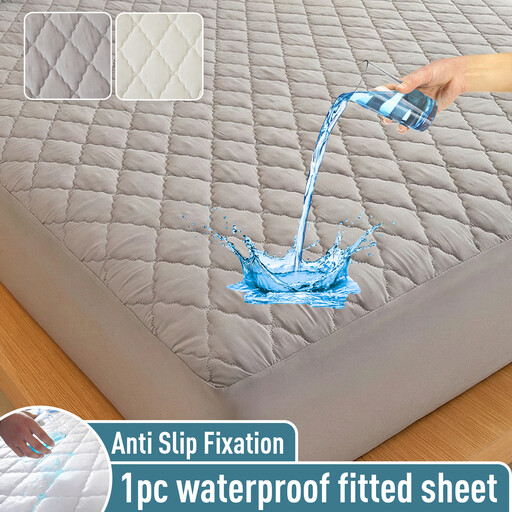
Why it stands out: This model takes it to the next level with its fitted sheet style and deep 30 cm pockets, designed for a perfect fit on even the thickest mattresses. Its quilted microfibre surface adds an extra touch of comfort.
Advantages:
Who is it for? Essential for thick mattresses or those with a mattress topper. It's also the choice for anyone who demands a perfect fit and a consistently neat bed, without a single wrinkle.
Protecting your sanctuary doesn't stop with the bedroom mattress. Whether it's for a sofa bed, a crib, or even garden furniture, there's a solution for every need.
? Discover our range of protective bedding covers
1. What's the difference between a mattress pad and a mattress protector? In common usage, the terms are often confused. Originally, a waterproof mattress pad was a simple, functional layer to protect against liquids. Today, the mattress protector is more advanced: it incorporates breathability, a comfortable feel, and often includes anti-dust mite treatments.
2. Does a waterproof mattress protector make you sweat? That was the main drawback of old PVC pads, which created a "greenhouse effect." Modern models with a TPU (polyurethane) membrane are micro-perforated. They are designed to block large water molecules while allowing smaller vapour molecules (perspiration) to escape, significantly reducing any feeling of heat.
3. How do I care for my mattress protector to maintain its waterproof quality? For regular maintenance, machine wash it at 40°C, and occasionally increase to 60°C for a thorough sanitisation. Use a gentle cycle and, most importantly, do not use bleach or fabric softener, as they can damage the waterproof membrane. Air drying is ideal. If you're in a hurry, a tumble dry on very low heat is possible for most models (check the care label). Finally, never iron your mattress protector, as you risk melting the protective layer.