
Same-day & Next-day Delivery

Quality Guaranteed

Unlock Your Welcome Offers: FREE Delivery | Up to 80% OFF | Free 30-day JoyPlus trial
Download the APP
A double mattress is a significant investment, but it’s still exposed to everyday mishaps: spills, perspiration, stains, pets and overnight leaks. A 140x200 cm waterproof mattress protector can help prevent a lot of problems, as long as it’s suited to your mattress depth and how you use it.
However, some features presented as must-haves are worth taking a closer look at. Here are the main pitfalls to avoid before you place your order.
A model designed for a standard mattress may come loose if yours has a mattress topper or is particularly deep. The fitted sheet may then pull at the corners, while the protector can become creased.
For a deep mattress, look for a 30 cm mattress protector or a deep-pocket mattress protector. The measurement given usually refers to the maximum pocket depth, not the total depth of the bed with its bedding.
A waterproof membrane keeps liquids out, but some fabrics can also trap more heat. For a comfortable night’s sleep, choose a soft surface and a design described as breathable. Check claims such as “waterproof” and “breathable” together.
The aim isn’t just to protect your mattress, but also to avoid a plasticky or clammy feel during the night.
A protector that slips, folds or shifts while you sleep loses much of its usefulness. A fitted design, elasticated edges or elastic straps at all four corners can help keep it in place.
Before ordering, check the exact dimensions too: a 140x200 cm mattress protector won’t automatically fit a 135x200 cm or 150x200 cm bed.
For a standard double bed in France, 140x200 cm means 140 cm wide and 200 cm long. Measure your mattress before choosing a protective cover.
Then add its depth, including that of a mattress topper if you use one. If the total is close to 25 to 30 cm, choose a deep-pocket design. A mattress protector for a deep mattress should cover the sides properly without pulling too tightly at the corners.
The manufacturer should specify whether the protector has a waterproof barrier or membrane. Product descriptions may mention liquids, perspiration, stains or urine. These details describe the product’s intended use and don’t constitute a medical guarantee.
Care instructions matter just as much as the initial protection. A machine-washable mattress protector is more practical for families, pet owners or anyone who needs to wash it frequently. Always follow the temperature, cycle and drying instructions on the label.
Polyester, towelling or quilted fabric: each material feels different. A quilted finish generally adds more thickness, while a thinner design is less noticeable beneath a fitted sheet.
For regular use, choose a secure elasticated edge or corner straps. A leakproof mattress protector should stay correctly positioned across the whole sleeping surface: the stated waterproofing won’t make up for a protector that’s been fitted incorrectly.
The models below were selected based on their dimensions, materials and advertised features. Before ordering, check the price, availability and care instructions on each product page.
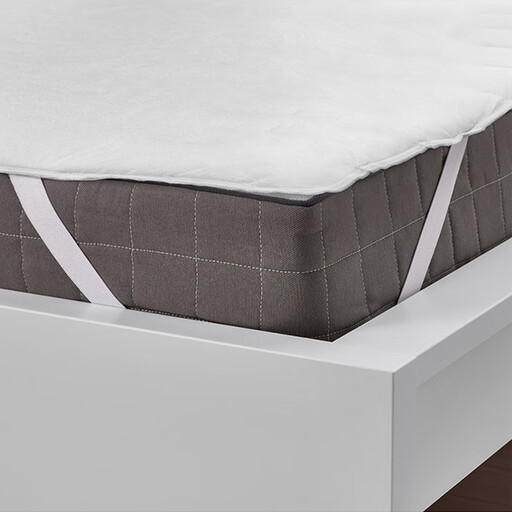
Why it suits this type of shopper: This model is for anyone looking for a four-strap fastening system for a 180 x 200 cm mattress, up to 30 cm deep.
The straps on all four sides help reduce movement overnight. However, check that your mattress measures 180 x 200 cm before buying.
Four elastic straps, advertised compatibility with mattresses up to 30 cm deep, and a waterproof design as stated in the product name.
We’ve put together a comprehensive selection, updated in real time, of products that meet these demanding criteria as well as European safety standards.
Avoid ironing a protector with a waterproof membrane unless the manufacturer says otherwise. Drying it at a low temperature or leaving it to air-dry can help preserve its shape and fabric properties.
Choose a model with a pocket of around 30 cm, and check that this measurement refers to the maximum depth of the mattress itself. If you use a mattress topper, add the two depths together before ordering.
How it feels depends on the surface material, fabric thickness and membrane design. A surface described as breathable may feel more comfortable than a very thin protector with a plasticky feel, but comfort is subjective. The type of fitted sheet you use can also affect airflow.
There’s no universal lifespan. Replace it if it develops tears, the membrane starts to peel away, it leaks or the elastic becomes loose. To help it last longer, follow the recommended washing temperatures and avoid care products that aren’t suitable for the fabric.