
Livraison le jour même ou le lendemain

Qualité garantie

Débloquez vos offres de bienvenue: Livraison GRATUITE | Jusqu'à -80 % | 30 jours d'essai gratuits à JoyPlus
Téléchargez l'application
Getting soaked to the bone in a downpour, despite wearing a jacket marketed as "?waterproof?", is an experience no one wants to have. In a market saturated with marketing promises, it's hard to know what to choose. Before you invest, it's crucial to know the pitfalls to avoid in order to find the perfect waterproof jacket for your needs, whether it's a hiking jacket, for your daily commute, or a sports session.
Here are the 3 most common mistakes to avoid:
To make an informed choice, you need to learn to speak the manufacturers' lingo. Here are the three key indicators that define the true performance of a rain jacket.
A fabric's waterproofness is measured in Schmerber, a unit representing the height of a water column (in mm) that the textile can withstand before water penetrates it.
A garment's ability to evacuate water vapour (i.e., sweat) is just as crucial. Two main indicators are used:
A good membrane isn't everything. The quality of construction is critical to your jacket's durability and effectiveness.
Different activities have different demands. Here are a few models that caught our eye for their design and technical performance.
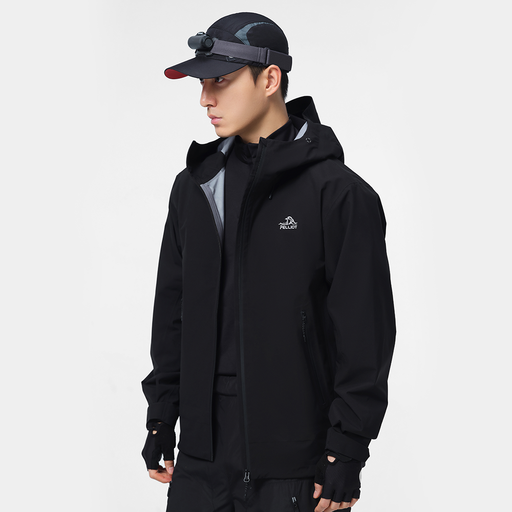
The Editor's Verdict: Ideal for those who switch between urban commutes and weekend hikes. Its understated design blends in seamlessly in the city, while its hardshell construction provides the necessary protection on the trails.
Its design ensures reliable protection against heavy downpours and wind, going far beyond a simple water-repellent treatment. Its good breathability limits the 'pressure cooker' effect to keep you comfortable even during exertion.
Its versatility and abrasion-resistant fabric make it a durable companion, from city streets to wilderness trails.
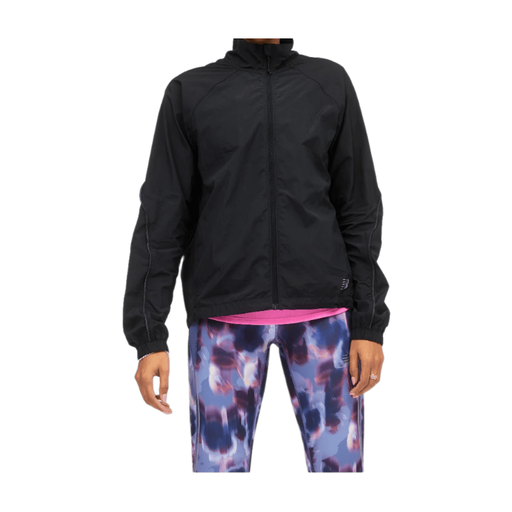
The Editor's Verdict: Engineered for runners, this sports jacket is all about lightness, freedom of movement, and practicality. Wind and water-resistant, it packs down into its own pocket to stay out of the way.
The trade-off is clear: it's not fully waterproof, but offers excellent water resistance, because for running, breathability and lightness are paramount. Its packable function is a real bonus for travelling light.
It's ultra-packable (it turns into a waist pack) and includes reflective elements for safe running after dark.
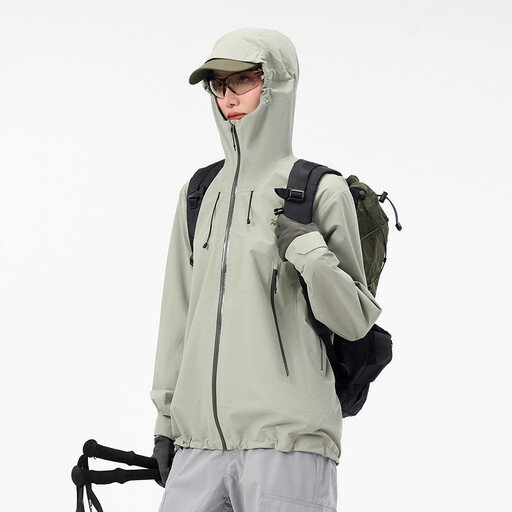
The Editor's Verdict: Designed for demanding users who venture into challenging terrain. This Pro version is built for pure performance, with top-tier waterproof breathability and integrated safety features.
It tackles the problem of overheating head-on with large zipped underarm vents, perfect for regulating temperature. Its bombproof construction and advanced features put it in a class of its own.
It integrates a RECCO avalanche rescue reflector, a detail that can be a lifesaver for backcountry outings.
Browse our complete selection of technical jackets, approved by our experts.
A water-repellent jacket has a chemical treatment (DWR) that makes water droplets bead up on the surface. This is effective against a light drizzle, but the treatment wears off and the jacket will eventually soak through. In contrast, a waterproof jacket incorporates a membrane that forms an impassable physical barrier, even in driving rain.
Wash it with a special detergent for technical apparel (and absolutely no fabric softener, which clogs the membrane's pores), following the instructions on the label. To reactivate the DWR finish, a low-heat tumble dry (if permitted) or applying a re-waterproofing spray after washing works wonders.
Yes, absolutely. The membrane that blocks water is by definition also impermeable to air, making it an excellent windbreaker. This is the dual advantage of a hardshell jacket: it protects you from both rain and wind, the inseparable duo of outdoor adventures.