
Livraison le jour même ou le lendemain

Qualité garantie

Débloquez vos offres de bienvenue: Livraison GRATUITE | Jusqu'à -80 % | 30 jours d'essai gratuits à JoyPlus
Téléchargez l'application
Choosing a waterproof hiking jacket can often be a real headache. Between the technical jargon and marketing promises, it's hard to know where to start. The risk? Investing in gear that will leave you soaked at the first downpour. Our mission: to separate fact from fiction and give you the keys to an informed choice, far from the marketing hype.
Before pulling out your credit card, let's take a moment to identify the common mistakes that can be costly and turn a great outing into a damp ordeal.
Relying solely on price or a familiar logo is the surest way to end up with a disappointing jacket. Here are the three pitfalls to avoid to get properly equipped for the mountains.
This is the classic trap. A water-repellent garment has a surface treatment that causes water to bead up and roll off in a light rain. The problem: this treatment wears off with washing and doesn't hold up against driving rain or high pressure (like from backpack straps). A truly waterproof jacket, on the other hand, incorporates a technical membrane that blocks water, even after hours of exposure. Heading out with a water-repellent jacket thinking it's waterproof is a guarantee you'll end up soaked to the bone.
A jacket can be a fortress against rain, but if it doesn't let your sweat escape, you'll end up just as wet... from the inside. This is the infamous "sauna effect." A good waterproof and breathable jacket must wick away the water vapour your body produces during exertion. Without this ventilation, comfort and thermal regulation are compromised, which is not only unpleasant but potentially dangerous in the mountains.
The concept of a 3-in-1 jacket seems to have it all: one jacket for all seasons. Be wary, as entry-level models are often a master of compromise. The outer layer lacks proper waterproofing, the fleece liner offers poor insulation, and the connecting zippers are flimsy. A truly good 3-in-1 jacket must excel in all three configurations: the shell alone as a high-performance technical windbreaker, the liner alone for cooler moments, and the combined set to face the cold and the downpour.
To avoid these traps, you need to speak the same language as the labels. Here are the three key indicators to inspect on your future trekking jacket.
A fabric's waterproofness is measured in Schmerber or millimetres (mm) of water column. This rating assesses the water pressure the fabric can withstand before letting it through.
Breathability is measured in MVTR (Moisture Vapour Transmission Rate), or g/m?/24h. The higher the number, the better the jacket wicks away the water vapour your body produces during exertion.
The finishes make all the difference between a good and an excellent jacket. Check that the jacket has taped seams (or sealed seams), as a standard seam is a highway for water. The zippers should be waterproof (water-resistant zips) or protected by a storm flap. Finally, for a men's outdoor jacket or women's, a well-fitting, adjustable hood, Velcro-adjustable cuffs, and a drawcord at the hem are non-negotiable for sealing out wind and rain.
To put theory into practice, here are some models that check the right boxes for different types of hikers.
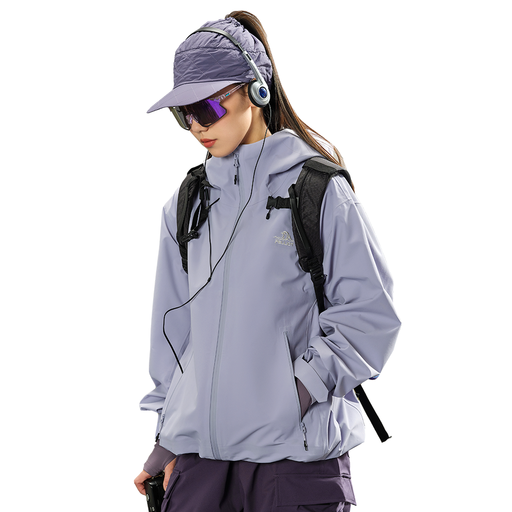
Why this model stands out: Ideal for occasional outings as well as facing city downpours. It offers serious protection without the expedition-grade price tag.
Forget jackets that are merely water-repellent. This model is a true hardshell jacket designed to handle real rain, saving you from a cold shower in the middle of nature.
Reliable waterproof and windproof protection in a versatile design, equally at home on the trails and in the city.
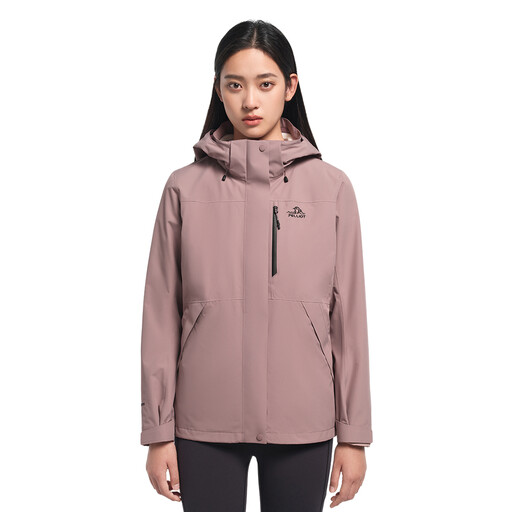
Why this model stands out: The perfect solution for those who want a single jacket for the whole year, from a rainy morning commute to a winter trek. An excellent, modular women's rain jacket.
This 3-in-1 jacket system doesn't fall into the trap of false versatility. Each component is high-performing, with impressive ratings announced by the manufacturer: 35,900 mm waterproofness and 16,000 g/m?/24h breathability.
A truly effective 3-in-1 system; the liner incorporates heat-retention technology and an anti-static treatment for added comfort.
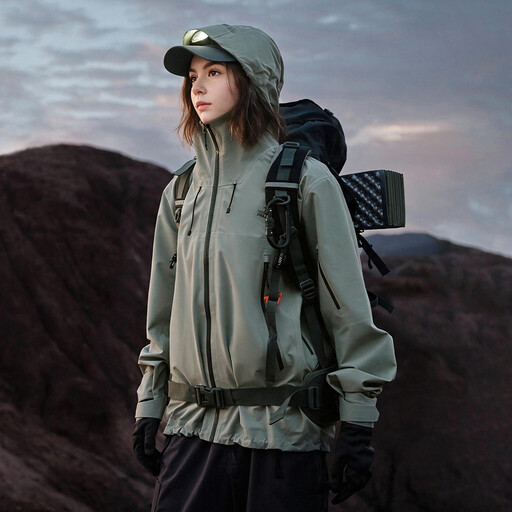
Why this model stands out: Built for mountain gear enthusiasts who brave harsh conditions and demand flawless technical performance for their adventures.
This model doesn't just settle for being breathable: it adds underarm pit zips, which allow for manual ventilation during intense effort to eliminate the "sauna" effect.
Lighter, stretchier fabric for total freedom of movement; includes a RECCO avalanche rescue reflector, a mark of safety for off-piste adventures.
A good men's outdoor jacket or women's is your armour. But for optimal comfort, never neglect what's underneath! A technical fleece or a thin down jacket is essential for managing moisture and retaining heat.
The secret to a successful outing is the 3-layer system. Discover our selection of mid-layers that combine warmth, lightness, and breathability.
It all depends on the frequency of use, the conditions, and especially the maintenance. A well-cared-for jacket can retain its properties for years. The weak point is the surface DWR (Durable Water Repellent) treatment, which needs to be reactivated regularly. The membrane itself can also wear out at friction points (shoulders from a backpack, hips).
Wash your jacket in the machine with a special detergent for technical clothing, and most importantly, without fabric softener (it's its worst enemy!). To reactivate the DWR, a tumble dry on low heat works wonders (if the label allows it). Otherwise, a re-waterproofing spray after washing will give your jacket a new lease on life. Regular maintenance is the key to preserving the performance of your waterproof and breathable jacket.