
Livraison le jour même ou le lendemain

Qualité garantie

Débloquez vos offres de bienvenue: Livraison GRATUITE | Jusqu'à -80 % | 30 jours d'essai gratuits à JoyPlus
Téléchargez l'application
Choosing a waterproof hiking jacket can quickly become a headache. Between marketing promises and opaque technical jargon, it's easy to make a mistake and end up soaked—either by rain or your own sweat. To avoid throwing your money away, it's best to know the most common pitfalls.
The first major hurdle is the confusion between "water-repellent" and "waterproof." A water-repellent fabric causes water to bead up on the surface in light rain, but it will eventually give way under a sustained downpour. The second trap is the "trash bag effect": a jacket that's perfectly sealed against water, but also against air. The result: your body's moisture can't escape, and you end up just as wet as if you had no protection at all. Finally, the last point to watch for is the finishing touches. Unsealed seams or low-quality zips are guaranteed entry points for water.
To ensure you don't regret your purchase, focus on a few non-negotiable technical features. They define the true performance of your future trekking jacket.
A fabric's waterproof rating is measured in Schmerber (or millimetres of water column). This rating indicates the pressure the water can exert on the fabric before it penetrates.
Another critical point: the seams. Check that they are all "heat-sealed" or "taped." Without this, even the highest-performing membrane is useless, and water will seep through.
A garment's ability to evacuate water vapour (sweat) is just as important as its waterproofness. It is measured in MVTR (Moisture Vapour Transmission Rate), expressed in g/m?/24h.
The extra touch that makes all the difference: underarm ventilation zips. They are incredibly effective for manually regulating your temperature during exertion.
The choice of construction depends on your intended use:
Here are a few options that cater to distinct user profiles, taking into account performance and durability criteria.
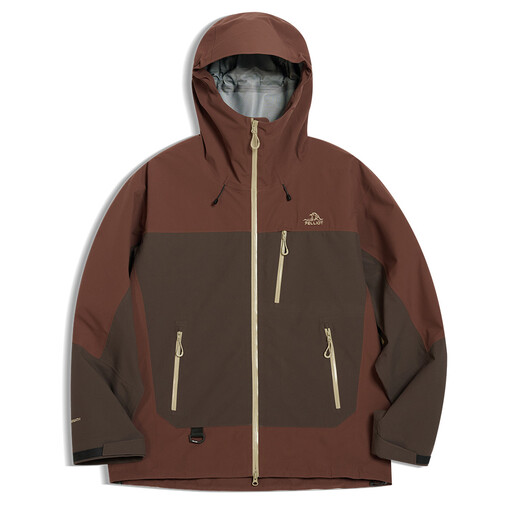
Why this model? Perfect for those seeking a technical jacket that can transition from mountain trails to urban commutes. Its modern two-tone design updates the look of traditional hiking jackets without sacrificing performance.
It combines rock-solid waterproofing with high breathability, which prevents the "trash bag effect" even during moderate exertion. Its robust construction resists abrasion.
Its strong point is its versatility, equally at home in the city and on the mountain. Its windproof design and abrasion resistance guarantee excellent durability.
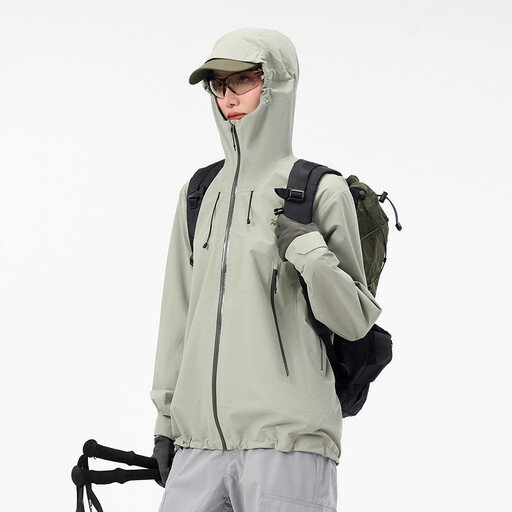
Why this model? Designed for extreme environments, this jacket is aimed at hikers and mountaineers who make no compromises on safety and performance. It is built for long expeditions where reliability is paramount.
It incorporates cutting-edge features like a RECCO avalanche rescue reflector and extended ventilation zips—details often missing from less technical models that can be critical in an emergency.
Its key advantages: a lighter, stretchier fabric for total freedom of movement, top-tier waterproofing and breathability performance, and a zipped sleeve pocket for small items.
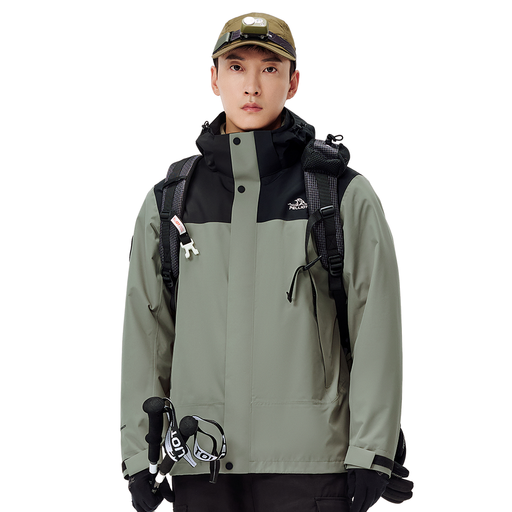
Why this model? This is the solution for those who want a single purchase to handle almost any weather condition, from spring to winter. Its modularity makes it a practical and smart investment.
Unlike some basic 3-in-1 jackets, this model uses a microporous membrane (STORMS BREATH) and taped seams for triple-layer protection, ensuring true waterproof performance.
Its clever 3-in-1 system allows for year-round use. The thermal liner, featuring an anti-static treatment, ensures optimal comfort even in cold weather.
Once your torso is dry, don't forget your head. A good waterproof running cap or a UV-protection visor is just as essential to fend off both sun and sudden showers.
Discover our full selection of products that meet our criteria for performance and comfort.
Maintenance is key to preserving your jacket's performance. Machine wash it at a low temperature (30°C) with a special detergent for technical apparel, and most importantly, without fabric softener. To reactivate the durable water repellent (DWR) treatment, you can tumble dry it on low heat (if the label permits) or apply a waterproofing spray after washing.
Yes, it is possible to find high-performing models in this price range. However, you must be particularly vigilant about the technical specifications. Don't rely on marketing slogans; look for the numerical ratings (Schmerber and MVTR). Also, ensure that the seams are fully taped—this detail often makes all the difference between an entry-level jacket and a reliable one.
These are two types of outdoor technical apparel with distinct functions. The hardshell is your armour against wind and rain. It is not insulating but offers maximum protection from the elements. The softshell, on the other hand, is more flexible, more breathable, and water-repellent. It is ideal for activities in cool, dry weather, where comfort and freedom of movement take precedence over absolute waterproofness.