
Livraison le jour même ou le lendemain

Qualité garantie

Débloquez vos offres de bienvenue: Livraison GRATUITE | Jusqu'à -80 % | 30 jours d'essai gratuits à JoyPlus
Téléchargez l'application
By Joybuy, Our Product ExpertPublished: August 27, 2026
Finding the right waterproof hiking jacket can quickly feel like an uphill battle. Between the technical jargon and marketing promises, it's easy to end up with a garment that leaks at the first sign of rain or turns your hike into a sauna session. To avoid buyer's remorse, here are the common pitfalls to watch out for.
Confusing "Water-Repellent" with "Waterproof": This is the number one trap. A water-repellent jacket has a surface treatment that causes water to bead up and roll off, but it won't hold up against continuous or heavy rain. Water will eventually seep through. A TRULY waterproof jacket, on the other hand, has a membrane and sealed seams that form an impenetrable barrier against moisture, even in a downpour. Don't pay a premium for something that only protects against a light drizzle.
Underestimating the Importance of Breathability: A jacket can be a fortress against rain, but if it doesn't let your sweat escape, moisture will build up on the inside. This is the infamous "trash bag" effect: you're shielded from the rain but soaked in your own sweat. For any activity, even a leisurely walk, a breathable and waterproof jacket is essential to stay dry and comfortable.
To make an informed choice, trust the numbers, not the slogans. Here are the two key indicators that measure the real-world performance of an outdoor jacket.
Waterproofness is measured in millimeters (mm) using the water column test (or Schmerber rating). This number indicates how much water pressure the fabric can withstand before it lets water through.
Another non-negotiable detail: make sure the jacket has heat-sealed or taped seams. Without this, even the best fabric in the world will let water seep in through the stitching.
This is the fabric's ability to let water vapor (sweat) escape. It's measured in grams per square meter per 24 hours (g/m?/24h).
A good hardshell jacket must therefore combine high waterproofing with breathability suited to your activity for uncompromising comfort.
The goal isn't to find the perfect "one-size-fits-all" jacket, but rather the one that meets YOUR needs. Here are a few suggestions for different uses.
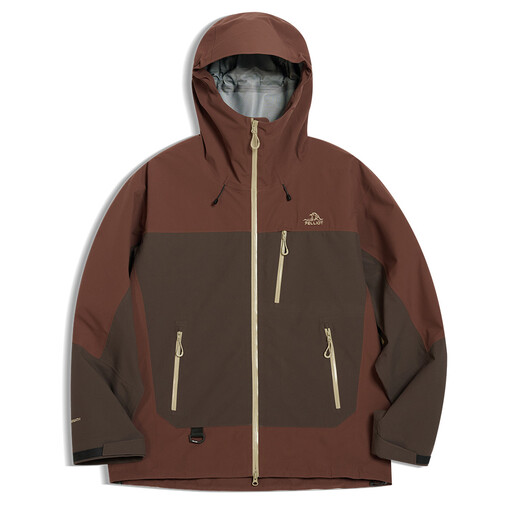
Why we recommend it: Ideal for those who want a single, reliable jacket for multiple activities, from mountain trekking to rainy daily commutes. Its robust design makes it an excellent waterproof windbreaker for facing the elements without compromise.
This jacket offers fully storm-proof waterproof protection, going far beyond a simple water-repellent treatment. Its high breathability prevents the "pressure cooker" effect during exertion.
Ultra-resistant fabric that stands up to wind and abrasion, designed to handle scrapes from rocks and branches without flinching.
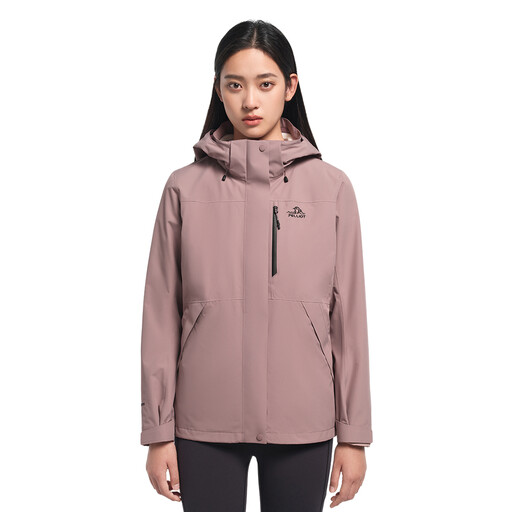
Why we recommend it: Perfect for those who demand maximum versatility. This **women's 3-in-1 jacket** adapts to all conditions, from cool autumn days to the cold of winter. It's the ideal **4-season jacket** for travel or trekking.
It overcomes the "false versatility" trap with a smart modular system: an outer layer with top-tier technical performance (35,900 mm waterproof rating) and a genuinely effective removable thermal liner.
Excellent breathability (16,000 g/m?/24h) and a warm liner with an anti-static treatment for optimal comfort in winter.
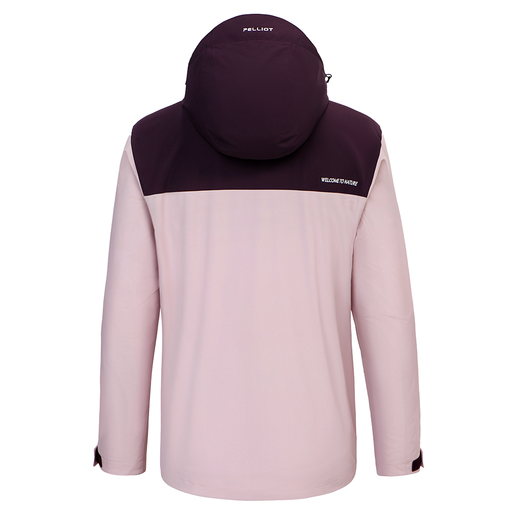
Why we recommend it: For those who want a **technical rain coat** without sacrificing style. Perfect for daily commutes, weekend walks in the woods, and trips where looks matter as much as performance.
This model proves that a technical jacket doesn't have to be boring. It combines triple-layer protection (STORMS BREATH technology) with a modern, two-tone design, blending performance and aesthetics.
Its clever 3-in-1 system indicates the ideal temperature ranges for each configuration, making it impossible to get it wrong when staying warm and dry.
We've curated a complete selection of jackets that meet our strict criteria for performance and durability.
A water-repellent jacket has a chemical treatment that causes water to bead on the surface. This is effective against light, brief rain. A waterproof jacket incorporates a membrane (like Gore-Tex or proprietary technologies) and sealed seams that block all water penetration, even in prolonged, driving rain. For hiking, true waterproofness is essential.
Wash your jacket according to the instructions on the label. Use a special or gentle detergent, without fabric softener, and close all zippers. Regular washing cleans the membrane's pores and maintains its breathability. From time to time, you can also reactivate the water-repellent treatment with a dedicated spray or a tumble dry on low heat (if the label permits).
Yes, as long as it's well-designed. A 3-in-1 jacket combines a waterproof-breathable outer layer (the shell) with a removable insulating liner (fleece or a light down jacket). This allows you to wear: