
Livraison le jour même ou le lendemain

Qualité garantie

Débloquez vos offres de bienvenue: Livraison GRATUITE | Jusqu'à -80 % | 30 jours d'essai gratuits à JoyPlus
Téléchargez l'application
Whether for a mountain hike, a multi-day trek, or simply facing downpours on your daily commute, a good waterproof hiking jacket is a cornerstone of your gear. Yet, the market is a minefield of technical terms and marketing promises where it's easy to get lost. Ultimately, a poor choice comes at a high price: a jacket that leaks during the first serious shower or turns you into a walking sauna.
To help you navigate this, we've identified the most common pitfalls and the criteria to check before you buy.
To make the right choice, you need to learn to read between the lines of the spec sheets. These few indicators, far from being insider jargon, are what truly guarantee your comfort and safety in the field.
Waterproofness: Measured in Schmerber (or mm water column), this value indicates how well the fabric resists water penetration under pressure.
Breathability (MVTR): Expressed in g/m?/24h, it measures the fabric's ability to evacuate water vapour (your sweat) over 24 hours.
Jacket Type:
Because a weekend hiker doesn't have the same needs as a seasoned mountaineer, here is our selection of models suited to different profiles, all vetted against our performance and versatility criteria.
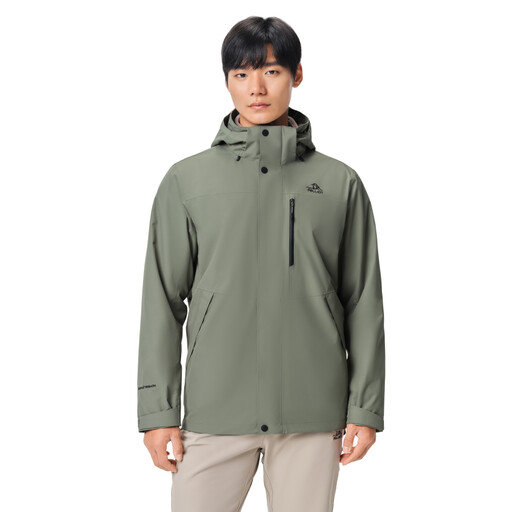
The Editor's Verdict: This is the perfect solution for anyone looking for a single jacket for the entire year. Its 3-in-1 system offers incredible modularity: the fleece alone for a cool autumn day, the outer shell for a summer shower, and the complete set to face the winter cold.
There's no marketing ambiguity here. The jacket is upfront about its performance with certified, quantified specs (JIS standard): an impressive 35,900 mm waterproof rating and a 16,000 g/m?/24h breathability rating. The anti-static thermal lining is an added guarantee of comfort.
The 3-in-1 jacket concept offers unbeatable modularity and an excellent versatility-to-price ratio for year-round use.
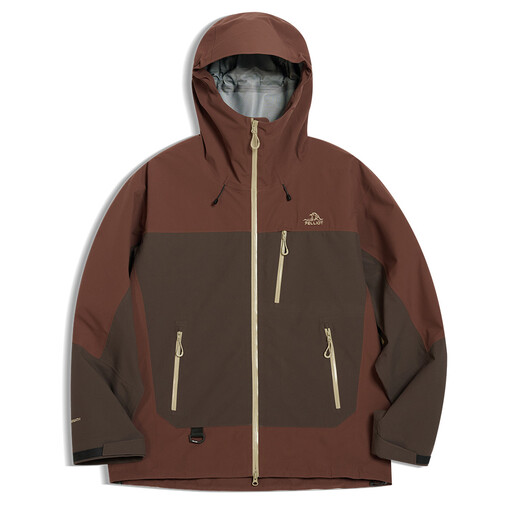
The Editor's Verdict: The perfect ally for juggling daily city commutes and weekend getaways. Its two-tone look, more understated and versatile than a mountaineering jacket, hides flawless technical protection for rainy days.
This is a true hardshell jacket built for bad weather, not just a water-repellent windbreaker. It combines high breathability with abrasion-resistant fabric, thus avoiding the trap of 'lifestyle' jackets that look technical but have disappointing performance.
Its city-to-nature versatility, with a style that never sacrifices technical features. An excellent hybrid-use men's or women's outdoor jacket.
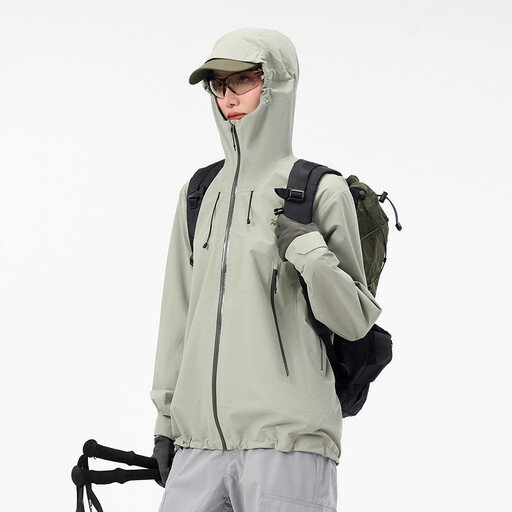
The Editor's Verdict: Built for hikers and trekkers who aren't afraid of demanding terrain. Its fabric, both lightweight and stretchy, ensures optimal freedom of movement. Most importantly, it integrates advanced features like the RECCO reflector, a real plus for mountain safety.
This jacket goes beyond just numbers. It's designed with the field in mind, featuring details that make a difference: long underarm zip vents to manage exertion and abrasion-resistant fabric for durability. It's not just waterproof; it's built for action.
The integration of a RECCO rescue reflector. This passive system can help rescue teams locate you in the event of an avalanche or if you get lost in the mountains. A detail that can save a life.
Your waterproof jacket is the outer layer, your shield. For maximum effectiveness, it should be part of a "3-layer system" with technical base layers and mid-layers. Discover our selection of apparel designed for performance.
Proper maintenance is key to your jacket's longevity and performance. Machine wash it at a low temperature with a special detergent for technical apparel, and be sure to close all zippers. Avoid fabric softener at all costs: it's the sworn enemy of breathable membranes, as it clogs their pores. The DWR (Durable Water Repellent) treatment isn't permanent. When you notice that water no longer beads up but soaks into the fabric, it's time to reactivate it. A low-heat tumble dry (if the label permits) or applying a re-waterproofing spray will give it a new lease on life.
For the vast majority of hikers, it's an excellent choice. Its modularity makes it the most versatile garment available, capable of adapting to almost any climate and activity. It's an investment that pays off quickly: it will serve as your mid-season jacket, winter trekking coat, and simple summer rain shell.
The hardshell jacket is your armour. Its purpose: to protect you from the worst conditions. Completely waterproof and windproof, it acts as a shield. The flip side: it's often stiffer and slightly less breathable than a softshell. The softshell jacket, on the other hand, is all about breathability, flexibility, and thermal comfort. Usually water-repellent and wind-resistant, it's perfect for action but won't hold up in a downpour. In short: the softshell is ideal for exertion in cool, dry weather. The hardshell is the safety layer you pull out of your pack as soon as the weather turns.