
Livraison le jour même ou le lendemain

Qualité garantie

Débloquez vos offres de bienvenue: Livraison GRATUITE | Jusqu'à -80 % | 30 jours d'essai gratuits à JoyPlus
Téléchargez l'application
Beach holidays, boat trips, hikes in the pouring rain... these are all precious moments we want to immortalize. The problem? Whipping out your smartphone near water is always a gamble. This is precisely where a waterproof camera comes in: it offers the durability and peace of mind our phones lack the moment they get near water.
This guide is here to help you navigate the multitude of available models. We'll break down the essential criteria and present our selection of the best cameras, whether you're looking for a companion for family swims or an ally for your snorkelling explorations.
Before you dive in, let's review the key technical specifications that will make all the difference out in the field.
This is obviously the number one criterion. This resistance, expressed in metres, defines your playground. A waterproof rating of up to 3 metres is more than enough for the pool and for photos while paddling in the shallows. For snorkelling or slightly deeper dives, aim for a depth of 10 to 15 metres. Don't forget shock resistance! Some models are true shockproof cameras, capable of withstanding drops from a certain height. This is a significant advantage for more dynamic activities.
Waterproof shouldn't mean compromising on image quality. The sensor's resolution, in megapixels (MP), will determine the level of detail in your shots. On the video front, while Full HD (1080p) remains the standard, more and more models are climbing to 4K. The result: sharpness and clarity worthy of a dedicated underwater camera.
Ergonomics are crucial, especially when your hands are wet or gloved. Well-placed physical buttons and a good grip are therefore essential. Certain features quickly prove indispensable, like a dual screen (one on the back for traditional framing, one on the front for selfies), perfect for a beach camera. Wi-Fi, meanwhile, will allow you to transfer your shots to your smartphone in a flash to share them on social media.
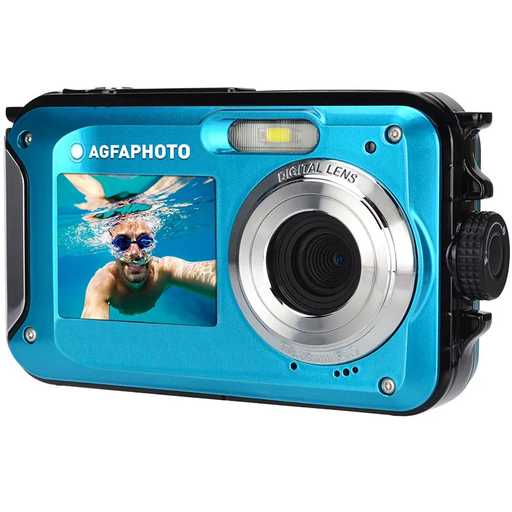
The concept: A simple and accessible camera, designed for family water activities. Its dual screen makes it particularly fun for selfies, whether your feet are in the water or your head is under it.
Key Features:
Who is it for? For families and holidaymakers who want a simple and effective camera to capture their moments at the beach or pool, without worrying about splashes.
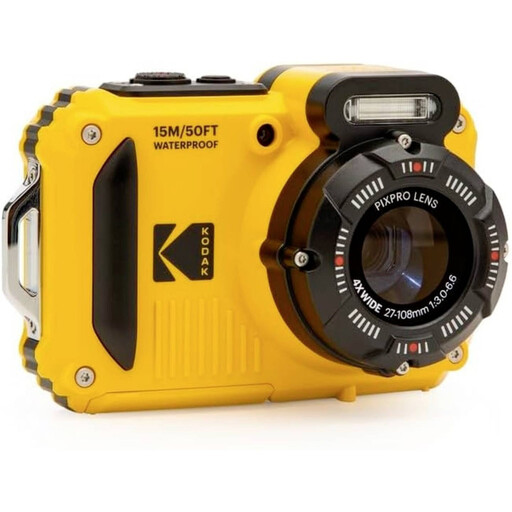
The concept: The Pixpro WPZ2 is a true adventurer. Built for action, its resistance to water and shocks makes it a reliable partner for the most intense activities.
Key Features:
Who is it for? For adventurers, snorkelling fans, and active travellers looking for a rugged camera that can handle tough conditions and deeper dives.
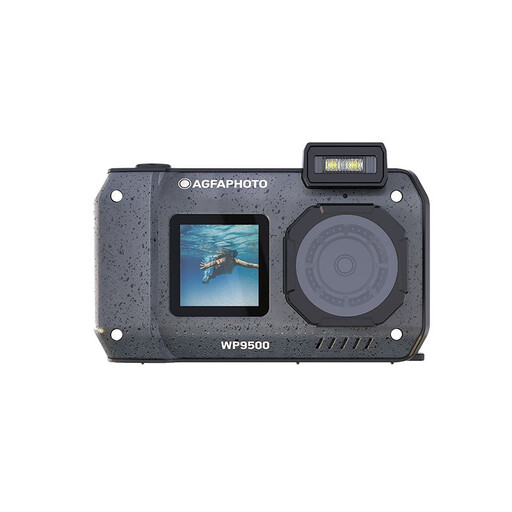
The concept: This model steps up its game by combining durability with high-performance video. With 4K and Wi-Fi, it's aimed at those who demand superior image quality and instant sharing.
Key Features:
Who is it for? For content creators, demanding travellers, and anyone who wants no compromises on the video quality of their adventures, while enjoying the simplicity of wireless sharing.
Waterproof cameras are, by definition, specialists. If your priority is photographic versatility (a powerful zoom for landscapes, manual settings for creativity, etc.), other types of cameras might be more suitable.
For a camera that can adapt to a wider variety of scenes, from family portraits to distant landscapes, we invite you to explore our selection of digital bridge cameras.
A waterproof camera retains the look and feel of a classic compact, optimised for taking photos. An action camera (or action cam), on the other hand, is much smaller and lighter. Designed to be mounted anywhere (helmet, board, harness), it reigns supreme for filming point-of-view (POV) action.
This is an absolutely crucial step to ensure its longevity. After every dip in the sea or pool, you must rinse your camera with fresh, clean water. Then, dry it meticulously with a soft cloth before opening the compartments (battery, memory card). This simple ritual prevents salt corrosion and preserves the integrity of the waterproof seals.
A 15-metre waterproof rating is perfect for snorkelling and shallow dives (an introductory dive, for example). For scuba diving beyond that depth, it is essential to choose a model designed for greater depths or, more commonly, to place your camera in a dedicated underwater housing. Only the housing can withstand the pressure.