
Livraison le jour même ou le lendemain

Qualité garantie

Débloquez vos offres de bienvenue: Livraison GRATUITE | Jusqu'à -80 % | 30 jours d'essai gratuits à JoyPlus
Téléchargez l'application
A surprise leak on a roof, window, or RV body? It's the kind of problem that can quickly turn into a nightmare. In an emergency, the go-to solution is often a waterproof butyl tape. But be warned—not all adhesive tapes are created equal. As a product expert at Joybuy, my mission is to help you find the perfect fit: a reliable and durable solution that will save you from unpleasant surprises and unnecessary expenses.
This guide breaks down the essential criteria to check before you buy and warns you about the common pitfalls, ensuring a quick fix doesn't turn into a recurring problem.
The market is flooded with products promising a perfect seal. Unfortunately, behind the marketing claims, you'll often find flaws that only appear after a few weeks.
To make the right choice, focus on the technical specifications that truly make a difference. Here are the three non-negotiable points to verify.
The quality of a sealing tape depends on its raw materials. The number one criterion? A product based on pure butyl rubber. Unlike conventional adhesives, butyl offers permanent flexibility, excellent adhesion, and a foolproof waterproof barrier.
The second crucial element is the outer protective layer. A reinforced PET aluminium foil is a true hallmark of quality. It acts as a physical barrier against damage (punctures, abrasion) and, most importantly, as a UV shield. This is the difference between a simple roof leak patch and a genuine exterior waterproof seal designed to last.
Check the operating temperature range specified by the manufacturer. A wide range, such as -40°C to 80°C (-40°F to 176°F), ensures the tape will maintain its flexibility and adhesion during the harshest winters and summer heatwaves. This feature is essential for an RV roof repair or any application permanently exposed to the elements.
A good aluminium leak tape must be versatile. Ensure it is compatible with the materials you need to repair: metal, tile, wood, glass, PVC, and EPDM (a very common roofing material on recreational vehicles).
The width of the tape is also a practical consideration. A 50 mm strip is perfect for window seals or small cracks, while a 100 mm width offers better coverage and more security for large-scale repairs on a roof or for use as a boat sealant tape.
To demonstrate how to apply these criteria in practice, here is a selection of products suited for different user profiles.
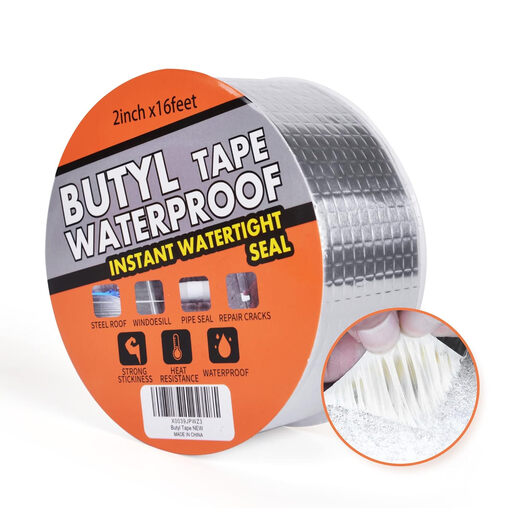
Why we chose it: Ideal for small, everyday repairs (gutters, garden sheds, pipe joints). Its standard size is practical and budget-friendly for occasional needs.
Its composition of pure butyl rubber ensures adhesion far superior to conventional adhesives, overcoming the pitfall of poor grip on common surfaces like PVC or metal.
Excellent value for a versatile sealing tape that is easy to apply without any tools.
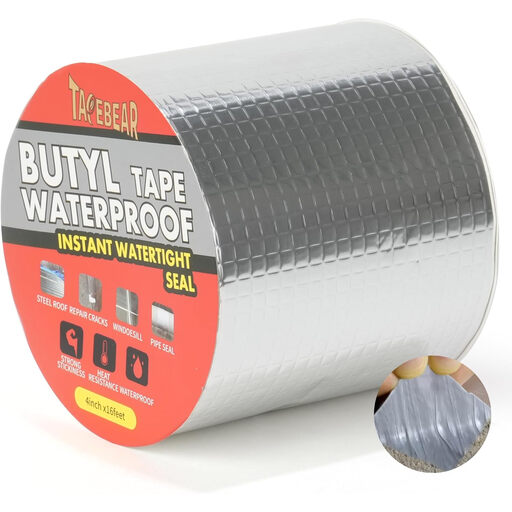
Why we chose it: Perfect for repairs on an RV, caravan, or boat. Its wide format effectively covers cracks and roof seams, and its robust design is built for constant exposure to the elements.
Its reinforced PET aluminium foil and anti-ageing film directly tackle the pitfall of poor durability. It is designed to withstand UV rays and extreme temperature fluctuations.
Its 100 mm width provides maximum coverage, and its extended thermal resistance (-40°C to 80°C) ensures rock-solid reliability all year round.
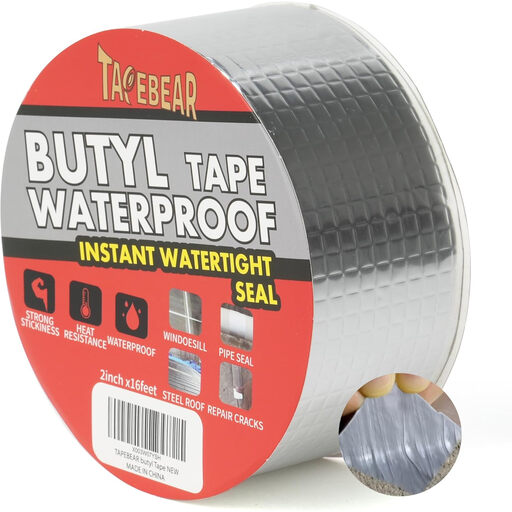
Why we chose it: For those who demand a professional-grade solution for precise, permanent repairs (window frames, chimney flashing, conservatories).
This tape combines a reinforced composition (pure butyl rubber + PET foil) with a standard width, ensuring precise application and maximum adhesion, even in corners.
Superior sealing quality for high-stress areas, offering enhanced durability and corrosion resistance.
Explore our full selection of products that meet these quality criteria and current standards.
Its longevity directly depends on the quality of its materials and its exposure to the elements. A high-quality tape with a protective aluminium foil and an anti-ageing film can last for many years. Conversely, basic versions without this protection will have a much shorter lifespan, especially if exposed to direct sunlight.
No, this is strongly discouraged. For optimal and long-lasting adhesion, the surface must be completely clean, dry, and free of dust or grease. Taking the time to properly prepare the surface is the secret to a successful repair.
Generally, no. The aluminium surface of these tapes is not designed to be painted; the paint is likely to adhere poorly or peel off quickly. This type of tape is primarily a functional solution where waterproofing takes precedence over aesthetics. If appearance is a critical factor for you, it's best to check the product specifications or consider other caulking solutions.