
Same-day & Next-day Delivery

Quality Guaranteed

Unlock Your Welcome Offers: FREE Delivery | Up to 80% OFF | Free 30-day JoyPlus trial
Download the APP
Summer means watermelon. The craving for a watermelon drink is the promise of a refreshing sip that's both sweet and thirst-quenching. But be warned: the beverage aisle is a minefield. Between disappointing artificial flavours and hidden sugars, it's easy to make a misstep. As a product expert for Joybuy, my mission is to teach you how to read between the lines on the labels to find the drink that truly delivers on its promise.
The marketing is often more appealing than the product itself. Here are the three most common pitfalls that could ruin your refreshing break.
To avoid these traps, a few simple habits are all you need when reading the packaging.
The ingredients list is your best ally. A good indicator? The presence of "watermelon juice" or "watermelon juice concentrate" at the top of the list. Conversely, be wary if water and sugar (or its derivatives like fructose syrup) come first, followed much later by simple "flavourings". For a lighter option, look for a sugar-free drink made with sweeteners like erythritol or sucralose.
To know what to expect, it's crucial to distinguish between the main categories of drinks:
The packaging says a lot about its intended use. Cans and glass bottles are ideal for enjoying at home. Flexible pouches, on the other hand, are ultra-practical for on-the-go. They slip easily into any bag for an impromptu refreshing drink break.
To guide you, here are a few options suited to different profiles that masterfully avoid the most common pitfalls.
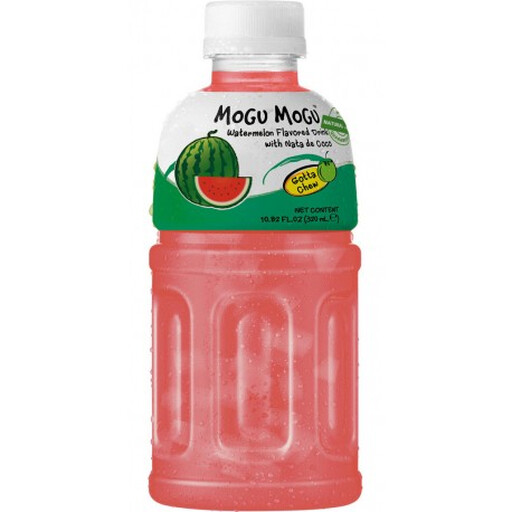
Why it's a match: Ideal for those seeking a fun and "Instagrammable" drink. The combination of fruit juice and chewy nata de coco pieces offers a dual sensation that turns a simple hydration break into an experience in its own right.
This product makes texture its main selling point. The "unexpected texture" pitfall is therefore avoided from the outset, as it's chosen precisely for its pieces of nata de coco (a firm and pleasant coconut jelly).
Contains real fruit juice and offers a fun texture that's out of the ordinary. The Mogu Mogu brand is the undisputed leader in this segment.
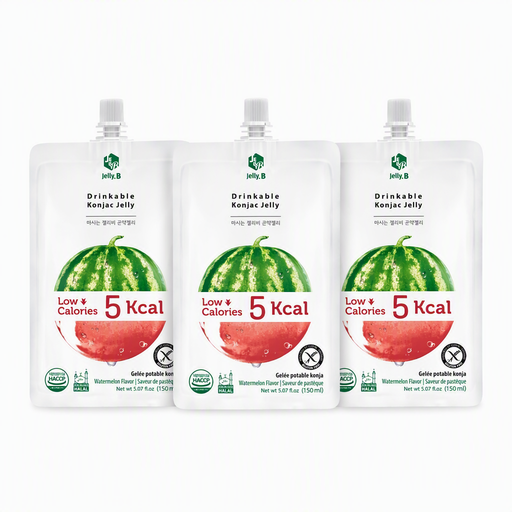
Why it's a match: Perfect for indulging without any guilt. This Korean drinkable jelly is designed as a healthy, refreshing, and ultra-light snack, ideal after a workout or to satisfy a small craving.
It tackles the "sugar bomb" pitfall head-on. With only 5 kcal per serving and the use of erythritol (a natural, zero-calorie sweetener), it offers a real sweet taste without the downsides of regular sugar.
Ultra-low in calories and no added sugar. Its konjac-based texture provides a welcome appetite-suppressing effect, making it much more than just a drink.
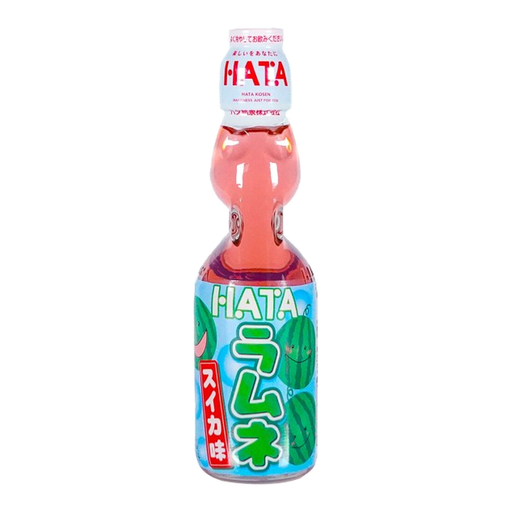
Why it's a match: For fans of Japanese pop culture and anime, Ramune is more than a drink: it's an icon. Its opening ritual, where you push a glass marble into the bottle, is a unique and cult experience.
This product doesn't pretend to be something it's not. It's an unapologetic watermelon soda, where the experience and nostalgia take precedence over the ingredients. You choose it for the fun, not for its fruit content.
Its Codd-neck bottle with a marble is one-of-a-kind, and opening it is a true ritual. An iconic drink for an authentic slice of Japanese culture.
We've curated a full range of drinks that meet our quality criteria and consumer expectations.
For the optimal experience, these drinks are best enjoyed well-chilled. Remember to put them in the refrigerator a few hours before serving. If there are pieces of jelly or nata de coco, gently shake the bottle before opening to distribute them evenly. Pouch formats are designed to be drunk directly by squeezing the pouch.
It all depends on the product. The underlying trend, in South Korea as in Europe, is towards sugar reduction. You can find both traditional, quite sweet "ades" and modern versions of a Korean drink formulated to be sugar-free or made with sweeteners. The best habit? Always check the nutritional information.
A "juice" is obtained by pressing the fruit and (in theory) consists of 100% fruit. An "ade," a very popular term in Asia derived from the English word lemonade, refers to a drink made from water, fruit syrup or concentrate, and sugar. "Ades" are therefore generally lighter, designed as a refreshing beverage rather than a true fruit juice.