
Livraison le jour même ou le lendemain

Qualité garantie

Débloquez vos offres de bienvenue: Livraison GRATUITE | Jusqu'à -80 % | 30 jours d'essai gratuits à JoyPlus
Téléchargez l'application
Choosing a watercolour set may seem straightforward: a few pans, attractive colours and, sometimes, a brush included. However, the format, pigmentation and type of paint have a direct impact on ease of use and the results you achieve. The right choice will differ for a child, a student painting on the go or an illustrator who enjoys mixed-media techniques.
A 24-colour watercolour palette is not necessarily more useful than a 12-shade set. It all depends on the selection and the way you paint. Well-chosen colours allow you to create a multitude of shades, whereas a very extensive palette may simply accumulate colours you rarely use.
Before choosing, check in particular:
Even a pleasant watercolour will produce disappointing results on paper that is too thin. Water may cause the sheet to buckle, create tide marks or slow down drying. For washes and layering, choose suitably thick watercolour paper, generally heavier than standard drawing paper.
The surface also matters when using watercolour pencils and markers. Smooth paper may be suitable for lettering, but it will not behave like a sheet designed to absorb washes.
Pans, tubes, markers and watercolour pencils are designed for different uses:
Pans are easy to reactivate with a damp brush and produce little waste during short sessions. Half-pans are particularly well suited to painting on the go. 12 ml tubes are more suitable for regular use, mixing and studio work.
Weight and storage are also important for students, travellers and anyone who paints in a sketchbook. A case with a palette lid or mixing area means you do not need to carry lots of extra accessories.
Traditional watercolour is diluted with water, allowing you to work transparently. On dry paper, it is ideal for details; on damp paper, it spreads more freely. Some marker inks and pigments can also be blended or layered after being activated with water.
Read the product details carefully to distinguish between:
This information does not replace testing the result on paper. If you intend to keep your artwork, also check the lightfastness information where available.
An included brush lets you get started straight away, but it will not necessarily replace a fine brush, wash brush or water brush. For a beginner watercolour kit, a guide, a few sheets of paper and a mixing area may be more useful than a large number of shades.
For a child, check the recommended age, warnings about small parts and compliance information. The M&G set’s product details specifically mention use from the age of 3, under adult supervision, as well as references to the EN 71 standards and the REACH regulation. These details should be checked on the packaging when the product arrives.
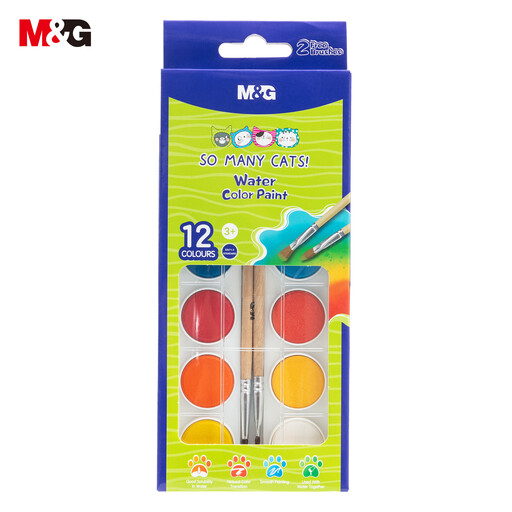
Why this choice suits this user: With 12 colours, a brush and solid pigments, this set provides everything you need to get started without having to buy lots of extras, whether you are painting at home or at a creative workshop.
The solid format helps reduce the risk of spills, and the product details state that the formula is washable with water. Even so, it is best to protect clothing and surfaces.
12 solid colours, an included brush, an advertised weight of approximately 150 g and recommended use from the age of 3.
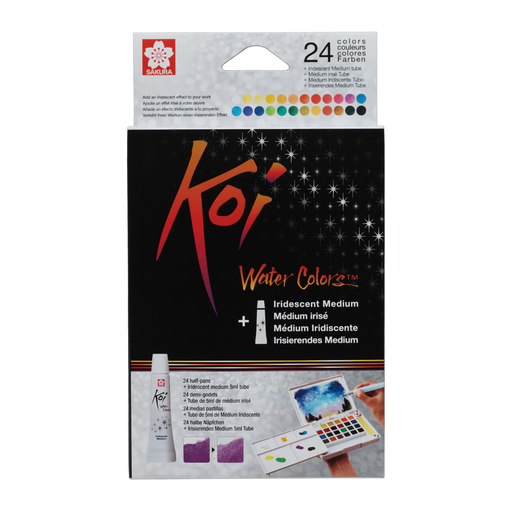
Why this choice suits this user: This compact set contains 24 half-pans and an iridescent medium. It is designed for artists who want to enhance their sketches with additional effects, even when painting on the go.
The choice of shades and built-in mixing area mean you do not need to carry a separate palette. The iridescent medium is clearly distinguished from the standard colours.
24 half-pans, a pocket-sized case, an integrated palette and an iridescent medium for travel sketching.
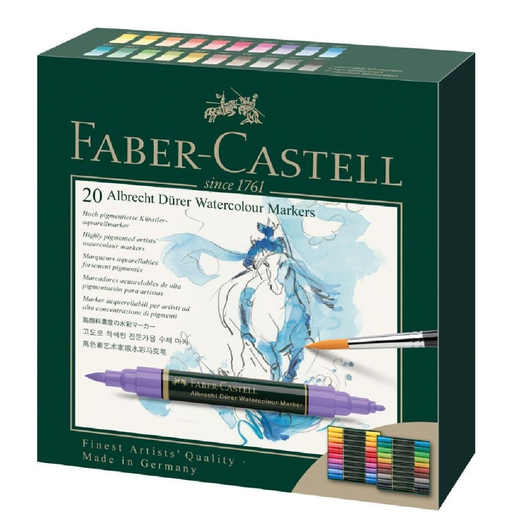
Why this choice suits this user: The two nibs on each marker cover the needs of illustration, sketching, lettering and mixed-media projects.
It is not limited to a brush nib: a fine nib is also provided for detailed work. Remember to replace the caps immediately after use.
20 double-ended markers, water-soluble ink and a storage case.
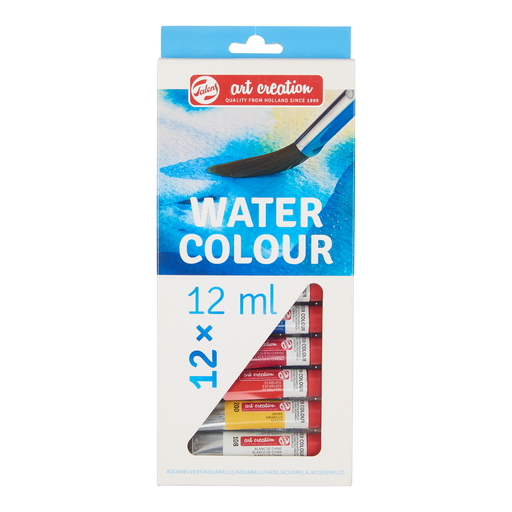
Why this choice suits this user: Tubes are ideal for anyone who wants to learn washes, mixing and techniques on dry or damp paper, with a more generous quantity of paint to work with.
The 12 shades are clearly listed, making it easier to compare this set with other collections. According to the product details, the paint can be reactivated with water.
12 x 12 ml tubes, clearly identified shades and the option to use the paint on both dry and damp paper.
We have brought together a comprehensive, real-time selection of products that meet these demanding criteria, as well as European safety requirements.
A 12-colour set with a brush and mixing case is a good starting point. For a child, check the recommended age and whether the set contains any small parts. For an adult beginner, tubes may be a good choice if you want to learn about mixing and washes.
It depends on how often it is used, humidity and storage conditions. Close the case after each session, rinse the brush and allow the palette to dry before closing it if it is particularly damp. Tubes should be sealed carefully to prevent the paint from drying out.
Yes. Watercolour paper is generally preferable whenever the technique requires a lot of water. For lettering or watercolour markers, choose a surface that is compatible with the ink and thick enough to prevent it from bleeding through. Paper plays just as important a role as the colours in the final result.