
Livraison le jour même ou le lendemain

Qualité garantie

Débloquez vos offres de bienvenue: Livraison GRATUITE | Jusqu'à -80 % | 30 jours d'essai gratuits à JoyPlus
Téléchargez l'application
Watercolour pencils let you move from precise drawing to a wash effect with just a damp brush. This versatility appeals to illustrators, art students, travel-journal enthusiasts, and anyone who wants to lighten their kit when sketching on the go. But not all sets are created equal, and not every one suits the same purpose.
Before you buy a box of watercolour pencils, there are a few pitfalls worth watching out for.
Good watercolour pencils should work in two ways: dry, for outlines, hatching and details, and then with water, to spread the colour and create gradients. A lead that’s too hard can leave marks that are difficult to blend. A softer lead deposits more pigment, but it’s also more likely to break if the wood or bonding isn’t sturdy enough.
For a travel journal or quick studies, go for a smooth application and a box that’s easy to carry. For detailed illustration, point retention and pigment consistency matter most.
The 12, 24, 36, 48, 72 or 120 colour formats suit different uses:
A smaller palette is perfectly fine if you’re confident with mixing. On the other hand, a large set can save you time on projects that need specific shades immediately available.
A metal tin protects a small set well and is ideal for travel. A wooden box offers more compartments and a more refined presentation, but it’s often bulkier. Sets supplied in a cardboard box are generally easy to store, but they offer less protection against knocks.
Product listings may also mention a thick lead, reinforced bonding or pigments described as lightfast. These details are useful for comparing products, but don’t treat this feature as a guarantee of unlimited exposure. After use, let damp accessories dry and store the pencils in a dry place away from direct sunlight.
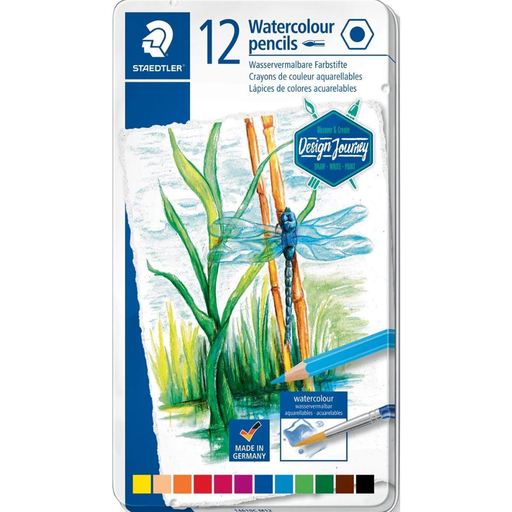
Why this choice suits this profile: This set of 12 watercolour pencils lets you explore the technique without investing in a huge palette. Its metal tin slips easily into a school bag or travel journal.
The number of shades is limited and clear, with the option to use them dry or activate them with a damp brush.
12 colours, leads described as soft and break-resistant, metal tin and wood from certified sources.
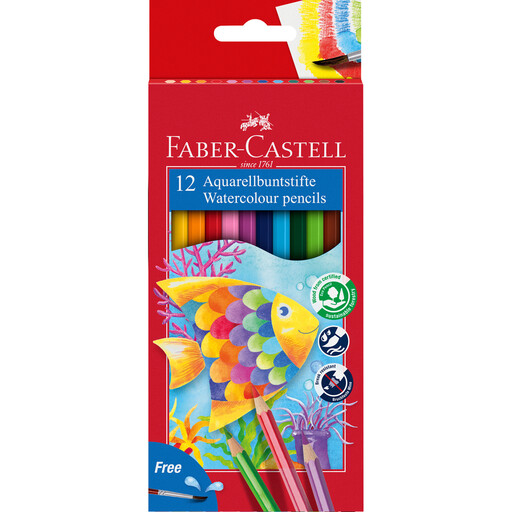
Why this choice suits this profile: The combination of 24 pencils and a brush means you can start straight away, whether at home, in the studio or on a sketching trip.
The included brush means you don’t have to buy a separate accessory straight away, and it makes the transition from dry line to wash much easier.
24 shades, synthetic-bristle brush, well-organised box and suitable for both sketchbooks and mixed-media projects.
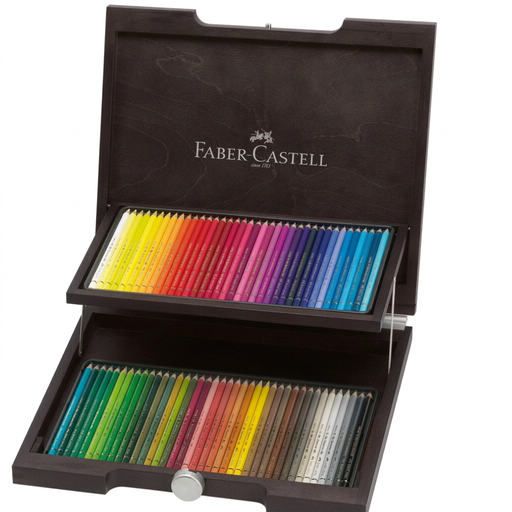
Why this choice suits this profile: With its 72 colours and wooden box, this set is aimed at regular users who want a complete, well-organised palette for studio work.
The extensive palette means you don’t have to layer many coats to achieve certain shades.
72 colours, compartmentalised wooden box and pigments described as acid-free and lightfast in the product listing.
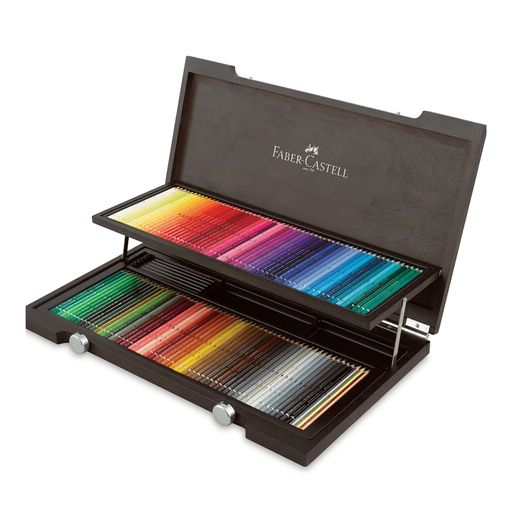
Why this choice suits this profile: A palette of 120 shades can suit illustrators, painters and heavy users who work on a variety of subjects and appreciate a refined presentation.
The set doesn’t rely solely on the number of colours: the listing mentions 3.8 mm water-soluble leads and reinforced bonding.
120 shades, wooden box with closure, thick lead and pigments described as lightfast by the manufacturer.
We’ve put together a comprehensive, real-time updated list of products that fully meet these strict selection criteria and European safety regulations.
Use a watercolour paper that’s thick enough to absorb water without warping. You can colour in dry and then apply water to the area, or lightly dampen the paper before adding the pigment. Rinse the brush between colours to avoid muddy mixes.
Let the pencils and brush dry before closing the box. Storing them in a closed container, in a dry place away from a very sunny window, helps protect the wood, the leads and the pigments.
First, draw or colour on the paper, then run a slightly damp brush over the area. Start with a small amount of water: it’s easier to add more than to rescue a soaking wet sheet. A set with a brush, like the Faber-Castell 24-pencil set, lets you get started straight away.
It depends on how often you use them, how much pressure you apply and the quality of your sharpener. A thick lead and reinforced bonding can help reduce breakage, but no pencil is unbreakable. Sharpen gradually and avoid dropping them. Put each pencil back in its box after use to protect the tip.
A set of 12 colours is enough to learn about mixing and discover the technique. A set of 24 colours offers more shades while staying compact. Sets of 36 colours and above become especially worthwhile when you practise regularly or want to spend less time mixing shades.