
Livraison le jour même ou le lendemain

Qualité garantie

Débloquez vos offres de bienvenue: Livraison GRATUITE | Jusqu'à -80 % | 30 jours d'essai gratuits à JoyPlus
Téléchargez l'application
Watercolour pencils let you draw dry, then turn your strokes into washes with a damp brush. This dual use appeals to illustrators, art students, creative journal keepers and families looking for versatile materials. But not all sets are created equal, and they don't all suit the same purposes.
Before you buy, take the time to check the lead strength, the colour range and what the set actually contains. These few criteria will stop you from ending up with a palette that looks good on paper but isn't practical to use.
A large number of pencils doesn't guarantee a well-thought-out palette. Some sets pack in lots of very similar shades while leaving out useful colours for shadows, skin tones, landscapes or blending.
To get started, a set of 12 watercolour pencils is more than enough to learn the basics. For illustration and more subtle gradients, 24 to 48 colours give you more flexibility. Artists who practise regularly can move up to 60, 72 or 120 shades, provided you have the space and budget.
A lead that's too crumbly breaks easily when sharpening or under pressure. On the other hand, a lead that's too hard can lack coverage and doesn't blend as well. The lead diameter, how it's fixed in the wood and its resistance to breakage all deserve your attention.
Some professional watercolour pencils feature a reinforced 3.8 mm lead, thanks to a bonding process highlighted by the manufacturer. Others, like the STABILO Woody, rely on an XXL 10 mm core designed to withstand heavier pressure, especially with children.
A metal tin protects your pencils from dust and slips easily into a bag. A compartmented wooden box is better suited to a studio: it keeps colours organised, but it's generally bulkier.
Also check whether a brush, sharpener or other accessories are included. A set of watercolour pencils with a tin doesn't necessarily come with everything you need to go from drawing to wash.
The principle of a watercolour pencil is simple: you first apply the pigment to suitable paper, then water dilutes and spreads it. To stop the paper from buckling, choose a watercolour paper that's thick enough, especially if you plan to layer several washes.
The easiest method to master is to colour dry, then run a slightly damp brush over the areas you've chosen. If you dip the lead directly into water, you'll get a more intense line, but the tip will wear down faster.
Mentions such as "lightfast pigments" or "acid-free pigments" correspond to the characteristics stated by the manufacturer. How well a piece lasts also depends on the paper used, its exposure to light and storage conditions.
A hexagonal or triangular body improves grip and stops the pencil from rolling off the table. Thicker models are often more comfortable for small hands, while a slim pencil lets you work on details with greater precision.
After each session, store your pencils in their box and avoid leaving them in a damp environment. If you use a metal tin, make sure the pencils and brush are completely dry before closing it.
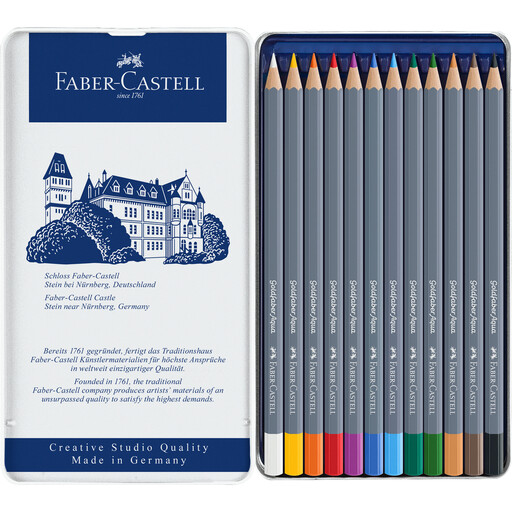
Why this choice suits this profile: A compact set for discovering watercolour pencils without investing in a large palette straight away. The 12 colours can be used dry or with a damp brush, at home or in class.
The limited format stops you paying for shades you won't use when you're starting out. The metal tin protects the tips and makes storage easy.
12 colours, water-soluble pigments, dry or wet use and a portable metal tin.
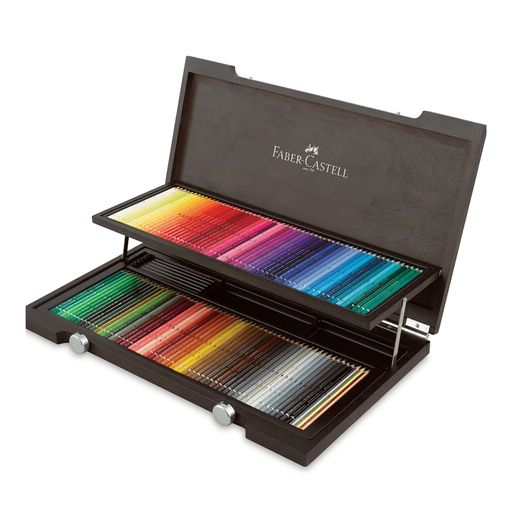
Why this choice suits this profile: A set designed for artists who want a very extensive palette and elegant storage for their studio.
The wide choice of shades stops you having to mix colours that are too far apart. The compartmented box also saves time when choosing your pencils.
120 colours, stated 3.8 mm lead, water-soluble pigments and compartmented wooden box.
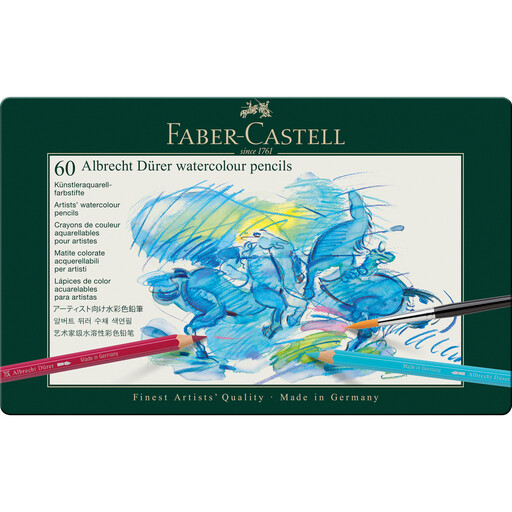
Why this choice suits this profile: With its 60 colours, this set is ideal for illustrators, regular work and anyone who switches between dry details, shadows and washes.
The stated thick lead and its reinforcement help reduce breakage with frequent use. The metal tin is easy to carry.
60 colours, stated 3.8 mm lead, dry and wet techniques and sturdy metal tin.
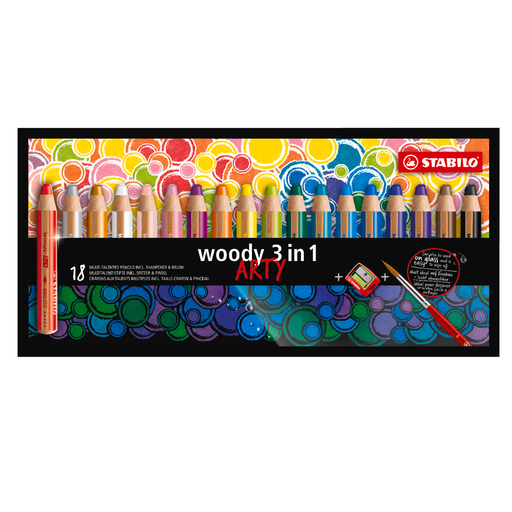
Why this choice suits this profile: Its short, thick body is easy to grip. It can be used as a colouring pencil, a watercolour pencil or a wax crayon on different surfaces.
The XXL core is designed to withstand heavy pressure. The included sharpener and brush mean you don't have to buy extra accessories straight away.
18 pencils, 10 mm core, use on paper, card, glass or ceramic, brush and sharpener included.
We've put together a complete, real-time updated selection of products that meet these demanding criteria, as well as European safety regulations.
Start by drawing on watercolour paper, then run a damp brush over the lines. Work in small areas to control the dilution better. Rinse the brush between colours and let the paper dry before adding a new layer.
It all depends on how often you use them, the pressure you apply and how many times you sharpen them. A reinforced lead can reduce breakage, but no pencil is unbreakable. Use a suitable sharpener, avoid dropping them and store the pencils in a dry, closed box.
Maintenance is inexpensive: a sharpener, one or two brushes and suitable paper are usually enough. The recurring expense is mainly for paper and replacing the colours you use most. A set with a brush included can help keep the initial cost down.