
Livraison le jour même ou le lendemain

Qualité garantie

Débloquez vos offres de bienvenue: Livraison GRATUITE | Jusqu'à -80 % | 30 jours d'essai gratuits à JoyPlus
Téléchargez l'application
A watercolour paint set might seem simple to choose: a few pans, a brush and a box are often enough to get started. Yet the format, pigment concentration, surface and accessories all have a direct impact on how comfortable it is to use. A student, a child, a hobbyist or an illustrator won’t necessarily have the same expectations.
Here are the main pitfalls to avoid and the criteria to consider before buying your next art painting supplies.
Gouache is generally more opaque and covering, whereas watercolour relies on transparent layers diluted with water. A set like the Maped Children's Gouache Paint 12 Tubes is fine for creative and school activities, but it isn’t a classic watercolour.
If you’re after transparent gradients, washes or layering effects, make sure you look for the words watercolour, aquarelle or transparent paint. For more opaque, flat colour on different surfaces, gouache will often be a better choice.
A 24-colour watercolour palette gives you more shades ready to use, but it can also be bulkier. On the other hand, a 12-pan kit lets you practise mixing and is easier to carry around.
So the number of colours alone isn’t enough to judge how good a watercolour box is. Also check:
Even good-quality paint can warp paper that’s too thin. Watercolour paper with a suitable weight absorbs water better and reduces buckling. For regular practice, also plan for a suitable brush, a water container and a surface for mixing.
Some sets already include paper, brushes or a guide. But take the time to check the exact contents listed, so you don’t end up buying the same supplies twice.
Watercolour in pans is especially handy for travel, classes and sketchbooks. The colours reactivate with a few drops of water, even after they’ve dried. A portable watercolour set is therefore generally easier to store and carry.
Watercolour in tubes is better suited to people who want to prepare larger amounts of mixed colour or work on bigger formats. 12 ml tubes, like those in the Talens Art Creation range, let you easily adjust the amount of paint and the level of dilution.
A transparent watercolour becomes lighter when you add water. This property makes it easy to create washes and layers. Some products also state that the colour remains re-wettable after drying. You can then rework an area with a damp brush, though that doesn’t mean the paint becomes water-resistant.
For school or leisure use, choose a box that’s easy to close. For more advanced practice, focus instead on the variety of shades, the mixing capability and compatibility with your watercolour paper.
For children’s watercolour paint, check the recommended age, whether there are any small parts and the manufacturer’s warnings. Several sets shown here are recommended for use from age 3, under direct adult supervision. The paint must not be ingested and contact with the eyes should be avoided.
A “safe” or “non-toxic” label doesn’t mean you can skip reading the usage instructions. Also remember to protect clothes and the table: pigments can leave stubborn stains.
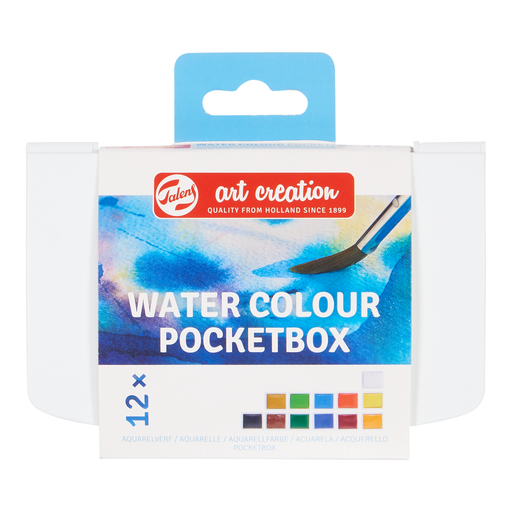
Why this choice suits this profile: This kit brings together 12 pans, a reversible brush, a sponge and a lid that doubles as a mixing palette, all in a compact case. A practical solution for getting started without buying lots of extras, at home or on the go.
The contents are clearly listed and the case includes mixing and cleaning areas. This helps you avoid forgetting an essential accessory.
12 transparent colours, water-reactivatable paint and a pocket-sized format with a lid palette.
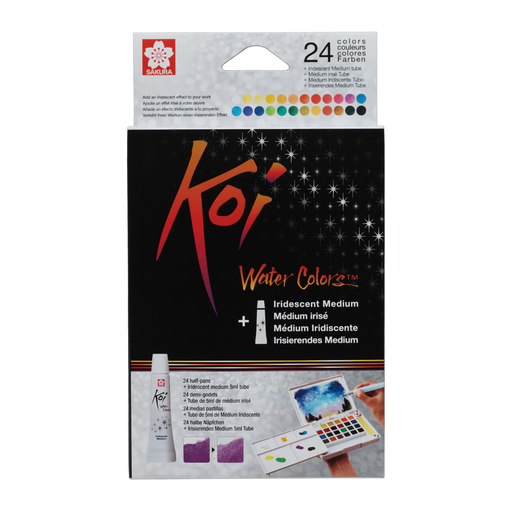
Why this choice suits this profile: With its 24 half-pans and iridescent medium, this box is aimed at amateur artists and illustrators who want to expand their palette and explore decorative effects.
The number of half-pans and the inclusion of a separate medium give you a clear idea of what the set is for, rather than relying solely on a large palette.
24 half-pans, portable case, integrated mixing area and iridescent medium for pearlescent finishes.
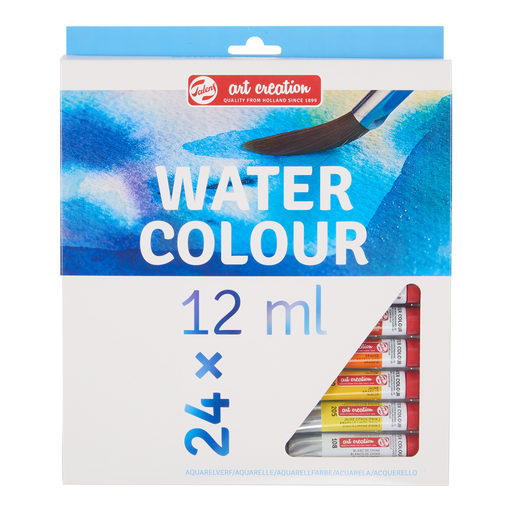
Why this choice suits this profile: The 24 tubes of 12 ml are ideal for people who paint regularly, prepare several mixes or work on larger formats in the studio.
The tube format makes the quantity and volume of each colour perfectly clear. You can therefore estimate your needs more easily before buying.
24 shades, 12 ml tubes and can be used on dry or wet paper.
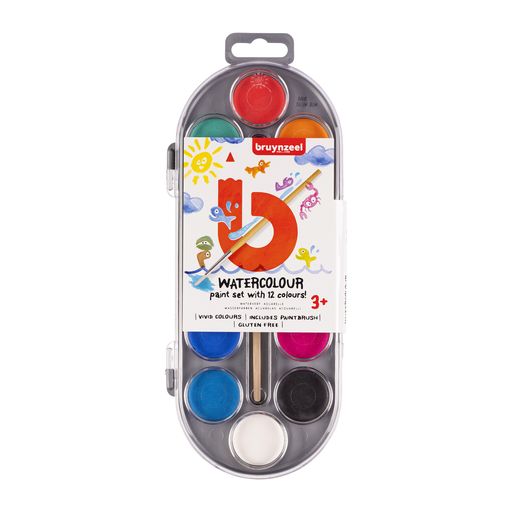
Why this choice suits this profile: The set includes 12 pans, a brush and a lid that doubles as a mixing palette. It’s suitable for creative activities at home or school, under the supervision recommended by the manufacturer.
The recommended age, contents and usage instructions are clearly stated. The case also helps prevent the pans from getting scattered.
Water-based paint, gluten-free formula stated, 12 colours and palette integrated into the lid.
We’ve put together a comprehensive, real-time updated list of products that fully meet these strict selection criteria and European safety regulations.
Water-soluble coloured pencils let you draw dry, then add water with a brush to turn the lines into washes. The Faber-Castell Albrecht Dürer Watercolour Pencils Tin of 12 is ideal for sketchbooks, detailed studies and mixed-media techniques.
Water-soluble felt-tip pens, like the Faber-Castell Albrecht Dürer set of 30 markers, have a fine tip and a brush tip. They can be very practical for illustrations, lettering or on-the-go sketching, as long as you use them on a sufficiently absorbent surface.
A beginner’s watercolour kit with 12 colours, a brush and a mixing palette is enough to learn the basics. Add watercolour paper, a water container and a cloth. A set that already includes paper can also help reduce separate purchases.
How long it lasts depends on how often you use it, storage conditions and whether the case is closed properly. Close the box after each session, clean the brush and let damp surfaces dry before putting everything away. Dry pans can usually be reactivated with water, according to the manufacturer’s recommendations.
There’s no universal answer. Pans are practical for working in small amounts and painting on the go, while tubes are better suited to frequent mixing and larger areas. Compare the total volume of paint, the number of shades and how often you actually paint, rather than relying solely on the price shown.