
Livraison le jour même ou le lendemain

Qualité garantie

Débloquez vos offres de bienvenue: Livraison GRATUITE | Jusqu'à -80 % | 30 jours d'essai gratuits à JoyPlus
Téléchargez l'application
The watercolor brush pen combines the precision of a pen with the fluidity of paint. It's a versatile tool that has become essential for brush lettering, illustration, and adult coloring. But with an overwhelming number of options on the market, it's easy to make the wrong choice and regret your purchase. This guide breaks down the essential criteria to help you make an informed decision that perfectly suits your creative practice.
Before diving into the technical details, let's review the common flaws that can ruin your experience.
To find the perfect brush pen set, let's scrutinize the parameters that will make all the difference in practice.
The tip is the heart of your watercolor brush pen. Its quality directly determines the fineness and variation of your strokes.
The ink's composition has a direct impact on the look and longevity of your artwork.
The pen's format is also a decisive factor. A dual-tip pen usually offers a brush tip on one end and a fine tip on the other. This setup is incredibly practical for combining flat washes, gradients, and fine details without juggling multiple tools. A particularly smart solution for adult coloring pens, bullet journaling, or technical illustration.
Here are some reliable choices, selected to meet specific needs and avoid the pitfalls we've just discussed.
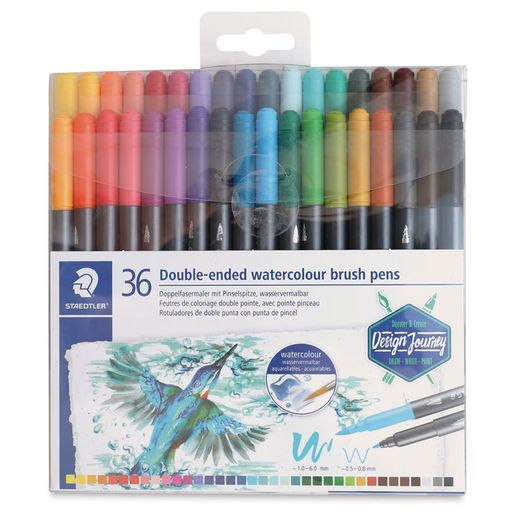
Why it's a great match: Ideal for starting out and exploring. The dual tip (brush + fine) offers maximum versatility for practicing both lettering and illustration. The wide assortment of 36 colors provides great creative freedom without breaking the bank.
STAEDTLER's reputation is well-established: its fiber tips are robust and limit the risk of premature fraying. The dual tip also saves you from buying a separate set of fine liners.
Versatility thanks to the dual tip; a wide palette of 36 colors for unbeatable value.
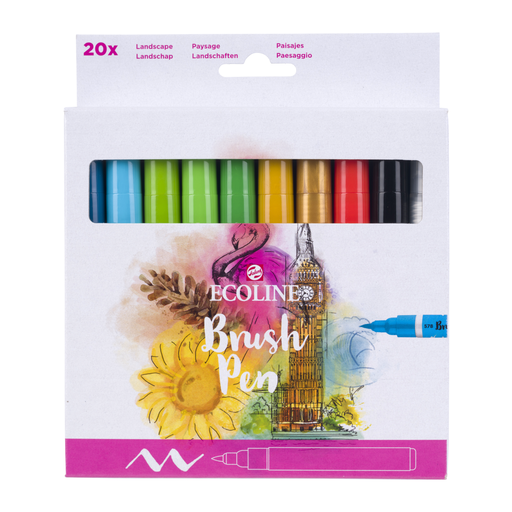
Why it's a great match: For those who want the quality of liquid watercolor in a portable format. Ecoline ink is renowned for its brilliance and blending capabilities. The "Landscape" palette is designed for illustrators who want a ready-to-use color harmony.
This set is the antidote to the pitfall of colors that refuse to blend. Its ink, based on dyes and gum arabic, is designed for perfectly smooth gradients and blends, with or without water.
Professional-grade ink quality, transparent and vibrant colors, exceptional blending with water and the included blender.
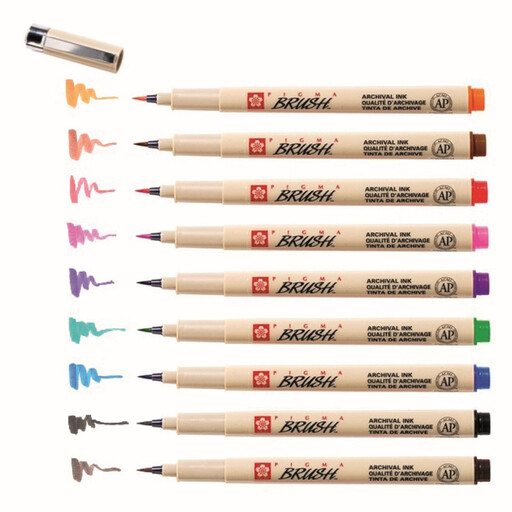
Why it's a great match: For artists who layer techniques (e.g., ink outlines followed by watercolor or alcohol marker coloring). The pigment-based Pigma ink is the gold standard for lines that won't bleed.
This set tackles the problem of inks that bleed and ruin an illustration. Pigma ink is permanent, waterproof, and lightfast once dry. It guarantees crisp outlines that will remain flawless during coloring.
Archival quality, permanent, and waterproof ink. Perfect for outlining, inking, and mixed media techniques.
Explore our full selection of products that meet our quality criteria and current safety standards.
If your pen tip has dried out, don't throw it away just yet! Gently dip the tip in a little water for a few seconds. Wipe off the excess on a paper towel and do a test stroke. To prevent this from happening, always cap your pens tightly and store your pens horizontally to ensure the ink is distributed evenly.
The fundamental difference lies in the ink's solvent. A watercolor pen uses a water-based ink that dilutes and blends with water to create transparent effects. An alcohol marker, on the other hand, uses an alcohol-based ink that dries very quickly and allows for smooth, streak-free flat washes and gradients by layering colors. The two are not mixable and require different types of paper.
Yes, and it's absolutely essential! To truly enjoy the watercolor effect, opt for watercolor or mixed-media paper with a weight of at least 180?g/m?, and ideally 300?g/m?. Standard paper (like printer paper, 80?g/m?) will buckle when it gets wet, and the ink will almost certainly bleed through. The right paper ensures perfect color blending and prevents your sheet from warping.