
Livraison le jour même ou le lendemain

Qualité garantie

Débloquez vos offres de bienvenue: Livraison GRATUITE | Jusqu'à -80 % | 30 jours d'essai gratuits à JoyPlus
Téléchargez l'application
Whether you're a plumber, a mechanic, or a weekend DIY enthusiast, water pump pliers are a toolbox essential. However, choosing the right model can quickly become a headache. Between marketing promises and confusing technical specs, it's easy to end up with a tool that just isn't up to the task. This guide is here to help you avoid the common pitfalls and choose a pair of water pump pliers that truly fits your needs.
The wrong tool is a recipe for frustration, but it's also a risk to your safety and the quality of your work. Here are the classic mistakes that lead to a bad purchase.
To invest in a high-performance, durable tool, focus on these key technical points that make all the difference.
The longevity of a pair of pliers depends above all on the quality of its steel. Chrome Vanadium (Cr-V) Steel is the gold standard for professional hand tools. When properly heat-treated, this alloy offers hardness and resistance to torsion that are far superior to standard carbon steel. It's your guarantee that the teeth will keep their bite and the pliers won't deform, even under heavy pressure.
This is the heart of the tool. While the traditional tongue-and-groove system is still common, the push-button adjustment is a game-changer. It allows for precise, rapid, and secure adjustment directly on the workpiece. This technology, once exclusive to high-end models, has become more accessible and represents a phenomenal time and comfort saver, especially for regular use.
The shape and hardness of the teeth determine the quality of the grip. A good pair of water pump pliers must be able to grip round, hexagonal, or square surfaces without ever slipping. Also, be sure to check the maximum opening capacity of the jaws. A large opening is crucial for plumbing work on large-diameter pipes, while a more compact size will be much more agile for fine mechanical work.
Rather than an endless catalogue, we've selected three options that meet specific needs. This will help you find the tool that truly matches your projects.
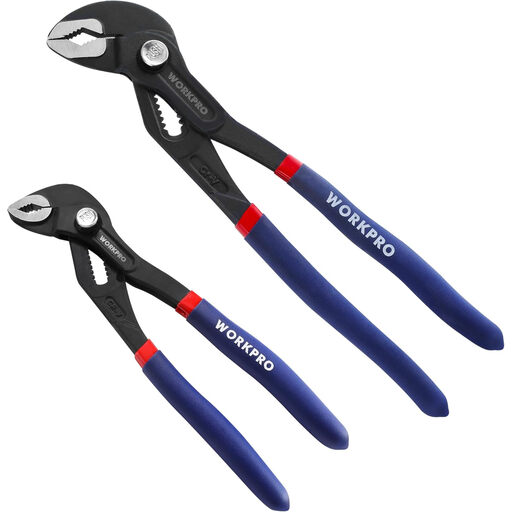
Why we chose it: This set of pliers covers the majority of common needs, from small mechanical jobs to household plumbing. It's the perfect starter kit to get properly equipped without breaking the bank.
By offering two complementary sizes, this set avoids the "one-size-fits-none" trap. Each pair is optimised for a specific range of use and features the quick push-button adjustment.
The Cr-V steel construction and push-button adjustment on both models. A duo that offers unbeatable value for its versatility.
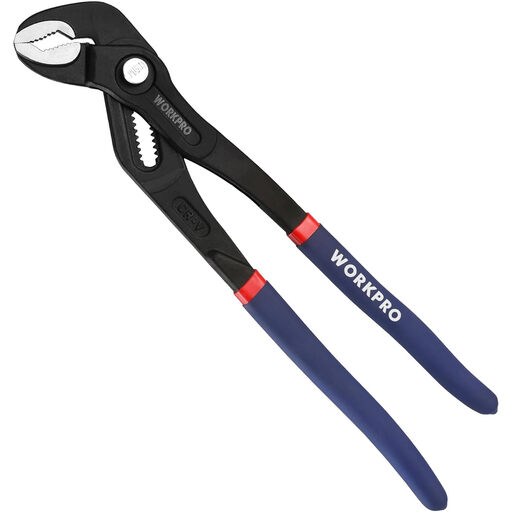
Why we chose it: Designed for heavy-duty work, this large-size pair of pliers offers the robustness and capacity needed for plumbing projects or industrial maintenance. It's the reliable tool for intensive, daily use.
Its heat-treated Cr-V steel construction is an insurance policy against "deceptive durability." This is a specialised tool, not a compromise.
Its very large opening capacity (50 mm) combined with the quick push-button adjustment, for formidable efficiency on large diameters.
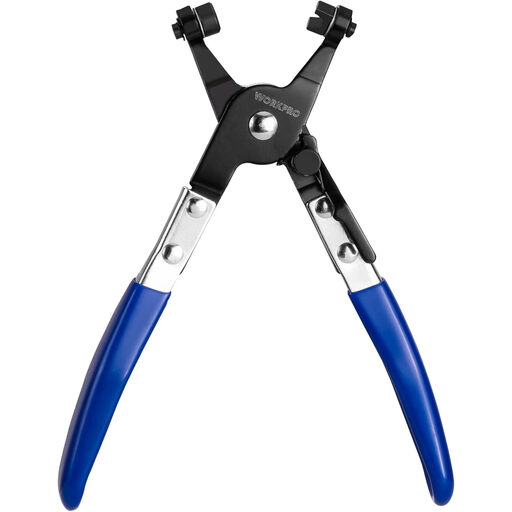
Why we chose it: Essential for handling flat-band or ring-type hose clamps in engine bays, where standard pliers are either ineffective or destructive.
It's the antithesis of a "do-it-all" tool. Its ultra-specialised design with a pivoting head is engineered for a single mission, which it executes perfectly.
Its pivoting head allows you to engage clamps from any angle, even in the most inaccessible corners of an engine.
Explore our full selection of pliers that meet our quality and safety standards.
Although the terms are sometimes used interchangeably, there's a slight historical nuance. The pipe wrench, as its name suggests, originally had jaws designed specifically for round pipes. Modern water pump pliers are much more versatile, with a jaw geometry capable of effectively gripping round, flat, square, and hexagonal shapes. Today, a good pair of water pump pliers perfectly fulfils the role of a pipe wrench for most tasks.
Maintenance is simple but shouldn't be neglected. After each use, wipe them down with a cloth to remove debris and moisture. Occasionally, a drop of oil on the pivot and adjustment mechanism will ensure smooth operation and protect against rust. Also, remember to inspect the condition of the teeth for any premature wear.
Yes, without a doubt, for regular use. The push-button adjustment is much faster and more precise than groove-joint systems. It locks the position more reliably, which eliminates the risk of slipping under load. For an occasional DIYer, a classic model will do the job, but for frequent or professional use, the time and comfort savings easily justify the extra cost.