
Livraison le jour même ou le lendemain

Qualité garantie

Débloquez vos offres de bienvenue: Livraison GRATUITE | Jusqu'à -80 % | 30 jours d'essai gratuits à JoyPlus
Téléchargez l'application
As a product expert at Joybuy, my mission is simple: to help you navigate the jungle of everyday gadgets and make the right choice, with complete objectivity. Today, we're putting the spotlight on the water flosser, also known as an oral irrigator.
This device has become an invaluable tool in our oral hygiene routine. But with an overwhelming number of options, it's easy to be fooled by marketing claims and end up with buyer's remorse. Let's review the key things to watch out for and the essential criteria to ensure you make the right purchase.
The market is flooded with models making tempting promises. Unfortunately, some features that look great on paper hide real-world problems. Here are the three most common pitfalls.
Many manufacturers claim weeks, or even months, of battery life for their portable water flosser. Be wary: this estimate is almost always based on minimal use (lowest setting, once a day for 60 seconds). In real life, for more realistic daily use, you can divide that time by two or three. When you're on the go, a travel water flosser that runs out of battery quickly becomes dead weight.
A super-powerful jet might seem like a sign of effectiveness, but it's a mistake. Pressure that is too high and not adjustable can be aggressive, or even painful, for sensitive gums or on recent implants. Conversely, pressure that is too low won't effectively dislodge residue in hard-to-reach areas, especially for a water flosser for braces. The lack of multiple pressure settings is a major red flag.
A water reservoir that isn't fully detachable or has a tiny filling opening is a potential breeding ground for bacteria. Stagnant moisture and inaccessible corners are the perfect playground for limescale and germs. A device meant to improve your hygiene shouldn't become a source of contamination itself.
To avoid these unpleasant surprises, focus on objective features. Here are the three fundamental parameters for finding the electric water flosser that's truly right for you.
Pressure, measured in PSI (Pound-force per Square Inch), defines the force of the water jet. A quality model should offer an adjustable pressure range and several modes:
The choice depends on your lifestyle.
A cordless water flosser with a removable reservoir and a wide opening is often the most practical and hygienic choice.
For a portable model, the battery capacity, expressed in mAh (milliampere-hours), is a key indicator. A battery of 1500?mAh or more guarantees longer use. Another crucial point is the charging port. Opt for USB-C, which has become the universal standard and is far more convenient than a proprietary charger that you always end up misplacing.
Every user has different needs. Here are models that cater to distinct user profiles, selected based on the objective criteria we've just defined.
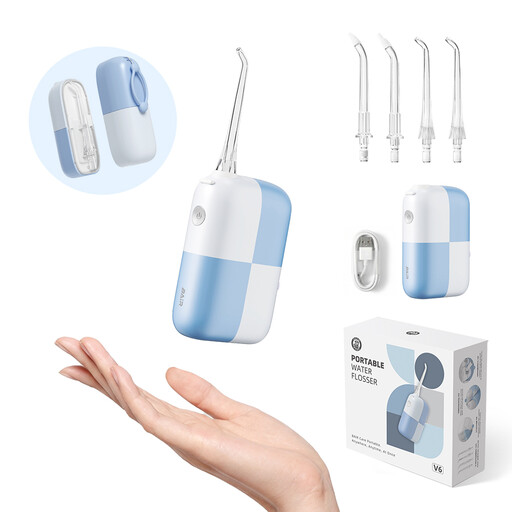
Why it stands out: Designed for mobility, it collapses to be no larger than a smartphone. Its patented magnetic reservoir and internal tip storage make it a perfectly optimised travel companion.
It solves the problem of on-the-go hygiene with its easy-to-clean magnetic reservoir. Its "on-demand pressure" mode allows for precise jet control, saving both water and battery.
Highlights: Ultra-compact foldable design, hygienic magnetic reservoir, integrated tip storage, up to 30-day battery life.
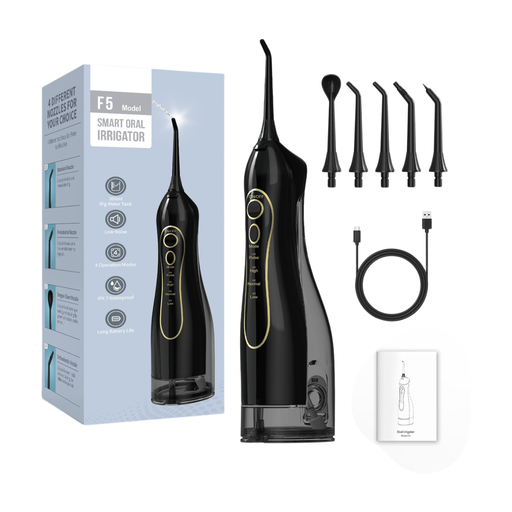
Why it stands out: It combines high pressure (up to 140 PSI) to dislodge debris around brackets, a 300 ml reservoir for a complete clean, and a specific orthodontic tip included in the package.
It avoids the single-pressure trap by offering 5 distinct modes. This allows you to adapt the power for effective cleaning of braces without irritating gums, which are often sensitive during treatment.
Highlights: 5 pressure modes, orthodontic tip included, 300 ml reservoir, up to 40-day battery life.
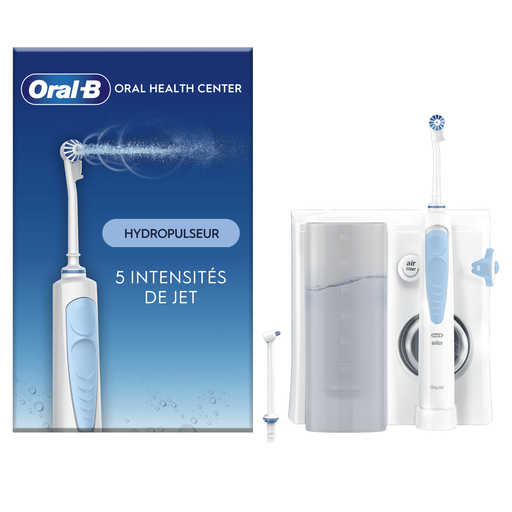
Why it stands out: This countertop station is designed to stay in the bathroom. Its very large 600 ml reservoir prevents constant refilling, which is perfect for multiple users or a deep clean.
It eliminates the constraints of a small reservoir and battery life, as it's plugged into the mains. Its mechanical control dial offers precise and reliable pressure control across 5 levels.
Highlights: Very large 600 ml reservoir, 5-level adjustable pressure via a dial, Oxyjet technology that enriches water with micro-bubbles of air.
We've analysed dozens of models to select only those that meet our strict selection criteria and current safety standards.
The average lifespan of a water flosser is between 3 and 5 years. This depends on the build quality and, most importantly, maintenance. To make it last as long as possible, follow a few simple steps: empty the reservoir after each use, clean it regularly with a mild soap, and occasionally descale it with diluted white vinegar (if permitted by the manufacturer). Also, remember to replace the tips every 3 to 6 months; this is essential for hygiene and effectiveness.
Yes, but under certain conditions. Only use alcohol-free, non-oily, and non-abrasive mouthwashes, and always remember to dilute them with water. Crucially, after use, you must rinse the entire system by running the device with a full reservoir of clean water. This prevents residue from clogging the pump or tips. When in doubt, consult the user manual.
No, the water flosser is a supplement, not a substitute. Brushing your teeth remains the essential step for removing plaque. Floss or interdental brushes are still the most effective tools for cleaning the tight contact points between teeth. The oral irrigator, on the other hand, is unbeatable for dislodging food debris, rinsing hard-to-reach areas (braces, implants, periodontal pockets), and massaging the gums. It perfects the work done by brushing and flossing.