If you mostly dry your laundry indoors, start by choosing a capacity that suits your usual loads, then compare the spin efficiency and noise levels of the specific model. Its maximum spin speed alone is not enough to make a decision. A top-loading machine may suit you if access or width is an issue, while a front-loader is worth considering if you regularly wash bulky loads and have enough space. Either way, make sure you have a well-ventilated place to dry your laundry.
Who is this advice for?
Households that dry a lot of laundry indoors
Spin performance matters to you, but so does noise during the cycle. ADEME points out that drying laundry indoors releases moisture into the air, so choosing a washing machine should go hand in hand with finding a well-ventilated place to dry your clothes.
Households that alternate between small loads and household linens
Your usual load matters more than the maximum capacity shown. UFC-Que Choisir notes that some fabric-specific programmes take smaller loads than the machine’s rated capacity, so check their limits if you often sort your laundry by fabric type.
People with limited space
The available width and access to the drum may influence whether you choose a front-loader or a top-loader. Also measure the space needed to open the door or lid, then compare the capacity and noise levels of the model you’re considering.
Which features should you prioritise?
If you dry your laundry indoors, compare each machine’s specifications with your actual loads and the space you have available. ADEME highlights the moisture produced when drying laundry indoors, while UFC-Que Choisir also recommends checking programme load limits and spin noise levels.
| What matters |
What to check |
Who is this useful for? |
| Moisture left after spinning |
Spin efficiency class and maximum spin speed. Don’t assume the machine will reach its maximum speed with every load. |
When I need to dry laundry on an airer indoors, I want it to retain less water when it comes out of the drum. Around 33 % of consumers make this their top priority. |
| Usable capacity |
Maximum load for the programmes you use and the machine’s dimensions, not just its stated capacity in kilograms. |
If I alternate between small loads and household linens, I want to avoid both underloaded cycles and extra washes. This is the top priority for around 27 % of consumers. |
| Spin noise |
Noise emissions in dB and the noise class of the specific model, as well as the manufacturer’s installation requirements. |
A washing machine near living areas can disrupt my activities during the spin cycle. Quiet operation is the top priority for around 20 % of consumers. |
| Durability and consumption |
Durability index, electricity consumption in kWh/100 cycles and water consumption in L/cycle shown for the model. |
If I use my washing machine regularly, I want to compare durability information and energy and water consumption before choosing between two models. Around 20 % of consumers prioritise these factors. |
Mistakes to avoid
-
Assuming the stated capacity applies to every programme
A drum with a capacity of 8 or 9 kg won’t necessarily take that much laundry on synthetic, jeans or wool programmes. UFC-Que Choisir points out that load limits can be considerably lower on certain programmes, so choosing the wrong capacity could mean more washes or underloaded cycles.
Make a note of the fabrics and amounts you wash most often, then check the permitted loads in the manuals for the models you’re comparing.
-
Choosing based only on revolutions per minute
Maximum spin speed alone doesn’t tell you how much water will remain in your laundry or how noisy the machine will be. Bosch explains that the maximum speed for its WGJ2440SFR may be reduced if the load is unbalanced.
Compare the spin efficiency class, maximum spin speed and noise emissions of the model you’re interested in.
-
Assuming a modern motor means quieter spinning
The type of motor doesn’t replace model-specific noise figures. UFC-Que Choisir notes that spin noise is still something to consider when choosing a washing machine.
Compare the stated dB and noise class, then follow the manufacturer’s instructions to install the machine on a suitable, stable floor.
-
Expecting the washing machine to manage indoor humidity on its own
Even after the spin cycle, drying laundry indoors releases moisture. ADEME recommends drying it in a large, well-ventilated room or one with suitable extraction.
Plan where you’ll dry your laundry when choosing a washing machine. A high spin speed is no substitute for good ventilation.
Brands to consider
The specifications below relate to specific models, not every machine made by each brand. They can help you identify what to compare before making your choice.
Bosch
The front-loading WGJ2440SFR gives you the option of a stated capacity of 9 kg and a maximum spin speed of 1 400 tr/min.
- Bosch lists dimensions of 845 × 598 × 590 mm, which are useful when checking the space you have available.
- Bosch says that the maximum speed may be reduced if the load is unbalanced. Compare the model’s spin efficiency and noise levels too.
Electrolux
According to its product information, the front-loading EWF0814A4 has an 8 kg capacity, a spin speed of 1 400 tr/min and a depth of 568 mm.
- The product information also lists 47 kWh/100 cycles and 43 L/cycle for this model.
- If you’re considering it for a living area, check its spin noise and durability index. You can’t infer these figures from the specifications of another Electrolux model.
Miele
Miele’s product information for the front-loading WQ 1000 WPS Nova Edition lists a 9 kg capacity and a maximum spin speed of 1 600 tr/min.
- For this model, Miele lists an A spin efficiency class and an A noise class. Consider both alongside your needs.
- These classes apply specifically to the WQ 1000 WPS Nova Edition; they don’t represent every Miele washing machine.
Washing machines available from Joybuy
These front-loading and top-loading models suit different ways of washing laundry before drying it indoors. Compare their capacity with your usual loads, then check the spin performance, noise and installation details for the model you choose.
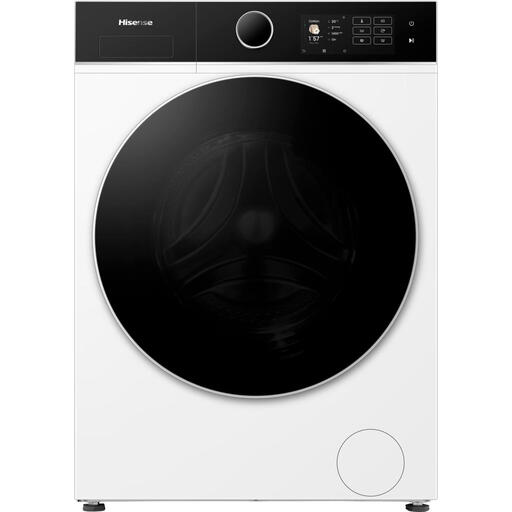 Image unavailable
Hisense WF5I8043BWF, 8 kg
This front-loader is worth considering if an 8 kg capacity suits your usual loads and you want to spin your laundry before drying it.
The product name indicates a maximum spin speed of 1 400 tr/min. Check the manual for programme load limits, as well as the dimensions, spin noise and durability index listed for this model.
View on Joybuy
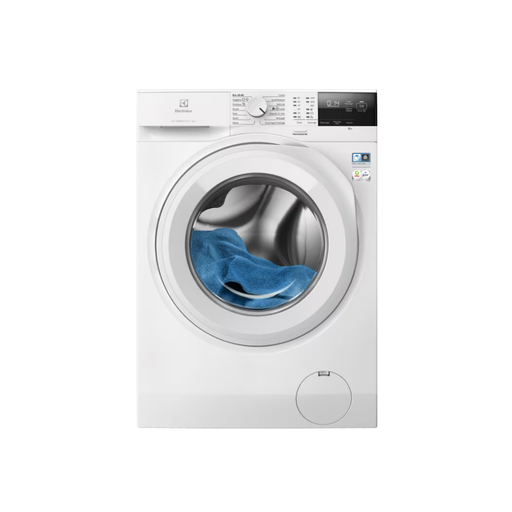 Image unavailable
Electrolux EW6FI4805AW, 8 kg with SensiCare
This front-loader may suit a household looking for an 8 kg capacity that washes different types of loads.
The product name mentions SensiCare and a maximum spin speed of 1 400 tr/min. Check the manual for the permitted load on each programme, then compare spin noise and the durability index before choosing.
View on Joybuy
 Image unavailable
Candy TCA464TM4-S ProWash 500, 6 kg
This top-loader is worth considering if easy access to your laundry matters more to you than a large capacity.
Its name indicates a 6 kg capacity and a maximum spin speed of 1 400 tr/min. Check that the capacity suits your household linens, that the lid can open in your chosen spot and that the spin noise is acceptable to you.
View on Joybuy
 Image unavailable
Electrolux EWF1410N2, 10 kg
This front-loader is best suited to a household that regularly washes bulky loads, provided your laundry makes good use of its 10 kg drum.
If you often wash small loads, check the programmes and their limits in the manual. Measure the space available and check the model’s spin noise before deciding.
View on Joybuy
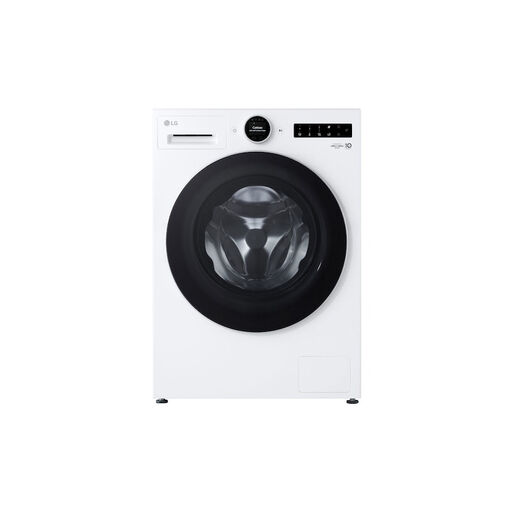 Image unavailable
LG F4WX851Y, 11 kg
This 11 kg front-loader is worth considering if you regularly have large loads to wash before drying them, rather than lots of small loads.
Check the permitted loads for each programme and the installation dimensions. To see if it’s suitable for indoor drying, also compare its stated spin efficiency, noise and durability index.
View on Joybuy
Frequently asked questions
Does an 8 or 9 kg capacity apply to every load?
No. It refers to the maximum load under the conditions of the relevant programme. UFC-Que Choisir notes that programmes for synthetics, jeans or wool may take less laundry. Check the manual if these fabrics make up a significant part of your washing.
Is a high spin speed enough if you dry your laundry indoors?
No. Check the specific model’s spin efficiency class and noise levels too. An unbalanced load may prevent it from reaching its stated maximum speed. ADEME also points out that drying laundry indoors releases moisture, so make sure you have a well-ventilated room for drying.
Should you check the durability index of a washing machine sold in France?
Yes. ADEME states that washing machines sold since April 2025 must display this index. Check the rating and any available details for the model you’re considering, but don’t let it replace checks on capacity, spin performance and noise.
Where should you dry your laundry after washing it?
ADEME recommends a large, well-ventilated room or one with suitable extraction. Where you dry your laundry still matters, even if you choose a washing machine with spin performance that meets your needs.


