
Livraison le jour même ou le lendemain

Qualité garantie

Débloquez vos offres de bienvenue: Livraison GRATUITE | Jusqu'à -80 % | 30 jours d'essai gratuits à JoyPlus
Téléchargez l'application
Buying a washing machine is about more than comparing the price or the number of programmes. Usable capacity, depth, noise levels, energy and water consumption, and installation constraints can turn a seemingly good deal into an appliance that is frustrating to live with every day. In a French home, your choice should also reflect the space available, your laundry routine, and ongoing running costs.
Here are the key criteria to consider before choosing your washing machine, along with a selection of models suited to different household profiles.
A capacity of 10 or 11 kg may be suitable for a large family, but it is not necessarily the right choice for one person or a couple. The stated capacity refers to the maximum load, generally reached on certain programmes, particularly the cotton cycle. An oversized drum may therefore frequently run half-empty while taking up more space than necessary.
Conversely, a 7 or 8 kg washing machine can quickly feel restrictive if you regularly wash bed linen, towels, or sportswear.
The Class A washing machine label is a useful starting point, but it is not enough to distinguish between two appliances. You should also compare:
A model rated at 37 kWh/100 cycles will not have the same running costs as one using 51 kWh/100 cycles, even if both carry an energy class A rating.
The depth stated by the manufacturer does not always include the space required for hoses or the clearance needed to open the door. Before delivery, measure the alcove, passageways, and access angles.
A front-loading washing machine must also be perfectly level. Poorly adjusted feet can cause vibration, increase noise, and make the appliance move during the spin cycle. In an apartment, the noise level in dB(A) deserves particular attention.
The right capacity depends primarily on how often you do laundry. A family-sized machine should not be chosen solely according to the maximum volume of its drum.
A front-loading washing machine generally provides a usable top surface that can serve as a worktop. It can also be installed beneath a suitable cupboard or work surface. However, you need sufficient clearance in front of the door to load and unload it comfortably.
A top-loading washing machine is loaded from above. It can be more convenient when space in front of the appliance is limited, but its lid requires enough vertical clearance. Some models are only around 40.5 cm wide, making them easier to install in a narrow room.
A spin speed of 1,400 rpm generally leaves less moisture in the laundry than a lower speed. This can reduce the time spent in the tumble dryer or on the airer, although you should still follow the care instructions on textile labels.
Inverter motors and direct-drive systems are often promoted for their ability to reduce vibration and energy consumption. Do not rely on the marketing claim alone: compare concrete specifications such as spin-cycle noise, energy use, and warranty terms.
Steam, automatic dosing, and Wi-Fi connectivity can be useful in some households, but these features do not replace a programme suited to the fabric. Steam can refresh certain garments and help reduce creasing, while connectivity is mainly useful for monitoring cycles or customising them.
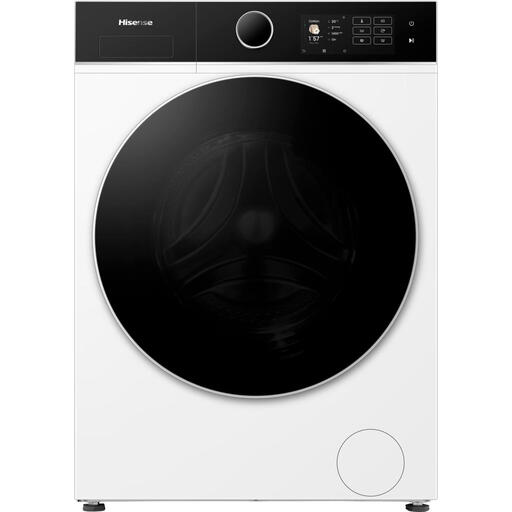
Why this model suits the profile: with a stated depth of 47 cm, it can fit into a bathroom or utility room where every centimetre matters.
Its detailed dimensions make it easier to assess the space required before installation, rather than relying on width alone.
8 kg capacity, Class A rating, 33 kWh/100 cycles, 38 litres per cycle, and a stated noise level of 72 dB(A) during the spin cycle.
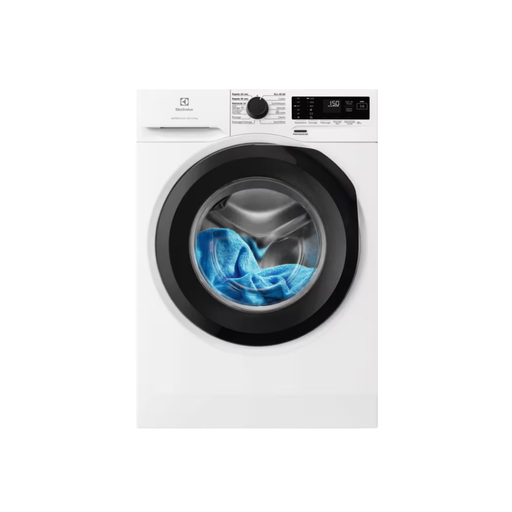
Why this model suits the profile: its 10 kg drum is well suited to large laundry loads and everyday family washing.
The specification sheet separates capacity, energy consumption, and noise level, making it possible to compare appliances using concrete data.
Class A rating, 51 kWh/100 cycles, 52 litres per cycle, spin speeds of up to 1,351 rpm, and a stated inverter motor.
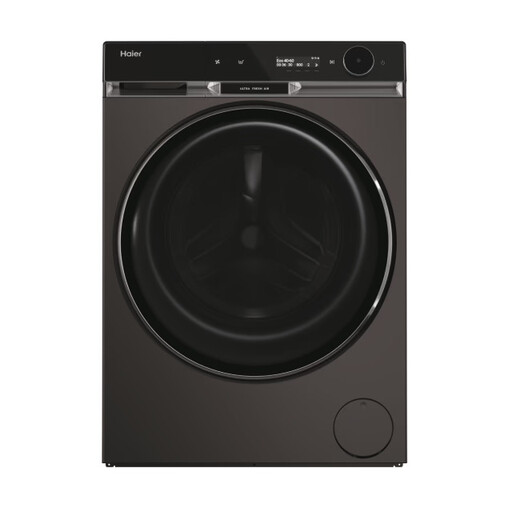
Why this model suits the profile: it combines a 10 kg capacity with a steam function, Wi-Fi, and an AutoDose system that automates part of the laundry-care routine.
Connectivity is backed by precise data on consumption, noise, and dimensions, rather than a vague smart-home promise.
41 kWh/100 cycles, 48 litres per cycle, 68 dB(A) during the spin cycle, Wi-Fi, Bluetooth, and 1,400 rpm.
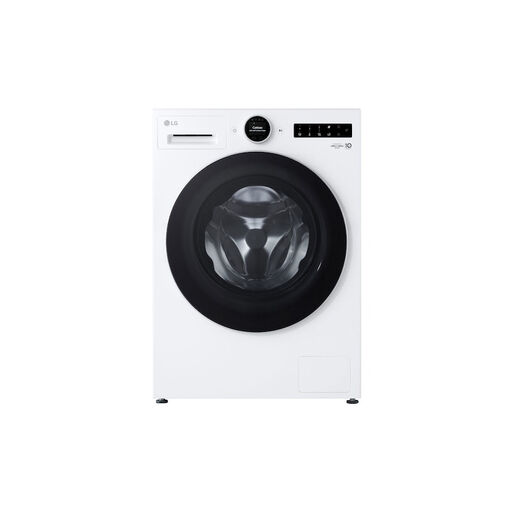
Why this model suits the profile: its 11 kg capacity is ideal for households that regularly wash bed linen, towels, or large quantities of clothing.
This large capacity comes with a stated consumption of 37 kWh/100 cycles, which should be considered alongside your laundry habits and the programmes you use.
11 kg capacity, Class A rating, 1,360 rpm, Wi-Fi, steam function, and automatic detergent dosing according to the product sheet.
Explore an up-to-date selection of washing machines suited to different needs, capacities, and home layouts.
A model with a capacity of 8 to 9 kg is generally suitable for a medium-sized household. A 10 or 11 kg capacity becomes worthwhile if you often wash bulky items or want to reduce the number of cycles. However, make sure the available space can accommodate the appliance.
Wi-Fi connectivity results in a small amount of standby consumption, but the overall impact depends mainly on the programmes used and how frequently you wash. Connected features are primarily designed to let you monitor cycles remotely, receive notifications, or download new programmes. Before buying, compare the consumption figures shown on the energy label.
This depends on how frequently it is used, how well it is maintained, and the quality of the installation. To help extend its lifespan, avoid overloading it, clean the door seal and detergent drawer regularly, check the filter, and leave the door slightly open after each cycle. You should also review the warranty terms and the availability of replacement parts.