
Livraison le jour même ou le lendemain

Qualité garantie

Débloquez vos offres de bienvenue: Livraison GRATUITE | Jusqu'à -80 % | 30 jours d'essai gratuits à JoyPlus
Téléchargez l'application
A washing machine can look spotless while still accumulating detergent residue, limescale, fibres and moisture in the seal, filter or pipes. These deposits encourage unpleasant smells and can make laundry seem less fresh. For UK households, choosing a washing machine cleaner therefore involves more than simply believing the claim printed on the packaging.
A washing machine descaler mainly tackles mineral deposits caused by hard water. It does not necessarily replace a product designed to remove detergent residue, greasy dirt or deposits found on the seal.
Conversely, a drum cleaner focused on hygiene may not necessarily be formulated for preventive use with every wash. So check whether the product is intended for:
Claims such as “99.9%” should always be considered in context. They may depend on a specific protocol, a particular temperature, a set contact time and a defined surface. Depending on the label, the product may require an empty 60 °C cycle, with no laundry or detergent.
It is better to regard these details as conditions of use to follow, rather than as a guarantee that applies to every machine and every situation.
A washing machine cleaner may contain oxygen-based agents, acids or surfactants. Some products are corrosive or irritating. If mixed with bleach, vinegar, another descaler or a chlorine-based product, it may cause a dangerous reaction.
Wear gloves when recommended on the label, ventilate the room, follow the dosage instructions and keep sachets or bottles out of the reach of children and pets.
Sachet washing machine cleaners come with a pre-set dosage. They are convenient if you want to avoid measuring powder or liquid. A 50 g sachet may be enough for one treatment, but always check the instructions: the format does not guarantee universal compatibility.
Bottles can sometimes allow you to adjust the quantity used more precisely. They may be suitable for regular maintenance or several appliances, provided you follow the manufacturer’s recommendations carefully.
A front-loading washing machine and a top-loading model do not always fill in the same way. Some products are poured directly into the drum, while others go into the detergent drawer.
Before buying, check:
A 60 °C programme is often recommended for formulas designed for deep cleaning. However, make sure this temperature is permitted by both the product and your washing machine.
To remove mould from a washing machine, you may need to treat the seal in addition to running a cleaning cycle. If your water is very hard, look for a clearly stated washing machine anti-limescale function. If unpleasant smells persist, choose a formula that mentions odour control or residue removal.
A washing machine disinfectant must be used in accordance with its biocidal labelling. Do not exceed the recommended frequency and do not use it on laundry unless the packaging explicitly states that you can.
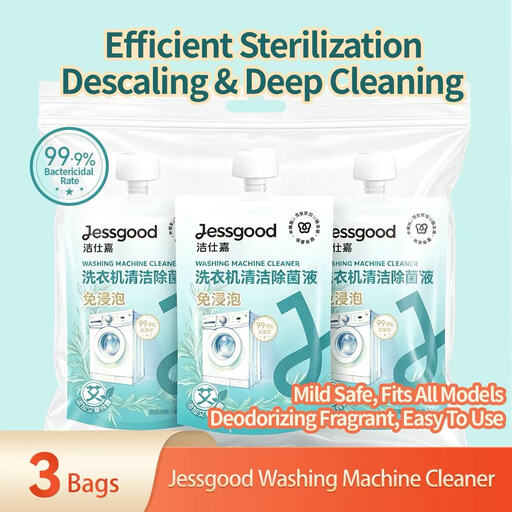
Why this choice suits this profile : The sachet format makes dosing easy for a first maintenance treatment, with three treatments included in the same pack. The product is suitable for both front-loading and top-loading washing machines.
The instructions distinguish between cleaning the drum and treating the seal or filter locally. Maintenance therefore involves more than simply running a fragranced cycle.
Pre-dosed sachets ; instructions suitable for several washing machine configurations.
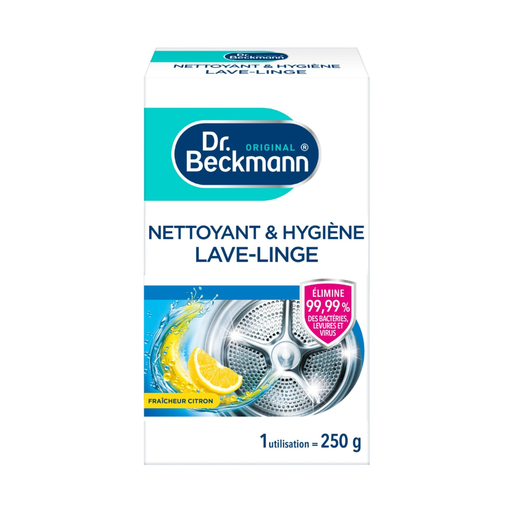
Why this choice suits this profile : This single-dose treatment is aimed at users looking for a formula specifically focused on residue and odours, with a recommended cycle of at least 60 °C.
The instructions specify that the machine must run empty, without a pre-wash or detergent, using the entire 250 g contents. This makes the conditions of use easy to check.
Single-dose treatment ; formula stated to contain oxygen-based bleaching agents.
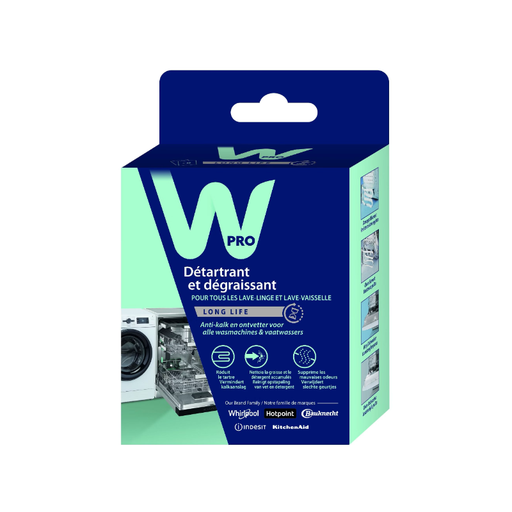
Why this choice suits this profile : The pack of six 50 g single-dose sachets is ideal for households that schedule regular maintenance or use their appliance frequently.
The individual dose reduces guesswork. The instructions recommend a long 60 °C cycle, without detergent, fabric softener or any other cleaning product.
Six 50 g sachets ; advertised action against limescale, internal residue and odours, in accordance with the manufacturer’s instructions.
We have put together a comprehensive, real-time-updated list of products that meet these demanding selection criteria and European safety regulations.
A washing machine cleaner does not replace regular maintenance. Once the cycle has finished, leave the door and detergent drawer slightly open to limit moisture. Remove visible residue from the seal with a damp cloth and clean the filter in accordance with your appliance’s instructions.
For effective maintenance:
A washing machine descaler can be useful in areas where the water is highly mineralised. If you regularly wash at low temperatures, an odour-control treatment will often be more suitable. How often you use it depends on the hardness of your water, your habits and the recommendations on the label.
No, unless the packaging explicitly says so. The products featured here are generally intended for an empty cycle, with no laundry, detergent or fabric softener. This precaution prevents unsuitable contact with fabrics and ensures that the instructions are followed correctly.
Some single-dose products can be used once a month, while other treatments are intended for use only a few times a year. Follow the instructions, taking into account how often you use the machine, any smells you notice and the hardness of your water. The seal and detergent drawer can be cleaned more frequently, without automatically applying a chemical product every time you wash.
It can help clean certain areas, but the result depends on the condition of the seal, the type of deposit and whether the recommended contact time is followed. For a localised mark, check whether the product permits direct application to the seal. Never use bleach with a descaler or another formula without first checking that they are compatible.