
Livraison le jour même ou le lendemain

Qualité garantie

Débloquez vos offres de bienvenue: Livraison GRATUITE | Jusqu'à -80 % | 30 jours d'essai gratuits à JoyPlus
Téléchargez l'application
A multi-purpose washing-up sponge can clean plates, worktops, sinks and even bathrooms. But not all sponges are created equal or suited to the same tasks. A surface that is too abrasive could mark a non-stick frying pan, while highly absorbent foam that is difficult to rinse may trap grease and unpleasant odours.
Before buying a pack of household sponges, it is worth keeping three potential pitfalls in mind.
A double-sided sponge generally combines a soft, absorbent side with a scouring side. This design lets you switch from wiping to removing stubborn residue without changing accessories.
For everyday washing up, choose a cellulose, foam or microfibre side that can hold water and washing-up liquid. The scouring side is better suited to food deposits, but should not be used automatically on delicate coatings. Some product descriptions specifically state that the abrasive side is unsuitable for non-stick frying pans, delicate glass or varnished surfaces.
An absorbent sponge makes it easier to clean worktops and helps reduce water marks. However, high absorbency alone is not enough: its structure should also allow dirt to be released quickly.
In particular, look for:
Treatments such as ‘Grease Stop’, when mentioned by the manufacturer, are intended to make the fibres easier to rinse. This is a design feature, not a promise that no residue will remain at all.
A machine-washable sponge can extend the time between replacements, provided you follow the recommended temperature and care instructions. Some products can be washed at 40 °C, others at 70 °C, while a few models can also be cleaned in the dishwasher.
Always check the instructions:
The claim ‘up to 52 washes’, found on some products, refers to the limit stated by the manufacturer under specified conditions. In practice, the lifespan depends on how often it is used, the cleaning products involved and the type of dirt being removed.
The models below are categorised according to different needs: everyday cleaning, versatility, bathroom cleaning or intensive use.
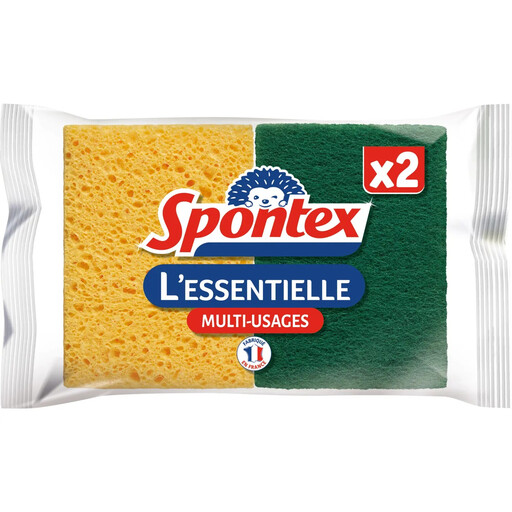
Why this choice suits this profile : This two-pack covers everyday needs thanks to its compact, easy-to-handle design, making it just as useful in the kitchen as in the bathroom.
The separate soft and scouring sides help prevent misuse. The manufacturer recommends replacing the sponge approximately every two months and testing it first on delicate surfaces.
A PEFC-certified cellulose vegetable sponge, two distinct sides and manufacturing stated to take place in France.
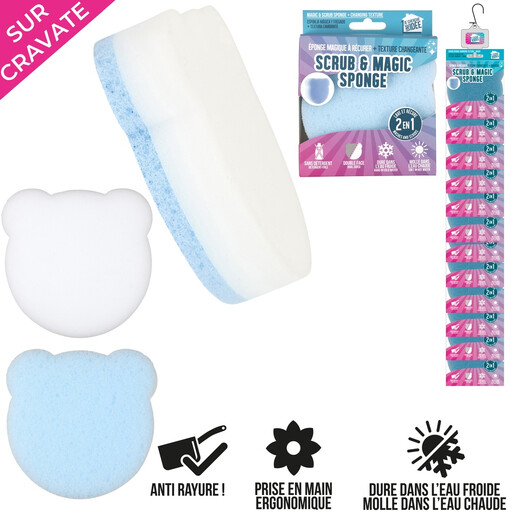
Why this choice suits this profile : Its two-surface design is ideal for households looking for a single accessory for everyday washing up and more stubborn deposits.
The texture of the scouring side varies depending on the water temperature. Even though it is described as non-scratch, testing it on an inconspicuous area is strongly recommended.
High-density absorbent foam, an ergonomic grip and a texture stated to be suitable for both cold and hot water.
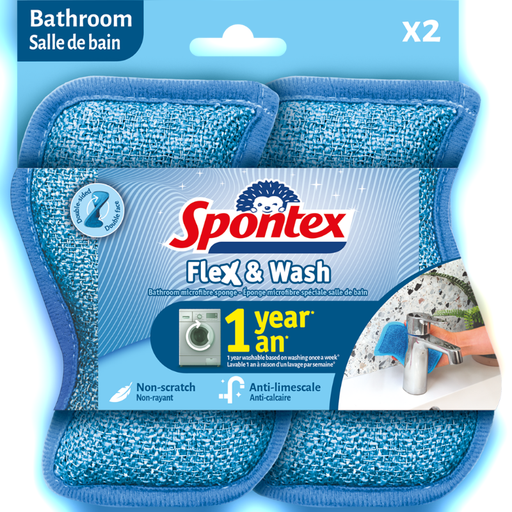
Why this choice suits this profile : This product is designed for bathroom cleaning, particularly mirrors, glass screens, washbasins and limescale deposits.
The product description clearly distinguishes the microfibre side, designed for wiping, from the scouring side, intended for limescale. It can be washed at up to 40 °C, without fabric softener or tumble drying.
Microfibre made from recycled fibres, an absorbent foam core and the option to wash it in a machine or dishwasher.
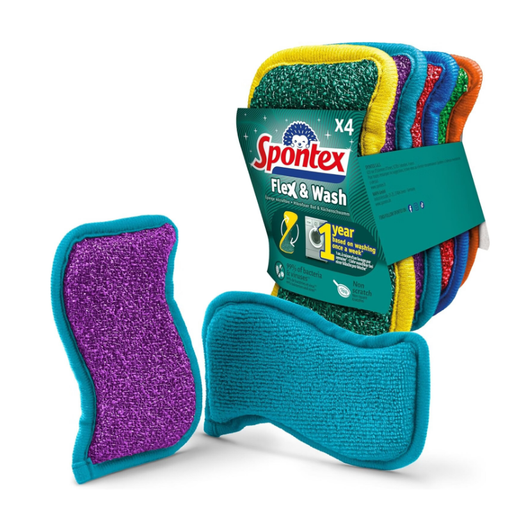
Why this choice suits this profile : This four-pack lets you assign a sponge to each area—washing up, kitchen, bathroom or car—while maintaining a regular rotation.
It can be washed for up to 52 cycles, with instructions to replace it as soon as performance declines. Even though the scouring side is non-scratch, it should be tested on a sensitive surface.
An ergonomic S-shaped design, a microfibre side, a scouring side and recyclable cardboard packaging, according to the product description.
Even a reusable sponge requires a few precautions:
A magic stain-removing sponge or micro-abrasive side should be moistened before use and applied with moderate pressure. It can remove certain marks, but its mechanical action may alter the appearance of a glossy or painted coating.
Choose a product description that mentions a non-scratch side compatible with frying pans, then test it on a small area. Avoid green or highly abrasive sides when the manufacturer advises against using them on non-stick coatings.
There is no universal lifespan: it depends entirely on how the sponge is used and cared for. Many products recommend replacing them approximately every two months, while some washable sponges claim to last for up to 52 cycles. Replace it sooner if it retains an odour, becomes misshapen, frays or is difficult to rinse.
It can reduce the number of purchases, but the calculation depends on the initial price, the number of washes it can genuinely withstand and the care instructions. Compare the price per sponge with the stated lifespan, while also considering drying time and the need to keep uses separate.