
Livraison le jour même ou le lendemain

Qualité garantie

Débloquez vos offres de bienvenue: Livraison GRATUITE | Jusqu'à -80 % | 30 jours d'essai gratuits à JoyPlus
Téléchargez l'application
Choosing a washing-up liquid seems straightforward… until grease clings to your plates, the fragrance becomes overpowering or your hands feel tight after a few washes. From one product to the next, concentration, cleaning agents, fragrance, bottle size and environmental labels can vary considerably.
Here are the criteria to consider to avoid any nasty surprises and find the right product for your household, whether you’re looking for a degreasing washing-up liquid, a formula for sensitive skin or a product made in France.
A rich lather can create the impression of greater power, but it is not enough on its own to assess degreasing performance. Effectiveness depends in particular on the surfactants used, the dosage and the water temperature. For frying pans or very greasy dishes, check whether the product description mentions enhanced degreasing action and recommends soaking.
A formula made with plant-based ingredients or scented with citrus is not automatically suitable for sensitive hands. Check the ingredients list as well as the instructions for use. Even a hypoallergenic washing-up liquid may require you to avoid prolonged contact with the skin and eyes.
Claims such as ‘hypoallergenic’, ‘fragrance-free’ or ‘dermatologically tested’ refer to a formulation or testing protocol stated by the manufacturer. They do not constitute an individual medical guarantee.
A 500 ml bottle will not necessarily last less time than a 750 ml bottle. A concentrated formula may require only a few drops per sink, while a less concentrated product will need to be used in larger quantities. Compare the recommended dosage, rather than looking only at the price displayed on the bottle.
For everyday household washing-up, choose a formula that claims to tackle grease and dried-on residue. Products intended for hand washing can be applied directly to a sponge or diluted in a bowl of hot water.
A concentrated washing-up liquid can be a good choice if the dosage is clearly stated. Some product descriptions recommend a few millilitres for 5 litres of water, while others suggest applying a small amount directly to the sponge. For heavily soiled dishes, a short soak can often reduce the amount of product required.
People prone to irritation or discomfort can compare a washing-up liquid for sensitive skin, a fragrance-free formula or a product containing fewer fragrance ingredients. A fragrance-free washing-up liquid limits added scents, while a lemon, herb or raspberry vinegar version provides a more pronounced fragrance experience.
Always read the precautions shown on the packaging. If irritation occurs, stop using the product and rinse the affected area thoroughly. Gloves may also be useful during prolonged washing-up.
An eco-friendly washing-up liquid may carry a label such as the EU Ecolabel, provided you check that the certification applies to the specific product you have chosen. The packaging also deserves careful attention: recycled plastic, a recyclable bottle and the option of a refill are three separate details.
If you would like to prioritise a washing-up liquid made in France, check the country-of-origin information in the product description. However, this information alone does not tell you about the product’s ingredients, cleaning performance or overall environmental impact.
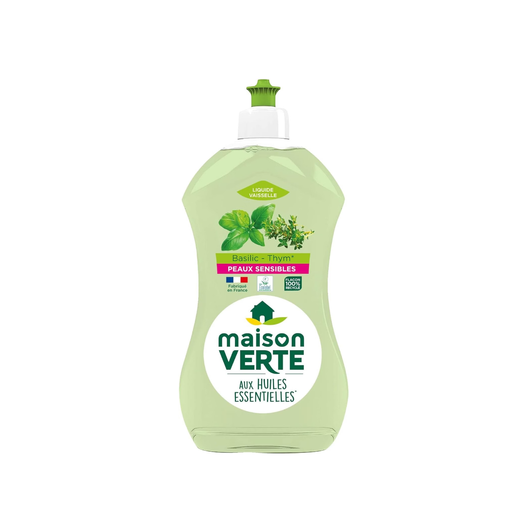
Why this choice suits this profile : This 500 ml bottle combines plant-based cleaning agents with a thyme and basil fragrance, and offers up to 100 washes according to the product description.
The product description specifies how to dose it and recommends washing in a bowl, helping to limit water and product consumption.
Presented as a hypoallergenic formula, with Ecolabel certification indicated and a Mediterranean herb fragrance.
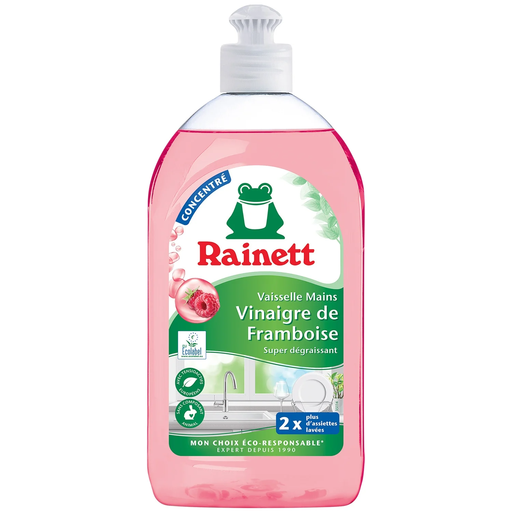
Why this choice suits this profile : It is aimed at households looking for enhanced degreasing action, stated environmental certification and a distinctive fruity fragrance.
The product description details its action on stubborn grease, how to dose it on a sponge or in water, and that it is intended for hand washing only.
EU Ecolabel indicated, bottle made from 100% recycled plastic according to the product description, and raspberry vinegar fragrance.
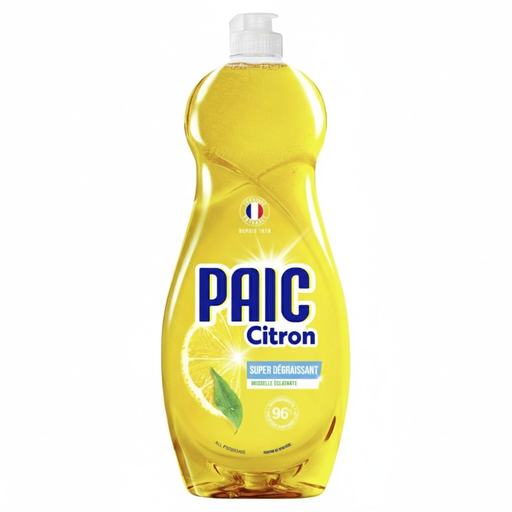
Why this choice suits this profile : Its 750 ml capacity and concentrated formula are ideal for kitchens where saucepans, frying pans and dishes regularly need scrubbing.
The stated dosage of 2.5 to 5 ml for 5 litres of water makes it easier to compare actual consumption and avoid using too much.
750 ml capacity, lemon fragrance and French origin indicated in the product description.
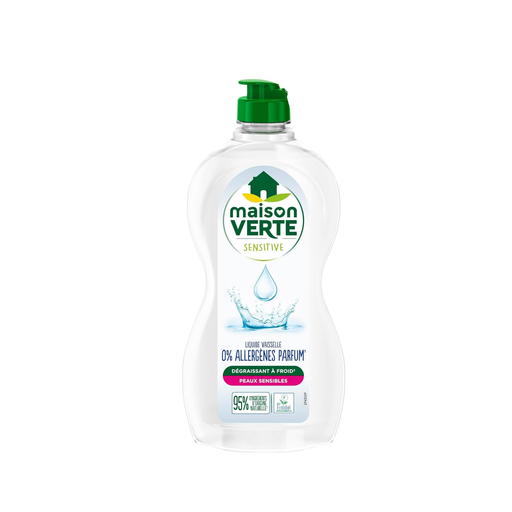
Why this choice suits this profile : The formula is presented as fragrance-free and designed for sensitive skin, with stated degreasing action from 20 °C.
The stated absence of fragrance helps you avoid choosing a scented product when this is a priority. However, the instructions for use must still be followed.
0% fragrance indicated, Ecolabel certification and stated suitability for use with water at 20 °C.
Compare formulas presented as hypoallergenic, fragrance-free or designed for sensitive skin. Nevertheless, check the ingredients and warnings, as no marketing claim can replace observing your own tolerance. Gloves can help limit prolonged contact with the product.
Not necessarily. The saving depends on the actual dosage, the number of washes and the price per millilitre. A small quantity recommended for several litres of water can reduce consumption, provided you follow the manufacturer’s instructions.
A lemon fragrance provides a fresh scent, but it is not enough to prove superior performance. To compare two products, look instead at the information relating to grease, dried-on residue, concentration and dosage.