
Livraison le jour même ou le lendemain

Qualité garantie

Débloquez vos offres de bienvenue: Livraison GRATUITE | Jusqu'à -80 % | 30 jours d'essai gratuits à JoyPlus
Téléchargez l'application
Choosing a washing-up liquid is not simply a matter of picking a pleasant scent or lots of foam. Between concentrated formulas, claims of cutting through grease in cold water, refillable packaging and ‘sensitive skin’ labels, there are several criteria worth checking before you reach the checkout.
Three common pitfalls are:
For frying pans, oven dishes and saucepans, look for a formula described as degreasing washing-up liquid. Anionic, non-ionic and amphoteric surfactants are commonly used to loosen greasy residue. However, their presence alone is not enough to distinguish between two products.
A concentrated product should be used sparingly. When washing up in a bowl, follow the instructions on the label rather than pouring a large amount of product straight into the sink. Soaking for a few minutes can also reduce your consumption of water and washing-up liquid.
Formulas such as PAIC Super Dégraissant Citron 750 ml or MIR au bicarbonate et citron 450 ml target stubborn residue. Their product details state that they can be used on crockery, saucepans and frying pans, followed by rinsing with drinking water. However, grease-cutting claims remain information provided by the manufacturer, so they should be considered alongside the dosage and type of dirt.
People who wash up frequently may wish to choose a washing-up liquid for sensitive skin, a hypoallergenic formula or a fragrance-free product. These descriptions do not mean that a product completely rules out the risk of a reaction. ‘Hypoallergenic’ generally refers to a formula designed to reduce the risk of allergy, according to the information provided by the brand.
For a more cautious choice, check in particular:
A fragrance-free washing-up liquid may suit households wishing to limit scented substances. By contrast, a formula scented with citrus, herbs or flowers is primarily a matter of personal preference. In all cases, the label on the product you buy is the definitive source of information.
An eco-friendly washing-up liquid may stand out through a certification label, packaging containing recycled plastic or a refill system. The EU Ecolabel and Ecocert Eco Detergent certification are useful references to look for on the packaging. They do not, however, replace reading the usage instructions and recycling guidance.
Refill formats deserve particular attention. The LOVE&GREEN product featured below consists of 166 ml refills to be diluted with 334 ml of water to make 500 ml of liquid. The product details also mention a recyclable doypack and a stated reduction in plastic use compared with the brand’s bottle. This solution does, however, require you to keep a clean, suitable bottle.
Finally, the description washing-up liquid made in France or packaged in France does not necessarily provide information about the origin of every ingredient. Product details generally specify the country of manufacture or packaging, without giving a full breakdown of the supply chain.
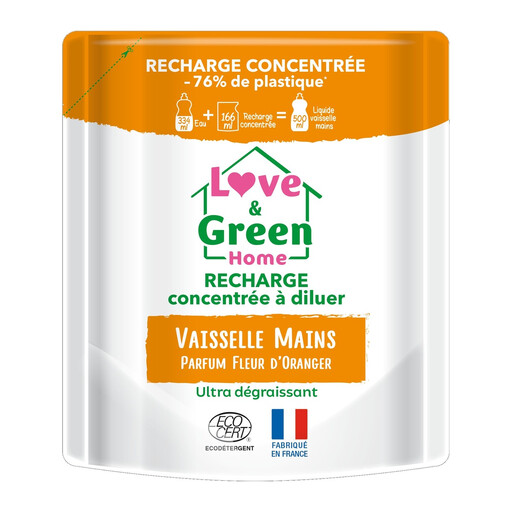
Why this choice suits this profile : The pack of two refills lets you try a refillable format without building up a collection of bottles. Each 166 ml refill is designed to make 500 ml of product when diluted at home.
The dilution ratio is clearly stated, helping to avoid guesswork. According to the product details, the formula contains 99% ingredients of natural origin and contains neither colourants nor M.I.T.
Two 166 ml refills, orange blossom fragrance, Ecocert Eco Detergent certification and packaging in France.
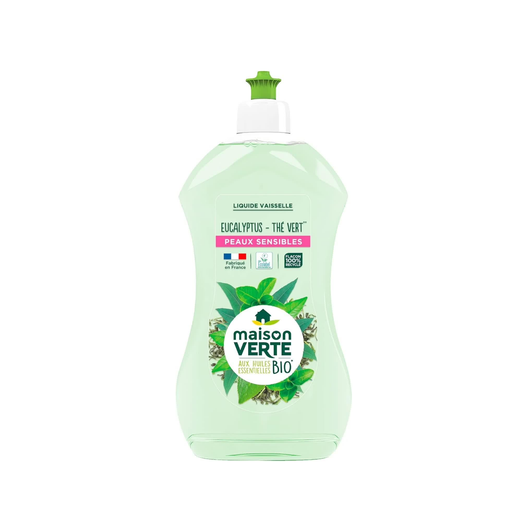
Why this choice suits this profile : This formula combines a carefully developed fragrance made with organic essential oils and a bottle made from recycled plastic. It is aimed at users who value both product presentation and the environmental commitments claimed by the brand.
The bottle does not rely solely on its fragrance claim : the product details mention the EU Ecolabel and 100% recycled plastic, which is itself fully recyclable.
500 ml format, made in France as stated in the product details, organic essential oils and fully recyclable packaging.
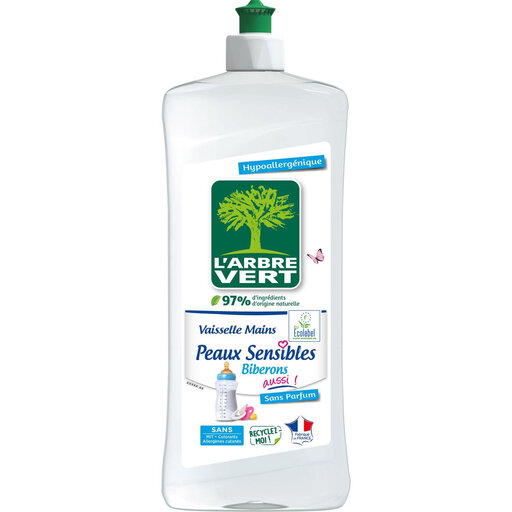
Why this choice suits this profile : Its product details recommend it for washing baby bottles, teats, dummies and breastfeeding accessories, while also presenting it as suitable for everyday family washing up.
The product details specify that it contains no fragrance, colourants or M.I.T., as well as a formula designed to minimise the risk of allergy. Rinsing remains essential.
750 ml format, EU Ecolabel, stated 97% ingredients of natural origin and refillable packaging containing at least 87% recycled materials.
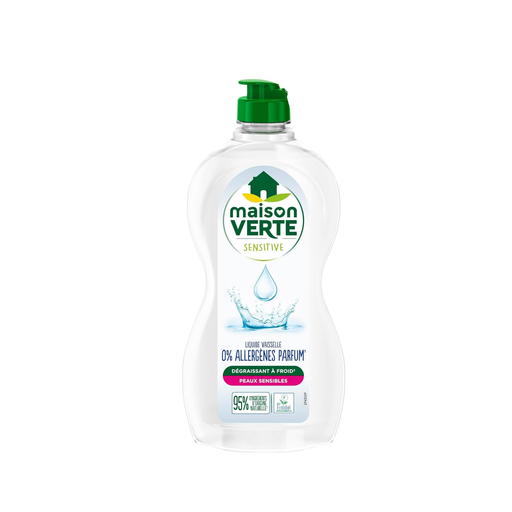
Why this choice suits this profile : This fragrance-free formula is suitable for consumers who want to avoid a lingering scent during everyday washing up.
The 0% fragrance claim clearly distinguishes this product from scented washing-up liquids. The product details also state that it cuts through grease at 20 °C and carries Ecolabel certification.
500 ml format, stated fragrance-free formula, formula intended for sensitive skin and EU Ecolabel.
We have put together a complete, real-time-updated list of products that meet these strict selection criteria and European safety regulations.
To keep costs down, fill a washing-up bowl rather than leaving the tap running continuously. A small amount on a sponge is often enough for lightly soiled dishes. Always follow the dosage recommended by the manufacturer and rinse utensils with drinking water.
Washing-up liquid is intended for hand washing. It must not be used in a dishwasher unless the packaging explicitly states otherwise. Keep the bottle closed and out of the reach of children, and avoid contact with the eyes. In the event of persistent irritation, follow the instructions on the label and seek advice from a healthcare professional.
Compare formulas labelled for sensitive skin, hypoallergenic or fragrance-free, then read the ingredients and warnings. Wearing gloves may still be helpful if you wash up frequently or have prolonged contact with the product.
It can be, provided you follow the recommended dosage. To compare two products, look at the price per usable volume, the stated number of washes and the dilution method. A large bottle used generously may ultimately cost more than a correctly dosed small concentrated format.
Some products are specifically indicated for baby bottles, teats and breastfeeding accessories. Only choose a product whose label mentions this use, use a small amount and rinse thoroughly with drinking water.