
Livraison le jour même ou le lendemain

Qualité garantie

Débloquez vos offres de bienvenue: Livraison GRATUITE | Jusqu'à -80 % | 30 jours d'essai gratuits à JoyPlus
Téléchargez l'application
Choosing a washing-up liquid is not simply a matter of comparing fragrances or bottle sizes. Between claims of powerful grease removal, formulas presented as natural and wording aimed at sensitive skin, some essential information can easily be overlooked. An overly fragranced product may cause discomfort for sensitive users, while a less concentrated formula means you need to use more of it.
Here are the criteria to consider when looking for a washing-up liquid that genuinely suits your habits, without relying solely on marketing claims.
A lemon, almond or raspberry vinegar fragrance can make washing up more enjoyable, but it says nothing by itself about a product’s cleaning power or skin tolerance. Fragranced formulas may also contain allergenic substances that must be listed on the label.
If you have sensitive skin or want to limit fragranced ingredients, choose a fragrance-free washing-up liquid and always check the list of ingredients shown on the packaging.
Concentrated washing-up liquid can prove economical, provided you follow the recommended dosage. Using too much increases consumption and makes rinsing more difficult. Conversely, too little may mean you need to soak greasy pans for longer.
Concentration should therefore be considered alongside the bottle size, recommended dosage and how often you wash up.
Claims such as natural washing-up liquid, eco-friendly or plant-based do not remove the need to follow safety instructions. A product intended for hand washing dishes is still a detergent: it must not be swallowed, should be kept out of children’s reach and requires rinsing with potable water.
A label such as the EU Ecolabel or Ecocert certification can provide a useful reference, but also take the time to check the packaging, dosage and ingredients.
For frying pans, dishes with sauces and oily residue, look for a formula described as degreasing washing-up liquid. Anionic, amphoteric and non-ionic surfactants are commonly used in products designed for hand washing. Their exact proportions appear in the legally required ingredient list, generally in the form of ranges.
A degreasing formula can be particularly useful for a family that cooks every day. For lightly soiled dishes, a gentler product used at the correct dosage may be perfectly sufficient.
Claims such as ‘sensitive skin’ or ‘hypoallergenic’ relate to how the manufacturer presents the product and are not a universal medical guarantee. They should be considered alongside the ingredient list and warnings shown on the label.
If you are looking for a washing-up liquid for sensitive skin, check in particular:
People who want to limit sources of fragrance can opt for a fragrance-free washing-up liquid. For other households, a lemon, mandarin or floral fragrance is primarily a matter of personal sensory preference.
A large bottle is not necessarily the most economical option. Compare the price per litre and check the recommended dosage. Washing-up liquid with a refill can reduce the amount of plastic used if you already have a reusable bottle.
Some concentrated formats must be diluted with tap water. If so, follow the stated proportions carefully, mix the preparation thoroughly and clearly label the resulting bottle. A refill must never be decanted into a food container.
Families with an infant should preferably choose a product explicitly intended for bottles, teats and breastfeeding accessories. Always rinse thoroughly after washing.
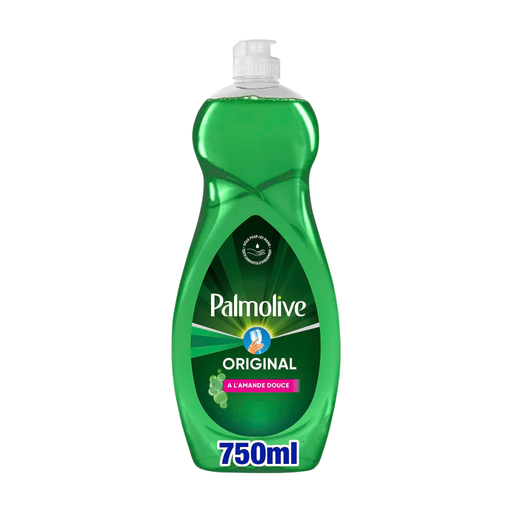
Why this choice suits this profile : At 750 ml, this bottle is suitable for everyday washing up and is a straightforward, classic product that is easy to dose.
The stated dosage is 2.5 ml for 5 litres of water. This gives you a clear guide, rather than leaving you to pour by guesswork.
A generous 750 ml size and a sweet almond fragrance. The product information also states that the formula has been dermatologically tested.
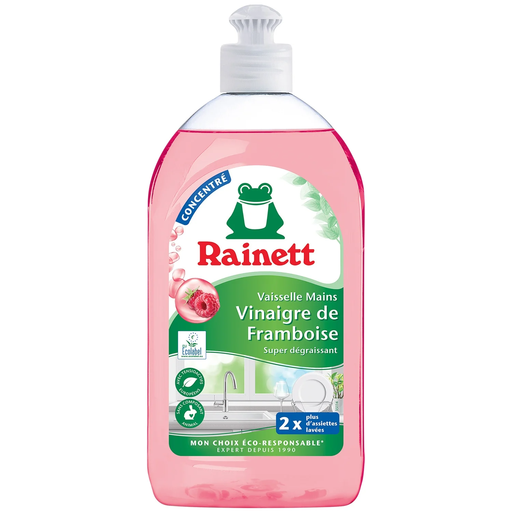
Why this choice suits this profile : This product combines enhanced grease removal, environmental credentials and a raspberry vinegar fragrance.
The product information mentions the EU Ecolabel, plant-based surfactants and a bottle made from recycled plastic. These features are distinct from a simple ‘green’ promise.
A concentrated formula, a 500 ml capacity and a bottle described as 100% recyclable.
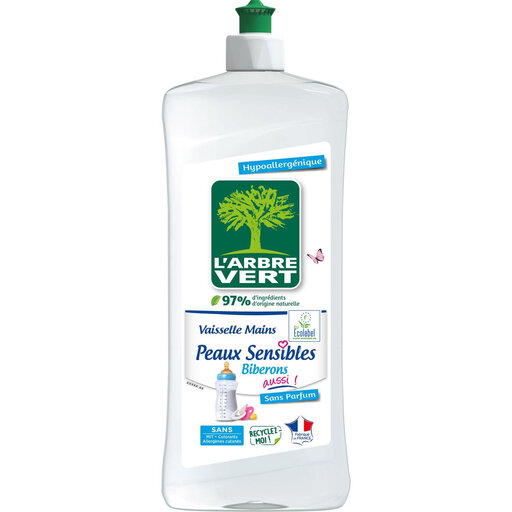
Why this choice suits this profile : The product information states that it is intended for bottles, teats, dummies and breastfeeding accessories, while remaining suitable for everyday family washing up.
The product information specifies a fragrance-free formula without colourings or MIT. These precise criteria go beyond simply labelling a product as suitable for babies.
EU Ecolabel, a 750 ml capacity and packaging described as refillable, made from at least 87% recycled materials.
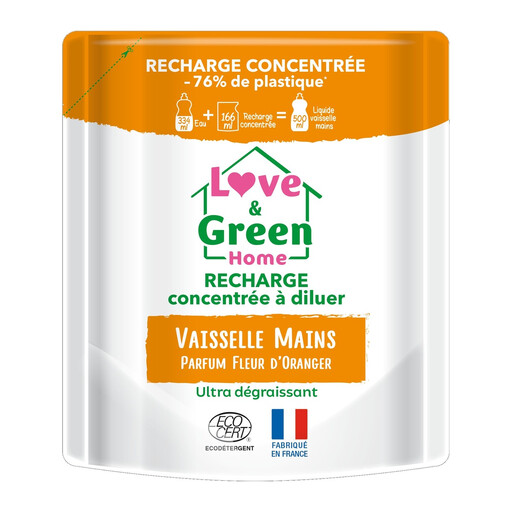
Why this choice suits this profile : Sold as a pack of two refills, this product is aimed at people who want to keep a bottle and prepare their washing-up liquid at home.
The ratio is clearly stated : 334 ml of water for 166 ml of refill, producing 500 ml of diluted product.
Two 166 ml refills, stated Ecocert certification and fully recyclable pouches, according to the product information.
We have put together a complete, real-time updated selection of products that meet these demanding criteria and European safety regulations.
Even a high-performing product loses its value if you use too much. To limit both your spending and your impact on water:
A suction-cup soap dish can also free up space around the sink and keep your sponge or soap away from standing water. Install it on a smooth, dry and non-porous surface, such as glass, metal or even tiles. The TAILI model, advertised with a maximum capacity of 3 kg, should be attached away from grout lines and textured surfaces.
Start with a fragrance-free, colourant-free formula that clearly states it is suitable for sensitive skin. Read the warnings carefully and stop using the product if you experience a reaction. Wearing gloves can also reduce prolonged contact with the detergent.
Not necessarily. It depends on the amount you actually use, the price per litre and your habits. Compare the recommended quantity with the total capacity and do not mistake abundant foam for better performance.
Only if the label explicitly states that it is suitable for this use. After washing, rinse every component carefully with potable water and allow it to dry completely. A standard washing-up liquid must not be described as suitable for baby bottles if it does not carry this indication.