Households with washing up piling up every day
Plates, glasses and utensils add up after every meal. You need enough capacity for this volume, without having to run several cycles or regularly switch on a barely full appliance.


If washing up piles up every day, consider a standard dishwasher if its capacity and installation requirements suit your household. A compact model is better for tight spaces, provided it has enough capacity. Hand washing remains an option if you have a modest amount to wash or installation would involve building work. Before choosing an appliance, check the available space and connections, then compare capacity, noise and Eco programme figures on the energy label.
Plates, glasses and utensils add up after every meal. You need enough capacity for this volume, without having to run several cycles or regularly switch on a barely full appliance.
The space available may point you towards a slimline or tabletop model. However, measure the space and check the water supply, drainage and electricity connections before choosing an appliance.
In an open-plan kitchen, or if you use the kitchen while a cycle is running, noise levels matter just as much as how the wash is organised. The energy label also lets you compare water per cycle and electricity per 100 Eco cycles, according to ADEME and the European Commission.
Start by considering how much washing up you have and whether you can install an appliance. Width alone doesn’t tell you how much it will hold, or whether you can use the necessary connections.
Consider this if: you regularly have a full load of washing up each day and have a suitable space with the necessary connections.
Bear in mind: for an integrated model, the cabinet space, door panel and door system must be compatible. As Electrolux France explains, an installation service may not include preparatory work.
Consider this if: there isn’t room for a standard model and a smaller appliance has enough capacity for the washing up you produce.
The trade-off: if the capacity is too small, you may need to run more cycles. UFC-Que Choisir presents 45 cm-wide slimline models with capacity for 9 place settings as an option for a small family, though they won’t suit every household.
Stick with this if: you only have a modest amount to wash, or installing an appliance would involve work you’d rather not take on.
The trade-off: you’ll still need to wash and dry everything after meals.
| Factor | What to check | Who is it for? |
|---|---|---|
| Capacity and cycle frequency | Compare the stated place-setting capacity with the washing up you produce between washes, including dishes and utensils. Also check the basket layout. | When meals quickly fill the sink, I want to run suitably sized loads without having to start another cycle straight away. Around 31% of consumers prioritise this day-to-day capacity. |
| Space and installation | Measure the space and door clearance; check the water supply, drainage and power socket. For an integrated model, also check the cabinet space and door panel. | In a narrow kitchen, I need to know I can fit and connect the appliance before considering its other features. This is the first priority for around 31% of consumers. |
| Noise | Compare the noise level in dB and its class on the label, particularly if your kitchen is open-plan. | If a cycle is running while we’re working or chatting near the kitchen, I want to keep noise to a minimum. Quiet operation is the main concern for around 19% of consumers. |
| Water and electricity | Look at the kWh per 100 cycles, litres per cycle, capacity and Eco programme duration together on the label. | When I wash up frequently, I want to understand how much a cycle uses without overlooking how long it takes to get the dishes back. Around 19% of consumers put running costs first. |
An appliance may appear to be the right width but still not fit the depth, door clearance or planned cabinetry. Bosch Home Appliances recommends measuring the cabinet space before buying.
Measure the usable space and check the condition of the connections, as well as exactly what the installation service includes.
If the space isn’t ready, you may need to arrange plumbing, electrical or carpentry work separately.
The letter rating doesn’t tell you how much water an appliance uses, how long the Eco programme takes, its capacity or how noisy it is.
Compare these details on the labels of appliances that suit the amount of washing up you have. ADEME and the European Commission explain that the stated consumption figures relate to the reference programme.
A compact model saves space, but if it doesn’t have enough capacity for your household, you may need to run cycles more often.
Consider how much washing up builds up between cycles and compare it with the stated capacity, rather than choosing based on size alone.
The appliance may interrupt conversations or make it harder to work nearby, even if its capacity is right for you.
Compare the dB level and noise class on the label rather than relying solely on a marketing claim that it’s quiet.
These appliances offer two options for everyday washing up: standard freestanding or integrated models if you have the space, and tabletop models for more compact kitchens. Compare their capacity with your washing-up routine before choosing.
 Image unavailable
Worth considering if your household produces a large daily load and has space for a freestanding appliance.
Stated capacity: 14 place settings; stated width: 60 cm; stated noise level: 41 dB; stated energy class: C.
Check the dimensions and connections in your home, then check the model’s label for kWh per 100 cycles and Eco programme duration.
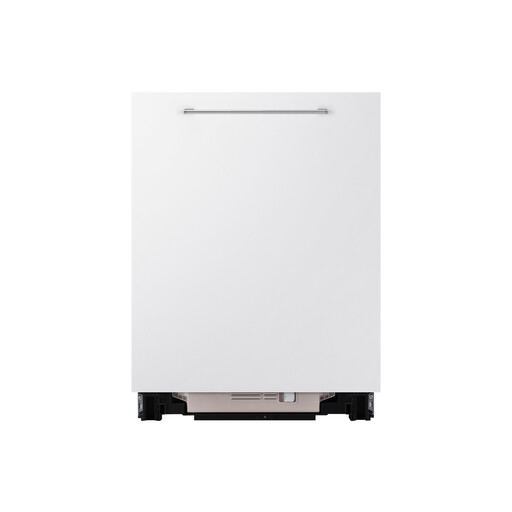 Image unavailable
Worth considering if you’d like to integrate the appliance into a fitted kitchen and have a compatible cabinet space.
Stated capacity: 13 place settings; stated width: 60 cm.
Check the cabinet dimensions, door panel, door system and connections. Consult the model’s energy label to compare its consumption, Eco programme duration and energy class.
 Image unavailable
Worth considering if washing up piles up every day and a freestanding model suits the space available.
Stated capacity: 14 place settings; stated width: 60 cm; stated energy class: E.
Check access to the space and the connections. To compare electricity use and cycle options, look at the kWh per 100 cycles and Eco programme duration on the label.
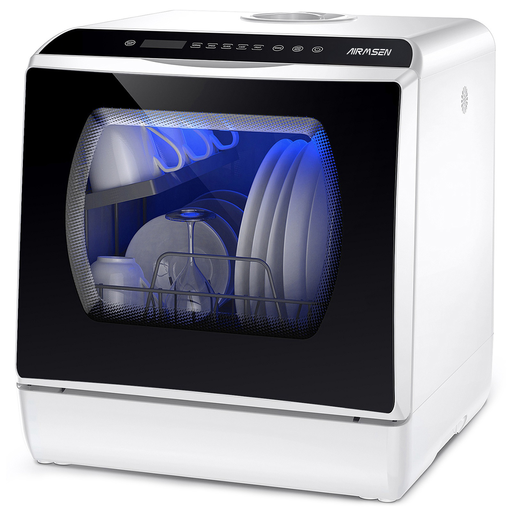 Image unavailable
Worth considering if space is tight and a small load is genuinely enough for the washing up you produce between cycles.
The product name specifies an integrated 5 L tank and 5+1 wash cycles.
Check there’s room on your worktop, how drainage is handled and the noise level. To compare consumption with other appliances, use figures based on the same reference programme.
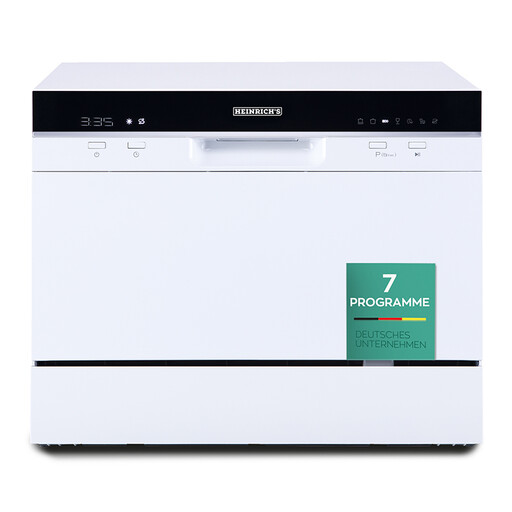 Image unavailable
Worth considering if a tabletop appliance fits in your kitchen and has enough capacity for the washing up that builds up between cycles.
Stated capacity: 6 place settings; 7 programmes; 24-hour delay start; stated noise level: 47 dB; stated energy class: D.
Measure the space and check the connections. Consult the label to compare kWh per 100 Eco cycles on a like-for-like basis.
It lets you compare the efficiency class, kWh per 100 cycles, litres of water per cycle, capacity, Eco programme duration and noise level. The European Commission explains that the consumption and duration figures are based on the Eco programme, so compare appliances with a capacity that suits your needs.
Measure the cabinet space and check the door panel, door clearance, water supply, drainage and power socket. Bosch Home Appliances stresses the importance of measuring the cabinet space. Electrolux France explains that its installers connect appliances to compliant existing installations, but don’t carry out preparatory plumbing, electrical or carpentry work.
It may be suitable if its capacity covers the washing up you produce between cycles, but saving space doesn’t solve the question of capacity on its own. UFC-Que Choisir says that some 45 cm-wide slimline models with capacity for 9 place settings may suit a small family, even with daily use. Also check the dimensions and connections of the model you choose.
Wait until you have a full load and avoid routinely pre-rinsing by hand: these are the steps recommended by ADEME. Still, follow your appliance’s loading instructions, and compare the litres per cycle on the label if you’re choosing between several models.