What to compare
For household laundry, start with your usual loads and the space available, then compare noise, spin performance, cycle times and consumption. ADEME says that a capacity of 7 kg is usually enough, but this isn’t a rule for every household.
In a survey conducted from 15 to 24 May 2025, Que Choisir heard from 4,350 readers and subscribers who responded to its newsletter. Their main concerns included spin noise, maintenance and cycle times. These responses highlight factors worth considering, but they don’t measure the priorities of all consumers.
| What matters |
What to check |
Who prioritises it |
| Suitable capacity |
Capacity in kg; your usual loads and the length of the programmes you use. |
When I do laundry regularly but my loads vary, I look for a suitable drum rather than automatically choosing the largest one. Around 26% of consumers put washing capacity first. |
| Space and access |
Overall dimensions, available clearance and the space needed to open the machine. |
If space is tight or I need to load from above, I check that the machine will actually open where it’s going to be installed. Around 21% of consumers prioritise the machine’s position and access for loading. |
| Noise and spin performance |
Spin noise shown on the label; the model’s spin performance, if available. |
If the machine runs near living areas or the laundry needs to dry afterwards, I compare noise and spin performance. Around 16% of consumers prioritise quiet operation and spin performance. |
| Cycle times and consumption |
kWh per 100 cycles and litres per reference cycle; the length of the programmes you’re considering. |
If I need to fit laundry around a busy schedule, I also compare the length of the cycles I’ll use. Around 16% of consumers prioritise cycle times and consumption. |
| Easy maintenance |
Where the filter access panel is; how much clearance you need to follow the instructions. |
If space in front of the machine is limited, I check that I can still access the panel and filter easily. Around 11% of consumers prioritise easy access for maintenance. |
| Built-in drying |
Separate washing and drying capacities; the length and consumption of the combined cycle. |
If I don’t have room for two appliances, I check that the load I want to dry is within the drying capacity. Around 10% of consumers put built-in drying first. |
Washing machines available on Joybuy
This selection includes front-loading and top-loading washing machines for everyday household laundry.
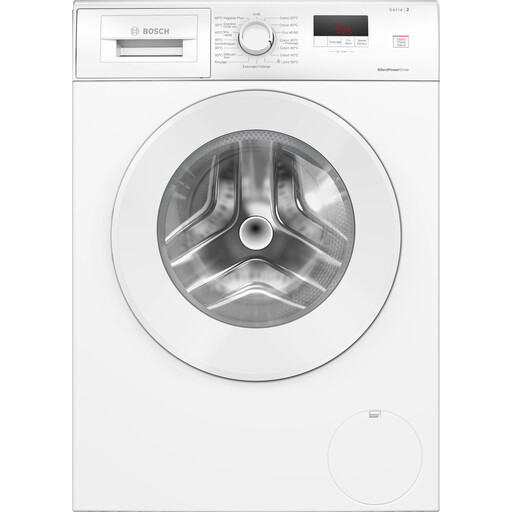 Image unavailable
Bosch WGE02407FR, front-loading washing machine
Worth considering for everyday laundry if a 7 kg capacity suits your usual loads.
7 kg; 1,400 tr/min; Class A.
View on Joybuy
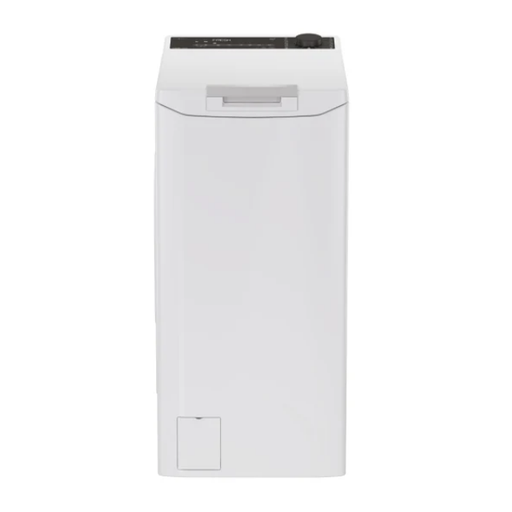 Image unavailable
Haier T Series 7 THASN276TM6-S, top-loading washing machine
Consider this model if loading from above suits your space; leave enough clearance to open the lid.
7 kg; 1,200 tr/min; Class A.
View on Joybuy
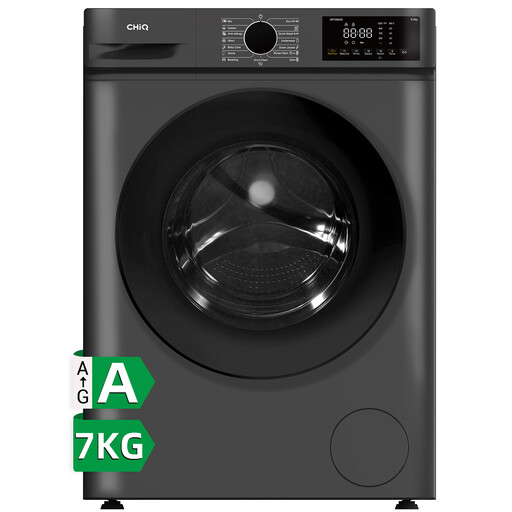 Image unavailable
CHiQ JW75883G, front-loading washing machine
Worth considering for everyday loads if a front-loader suits your space and there’s enough room to open the door.
7 kg; 1,200 tr/min; Class A; 16 programmes.
View on Joybuy
 Image unavailable
Haier X Series 11 HW100-BD14397PGU1, front-loading washing machine
Worth considering if you regularly wash large loads. ADEME says that 7 kg is usually enough, so compare this capacity with the laundry you actually wash.
10 kg; 1,400 tr/min; Class A.
View on Joybuy
 Image unavailable
Electrolux EWF1410N2, front-loading washing machine
Worth considering if you need a stated capacity of 10 kg; check that it suits your usual loads.
10 kg.
View on Joybuy
Frequently asked questions
How can I compare the energy use of two washing machines?
Compare the labels and product information on a like-for-like basis, including kWh per 100 reference cycles and litres per cycle. ADEME notes that these figures don’t predict how much energy and water all your programmes will use.
What should I check if a new washing machine moves or won’t drain properly?
Follow the instructions for your model. For its machines, Bosch recommends checking that the transit bolts have been removed and that the appliance is level if it moves. If it won’t drain properly, its guidance suggests checking the filter and hose, among other things. This is the manufacturer’s advice, not a diagnosis for every fault.
How should I plan to clean the filter?
Before buying, check where the access panel is and whether you’ll be able to reach it. For its machines, Bosch says to unplug the appliance before following the draining and cleaning procedure. Always refer to the instructions for your model.
Do I need an extended warranty to benefit from the statutory guarantee?
No. When a consumer buys from a professional seller in France, the statutory guarantee of conformity applies under its own terms. The DGCCRF states that you have two years from delivery of the goods to take action; a commercial warranty is optional and separate.
Which regulatory rating should I look at for the durability of a washing machine in France?
For the relevant front-loading and top-loading washing machines, the durability index has replaced the repairability index since 8 April 2025. The Ministry for Ecological Transition lists these two categories; don’t assume the same requirement applies to a washer-dryer.


