What should you check before choosing?
First rule out any machines whose door or connections would be blocked, then compare capacities to find one that suits your laundry.
Top-loader
Consider it: when width is the main constraint and there’s clear space above the machine.
Keep in mind: the lid means it can’t be installed under a worktop, as the Institut national de la consommation points out.
Compact front-loader
Consider it: when you need to load from the front but a standard front-loader won’t fit.
Keep in mind: Haier France’s compact HW50-BP12307U1-S has a 5 kg capacity and still needs clear space in front of the door.
Standard front-loader
Consider it: if the alcove and delivery route can accommodate the machine, with clear access at the front.
Keep in mind: its width and door clearance may restrict movement in a small room, so measure the exact model.
| What to consider |
What to check |
What I need |
| Dimensions and door clearance |
Measure the width, height and depth of the machine without its packaging. Check there’s room for the hoses and for the lid or door to open fully. The Institut national de la consommation puts top-loader widths at around 40 to 45 cm, but that doesn’t guarantee one will fit every alcove. |
I want to be able to install the machine and load the laundry without moving furniture or blocking the way. |
| Capacity for different programmes |
Compare the rated capacity with the load limits for the programmes you use. The Institut national de la consommation explains that the stated capacity is based on dry cotton, and some fabrics and programmes can take smaller loads. |
For my usual laundry, I’d rather check the permitted load sizes than choose based on the kg figure alone. |
| Delivery and connections |
Measure the route to the room and check the water supply, waste outlet and position of the socket. Electrolux France recommends checking the dimensions before delivery; Promotelec advises plugging the washing machine directly into a dedicated wall socket, not an extension lead. |
The machine needs to fit in the alcove, reach it and be connected without getting in the way. |
| Durability |
Once you’ve found compatible models, compare their individual durability ratings. The French Ministry for Ecological Transition says this rating has been used for washing machines in France since 8 April 2025; it provides information on factors including repairability and wear resistance. |
If several machines fit my space, I want to compare their ratings model by model, without confusing them with the machine’s dimensions. |
A guide to the brands
These examples show specific dimensions: a feature of one model doesn’t necessarily apply to the whole brand.
Electrolux
According to Electrolux France, the freestanding EW7T3733BA top-loader measures 890 × 400 × 600 mm and has a 7 kg capacity.
- Its 400 mm width makes it worth comparing with narrow alcoves.
- It is 600 mm deep, and the space above it needs to remain clear for loading.
Haier
Haier France offers two different formats: the compact front-loader HW50-BP12307U1-S, measuring 510 × 492 × 700 mm with a 5 kg capacity, and the THASN276TM7-S top-loader, measuring 405 × 600 × 860 mm with a 7 kg capacity.
- These models let you compare an awkward space with one that’s narrow in width.
- The compact model needs room in front of its door; the top-loader needs space above to open.
Bosch
According to Bosch Électroménager France, the front-loading WAJ24008FF measures 848 × 598 × 546 mm and has an 8 kg capacity.
- Its 546 mm cabinet depth is worth comparing with the depth of your alcove.
- It is still 598 mm wide, and you’ll also need to allow space for the door and connections.
Whirlpool
The TDLR6247FR/N top-loader is an example of a 40 × 60 × 90 cm model with a 6 kg capacity, according to Whirlpool France.
- Its 40 cm width is a useful reference when checking a narrow access route.
- You’ll still need to allow for its 60 cm depth and top-opening lid.
Front-loading washing machines on Joybuy
Consider these front-loading models if you can clear the space in front of the door. Before choosing, compare their external dimensions and installation requirements with your kitchen or utility room.
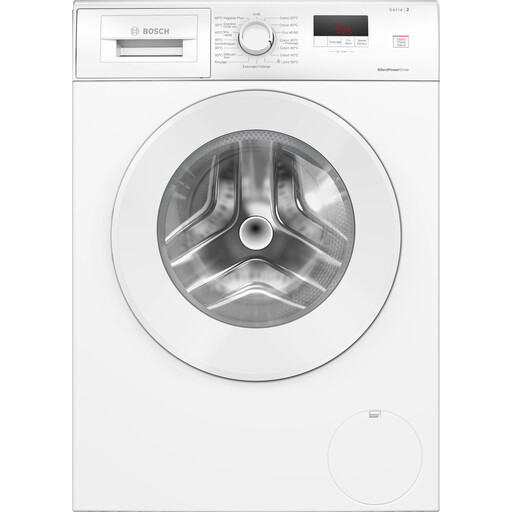 Image unavailable
Bosch WGE02407FR, 7 kg front-loader
Worth considering if your space can accommodate a front-loader and you’re looking for a stated capacity of 7 kg. The model name indicates a spin speed of 1 400 tr/min; check its dimensions, the space for the hoses and the door clearance in your home.
View on Joybuy
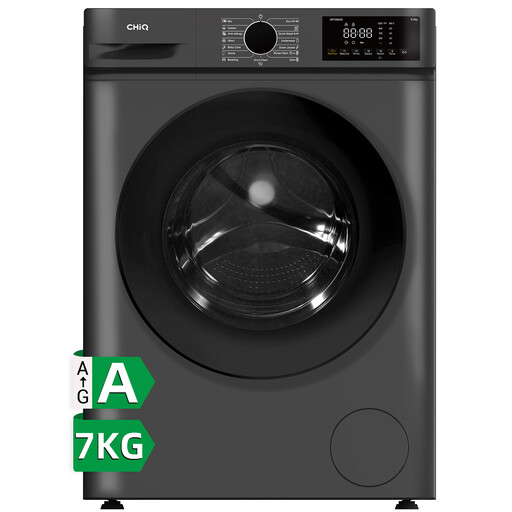 Image unavailable
CHiQ JW75883G, 7 kg front-loader
Worth comparing if the depth of your alcove is limited and there’s clear access to the door. The model name indicates 1 200 tr/min and 16 programmes; confirm the full external dimensions and space needed for the connections.
View on Joybuy
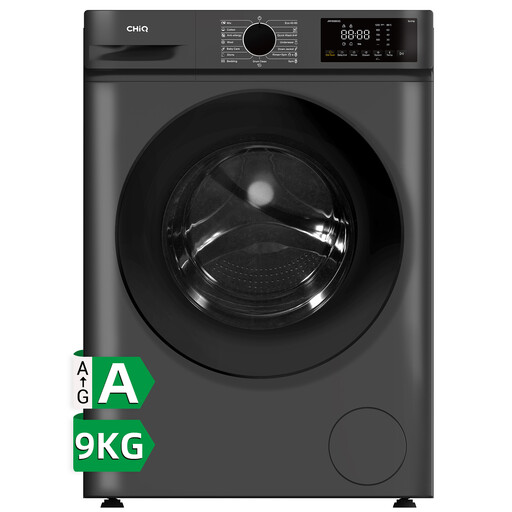 Image unavailable
CHiQ JW95883G, 9 kg front-loader
Worth considering if you’re looking for a front-loader with a stated capacity of 9 kg. The model name indicates 1 400 tr/min; the listed width and depth measurements contradict one another, so confirm the exact model’s external dimensions and door clearance before planning where to put it.
View on Joybuy
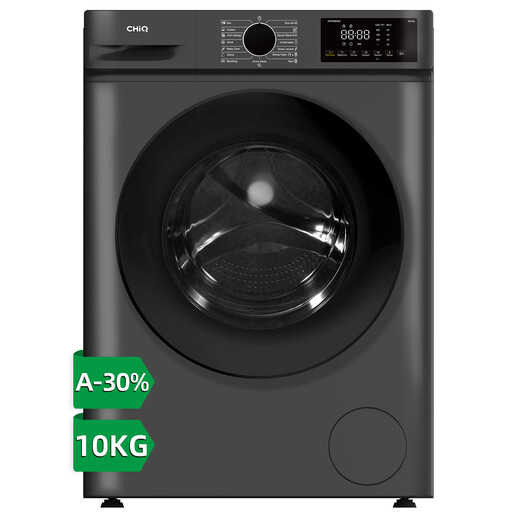 Image unavailable
CHiQ JW105883G, 10 kg front-loader
Worth comparing if you’re looking for a stated capacity of 10 kg and have space for front access. The model name indicates 1 400 tr/min and 16 programmes; measure the space and confirm the external dimensions, connections and door clearance before deciding if this type is right for you.
View on Joybuy
Frequently asked questions
What should I measure before ordering a washing machine?
Measure the available width, height and depth, as well as the route to the room. Then check that the lid or door can open, and note the positions of the water supply, waste outlet and socket. Compare these with the dimensions and instructions for the exact model. Electrolux France recommends checking the dimensions before delivery.
Can a top-loader fit under a worktop?
No. The Institut national de la consommation says a top-loading machine can’t be installed under a worktop. The lid needs to be accessible and able to open, so check the installation diagram for the model you’re considering.
Are top-loaders limited to 5 or 6 kg?
No. Electrolux France lists a 7 kg capacity for the EW7T3733BA, and Haier France lists 7 kg for the THASN276TM7-S. Their narrower width doesn’t solve the issue of depth, though: both models are 600 mm deep.
Can I use an extension lead with a washing machine?
Promotelec advises against this and recommends plugging the machine directly into a dedicated wall socket connected to a dedicated circuit, to avoid overloading it. If the electrical installation in your kitchen or utility room is old or has been altered, ask a qualified professional to check it.
What is a washing machine’s durability rating for?
It helps you compare durability-related features between specific models, but doesn’t tell you whether a machine will fit in your alcove. The French Ministry for Ecological Transition says the rating was introduced for washing machines in France from 8 April 2025 and takes account of factors including repairability and wear resistance.


