Limited width
You need to fit the machine between existing fixtures and keep the top clear for loading laundry. Remember to measure the space needed to open the lid, too.


Start by identifying the dimension that really limits your installation, and the space you need to load the machine. A top-loader may be the answer if width is limited, while a compact front-loader could work if depth or height is your main constraint. A standard front-loader may also be suitable if its size, connections and door clearance are compatible with the room. Then compare the capacity with your usual laundry loads, the spin-cycle noise, and the energy and durability information.
You need to fit the machine between existing fixtures and keep the top clear for loading laundry. Remember to measure the space needed to open the lid, too.
You’re considering a compact front-loader, while checking that the door can open and there’s enough room for the connections.
You’re looking for a capacity that suits your loads and want to take spin-cycle noise into account, once you’ve checked the space available.
Consider it if: width is your main constraint and the lid can open without obstruction.
Bear in mind: the top must remain accessible, and the machine’s dimensions alone don’t confirm the clearance needed for installation.
Consider it if: the available depth or height rules out some standard front-loaders.
Bear in mind: a smaller stated capacity may mean more cycles for bulky loads. You’ll also need to allow space in front of the door.
Consider it if: the machine and the space needed to access it from the front fit in the available area, particularly if you wash larger loads.
Bear in mind: a large capacity won’t necessarily suit smaller loads, and it doesn’t confirm that the machine will fit in an alcove.
| Factor | What to check before buying | Who this matters to |
|---|---|---|
| Width and loading | Measure the space and check the type of opening, as well as the clearances specified for the exact model. | If the machine needs to fit into a narrow space, you’ll need to keep access clear for loading from the top or through the door. This is a concern for around 33% of consumers. |
| Depth, height and opening | Compare the dimensions in the order given by the manufacturer, and allow for the door swing, connections and clearances specified in the manual. | If the alcove is short on depth or height, you’ll also need to ensure there’s practical access from the front. Around 27% of consumers prioritise these constraints. |
| Capacity and how often you do the laundry | Compare the stated capacity with your usual loads, then check the dimensions and consumption figures for the model. | If you regularly wash bulky loads, a capacity that’s too small could mean more cycles. For smaller loads, a large capacity may be unnecessary. Laundry volume is a priority for around 20% of consumers. |
| Noise and consumption | Compare the spin-cycle noise and the consumption figures on the labels of models that can actually be installed in your space. | If the machine is near a living area, you may want to keep noise down while comparing energy use and water consumption. These factors are a priority for around 20% of consumers. |
The dimensions of the casing alone won’t confirm that the lid or door can open, or that there’s enough room for the connections and required clearances.
Measure the space and the access route, then check the installation instructions for the exact model before ordering.
If the machine isn’t compatible, you may be unable to install it or may need to return it.
A smaller capacity may mean more cycles for bulky loads, while a larger capacity may be unnecessary if you mainly wash small loads. ADEME recommends choosing a capacity that suits your needs.
Estimate the size of your usual laundry loads and compare it with the stated capacity of models that can be installed in your room.
A poorly matched capacity could mean extra cycles or leave part of the drum unused.
A claim about noise during washing doesn’t necessarily tell you how loud the machine is during the spin cycle. Que Choisir lists spin-cycle noise among the reasons respondents to its washing machine survey were dissatisfied.
To compare models, check the spin-cycle noise measurement and its class on the label for the exact model.
The range includes top-loaders, such as the TDLR 62667 FR, which is listed as 40 cm wide.
The Mini ProWash 700 CW50-BP12307U1-S is an example of a compact front-loading washing machine.
The range includes standard front-loaders. The WAN28219FR is listed with a capacity of 9 kg.
The EW6T3465DA is an example of a top-loading model available in France.
These Joybuy models include standard front-loaders, a front-loader with a reduced depth and top-loaders. Compare their features with the space you have and your household’s needs.
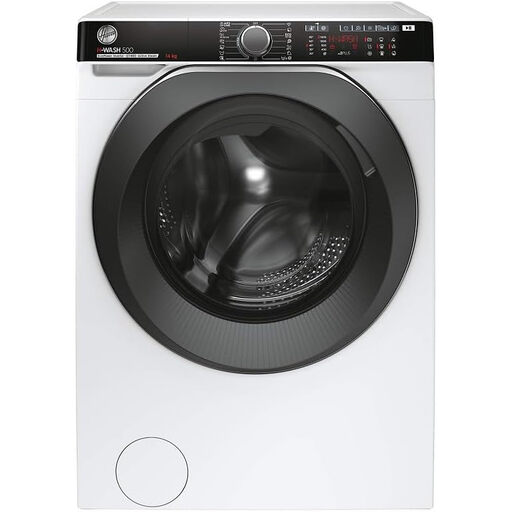 Image unavailable
Worth considering if you’re looking for a high-capacity front-loader and its size suits your space.
The Joybuy listing gives a capacity of 14 kg, a maximum spin speed of 1,400 rpm, 16 programmes and dimensions of 67 × 85 × 60 cm (W × H × D). Energy class B.
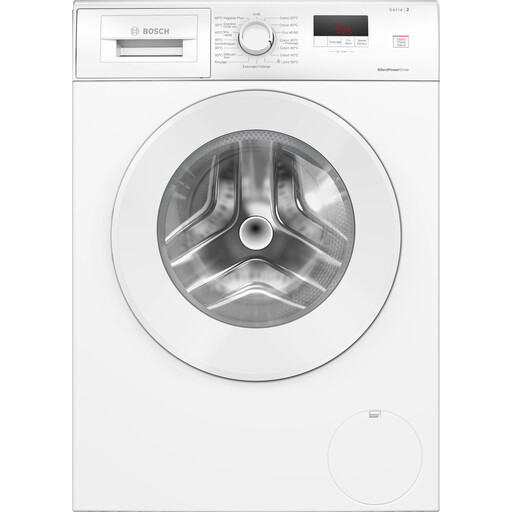 Image unavailable
This front-loader may be suitable if its depth and the space in front of the door work for your room.
The Joybuy listing gives a capacity of 7 kg, dimensions of 59.8 × 84.8 × 59 cm (W × H × D), a spin speed of 1,400 rpm and a spin-cycle noise level of 72 dB. Energy class A.
 Image unavailable
Worth considering if width is your main concern and you can keep the space above the machine clear for the lid.
The Joybuy listing gives a width of 40.5 cm, a capacity of 6 kg, a maximum spin speed of 1,400 rpm and 17 programmes. Energy class B.
 Image unavailable
This shallower front-loader may be worth considering if depth is a constraint, provided you check the clearances and connections.
The Joybuy listing gives a depth of 47 cm, a capacity of 8 kg, a spin speed of 1,400 rpm, 33 kWh/100 cycles, 38 litres per cycle and a spin-cycle noise level of 72 dB.
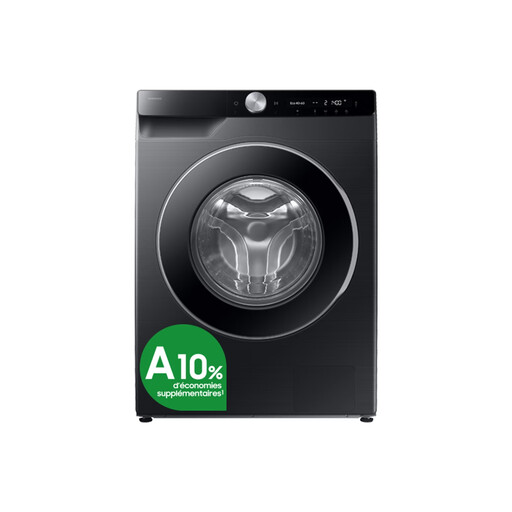 Image unavailable
Consider it if you’re looking for a 9 kg front-loader and there’s enough room for its depth, including the door.
The Joybuy listing gives a depth of 55 cm, or 63 cm including the door, a maximum spin speed of 1,400 rpm and a spin-cycle noise level of 72 dB. Energy class A.
Compare the spin-cycle noise level shown on the labels of models that fit your space, and distinguish it from the noise quoted during washing. In its survey of 4,350 respondents to its newsletter, conducted from 15 to 24 May 2025, Que Choisir reports feedback on spin-cycle noise. The survey doesn’t provide a measurement for every model.
No. Compare the model’s dimensions with the available space, then check the manual for the lid or door opening, connections and required clearances. The casing size alone doesn’t confirm that the appliance can be installed and used in your room.
Check the durability index and how its score is made up for the model in question. ADEME explains that repairability is assessed in particular by looking at documentation, ease of dismantling and access to spare parts. Since 8 April 2025, the durability index has applied to washing machines sold in France.
The statutory guarantee of conformity applies to new goods sold by a business to a private individual, subject to the legal conditions. The French Ministry of the Economy says it can be claimed for two years for a new item. Any additional commercial warranty does not replace this statutory guarantee.