Studio flat residents with space in front of the machine
If your machine faces a hallway, shower room or narrow kitchen, also measure the space needed to open the door or lid and handle your washing.


In a studio flat, start by choosing a machine that fits the space and leaves enough room to load your washing. A compact or slim front-loader needs clearance in front of its door, while a top-loader needs space above its lid. Then choose a capacity based on how much washing builds up between loads and whether you occasionally wash bulky items, rather than on the size of your home alone.
If your machine faces a hallway, shower room or narrow kitchen, also measure the space needed to open the door or lid and handle your washing.
The capacity you need depends on how much washing builds up between loads and whether you occasionally wash bulky items. The size of your household alone isn’t enough to determine the right capacity.
If the machine will go in an alcove or near existing connections, check the exact model’s dimensions, how easy it is to load and the usage information before delivery.
Worth considering: if height and depth are limited, but there’s room in front of the machine to open the door.
Bear in mind: check that its capacity suits your usual laundry loads. A drum that’s too small could mean more wash cycles, as Que Choisir points out.
Worth considering: if you’re short on depth rather than width, and the door can open without blocking the walkway.
Bear in mind: a reduced depth doesn’t remove the need for clearance in front of the machine.
Worth considering: if width is limited or a front-opening door would get in the way. Darty’s guide describes this style as narrower.
Bear in mind: the lid needs room to open fully. A worktop above the machine could make it difficult to load.
| What to consider | What to check | What I need |
|---|---|---|
| Size and access | Measure the width, height and depth of the space, then compare them with the exact model’s dimensions. Check the connections and how the door or lid opens. | I want to open the machine and handle my washing without blocking the walkway. |
| Capacity | Compare the kg of dry laundry with the amount you wash between cycles and any bulky items you occasionally wash. Que Choisir points out that a drum that’s too small could mean more wash loads, while a capacity you rarely use may not be right for you. | My loads are sometimes small, but I also need to consider sheets and other large items I wash. |
| Everyday use | For washing machines covered by the rules in France, the EU energy label includes information such as energy use per 100 cycles, water per cycle, duration and noise, according to the European Commission. Compare models with similar capacities and loading types, and check their repair information. | If the machine is near my living space, noise and cycle duration matter just as much as its dimensions. |
A front-loader might fit in the space but block the walkway when its door is open. A top-loader needs clear space above it.
Also note where the connections are and check the opening diagram in the product details or manual for the exact model.
Que Choisir points out that a capacity that’s too small could mean more wash loads. A capacity that’s too large may not be right for you if the drum is rarely full.
Think about how much washing builds up between cycles and any bulky items you plan to wash.
Extra cycles can increase water and electricity use.
The rating letter on its own doesn’t tell you how much water an appliance uses per cycle, how long a cycle takes or how noisy it is.
Compare all the label information across similar models and check the repair information.
A brand to consider for a slim or compact front-loader. Check the dimensions of each model.
A brand to consider if a front-loader with a mid-range capacity suits your laundry routine.
A brand to consider if top-loading would work better in your space.
These two models suit different space constraints: a top-loader if width or access is an issue, and a front-loader to consider if depth is the main concern. Check their full dimensions before choosing.
 Image unavailable
Worth considering if a front-opening door would get in the way. Make sure there’s enough height to open the lid fully.
Specifications shown in the product name: 1 400 tr/min spin speed, B energy rating, Inverter motor, Wi-Fi and 17 programmes. Check the exact dimensions and spin noise level if the machine will be near your living space.
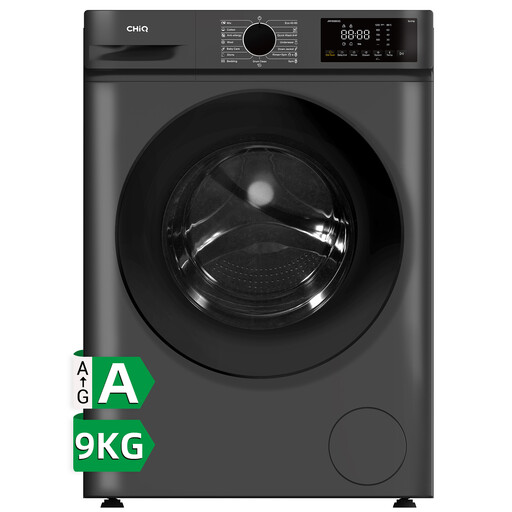 Image unavailable
Worth considering if you’re looking for a front-loader for a shallow space, as long as the door can open without blocking the walkway.
The product name lists a 530 mm drum, a BLDC motor, 1 400 tr/min spin speed and a 15-minute quick programme. Compare the 9 kg capacity with your usual loads, and check the model details for its depth, energy and water use, and noise level.
No. The size of your home alone doesn’t determine how much washing you need to do. Que Choisir points out that a drum that’s too small could mean more wash cycles, while a capacity you rarely use may not be right for you. Consider how often you do your washing and whether you occasionally wash bulky items.
Not necessarily. A slim model is still a front-loader, so its door needs to open in front of the machine. If that would block the walkway, consider a top-loader, provided there’s clear space above the lid.
For washing machines covered by the rules in France, the European Commission says the label includes a rating from A to G, energy use per 100 cycles, water per cycle, cycle duration and noise, among other details. Compare this information across machines with similar capacities and loading types, rather than focusing on the letter alone.
Before you buy, check the documentation for the model and the brand’s service arrangements. The European Commission lists the availability of certain categories of spare parts for washing machines covered by EU rules. Check which parts and repair information apply to the model you’re considering.